跳到内容

介绍
食品腐败和损耗过大是食品行业、零售业和快餐业面临的主要问题,不仅造成重大经济损失,也对食品安全构成潜在风险。许多食品过早受到污染的主要原因是接触氧气不足、外部污染或包装密封不完整。. 食品托盘封口机 采用高密封性能和MAP包装,防止有害物质的产生,延缓食品氧化,可以有效解决这些问题。本文将介绍如何 托盘密封机 可以延长食品的保质期,分析包装的重要参数、制冷机构的规格、设备的保养和维修方法,以纠正错误。通过这种方式,企业可以稳定产品质量,尽可能减少损失。.
什么是食品托盘封口机?

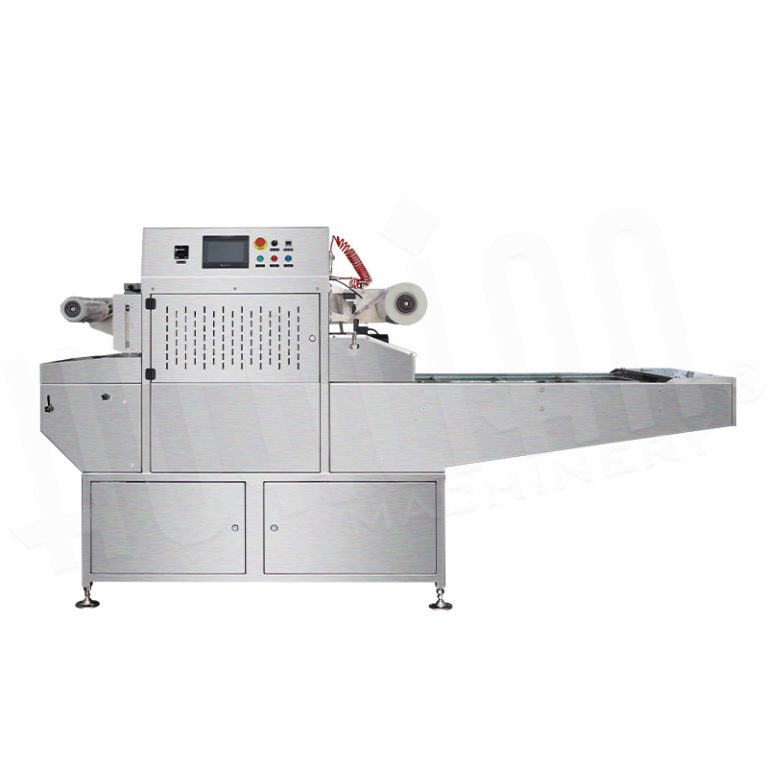
食品托盘封口机 是专业 托盘封口机食品包装 是一款专为托盘式食品容器设计的包装机。采用热封技术,将软包装薄膜与预制食品托盘紧密贴合,形成全密封、防尘、无菌的包装单元。包括手动、半自动和全自动三种型号, 食品托盘封口机 广泛用于包装鲜肉、熟食、水果、蔬菜、即食零食、乳制品等。.
不同于传统的手工包装和简单的包装方式,专业 食品托盘封口机 可保证压力密封均匀,温度调节稳定,密封精度高。本机既可采用传统的高密度空气密封方式,又可采用保护气体代替内部空气的改进型气封方式(MAP),灵活适应各种托盘尺寸和薄膜材料,, 托盘密封机 完美满足小批量餐饮包装、大规模工业化食品加工、甚至机构餐饮的需求,包括可靠的 学校营养食品托盘密封机 需要一致、安全和持久的食品包装的项目。.
托盘封口机如何延长食品保质期
的主要价值 食品托盘 在于防止外界因素对食品的破坏,使其保持稳定的新鲜度,延长保质期主要通过专业的阻隔密封技术和科学的空气调节来实现,从而保证食品的双重安全和理想品质。.
阻隔密封和气调包装(MAP)
一般的开放式包装方法使食品不断与外部大气中的氧气接触,引起快速氧化,霉菌生长和细菌繁殖。. 托盘密封机 通过精确的热压和装料过程,达到100%的密封效果,将产品与外界大气、灰尘和微生物完全隔离。这种密封层大大减少了食品的自然腐烂。.
对于更高标准的保鲜需求,, 托盘密封机 配备MAP功能,进一步优化内包装环境。通过抽取原有空气,根据食品特性加注定制混合气体,抑制腐败菌生长,保持食品原有的色、味、质。例如,低氧高二氧化碳气体配方,可有效延长鲜肉、果蔬保质期2-比普通密封提高3倍。.
食品安全和质量保存的好处
除了延长保质期外,, 托盘密封机 有效保障食品在储存和流通过程中的品质安全。完全密闭的密封结构,防止空气中灰尘、细菌、异物等二次污染,确保食品卫生,符合食品级安全标准。同时锁住食品水分,避免储存过程中水分挥发造成的干燥、收缩、变味。.
标准化的密封包装通过使用加工食品、半成品和冷藏保鲜食品,可以有效防止冷链运输和货架储存过程中的交叉污染,确保产品从生产到消费的质量稳定,减少次品和退货数量,提高优质食品的可靠性。.
最大化有效期的关键因素
高质量的托盘密封包装是食品长期保鲜的前提,而不合理的材料选择、不正确的参数设置、不规范的包装后管理,都会大大削弱保鲜效果。要最大限度地延长食品保质期,企业需要严格控制三个核心环节:包装材料匹配、密封参数调试、冷链仓储管理。.
托盘和薄膜材料选择
包装托盘和密封膜是阻隔保鲜的基础,只有配套的食品级高阻隔材料才能配合 托盘密封机 to achieve the best shelf-life extension effect.
高阻隔包装膜和食品级托盘
Ordinary low-barrier plastic films have poor oxygen and water vapor isolation performance, which cannot block external air penetration and will lead to food deterioration in a short time. High-barrier packaging films have excellent oxygen resistance, moisture resistance, and antibacterial properties, which can maintain a stable internal packaging environment for a long time. Cooperated with food-grade PP, PET, and aluminum foil trays that meet safety standards, they avoid chemical precipitation and ensure food safety while achieving efficient barrier fresh-keeping.
It is necessary to select corresponding barrier materials according to food attributes: high-fat cooked food needs oil-resistant and high-temperature resistant high-barrier films, while fresh fruits and vegetables need breathable and anti-fog high-barrier materials to adapt to their breathing characteristics.
与MAP、冷藏和冷冻储存的兼容性
All selected trays and films must have good MAP gas compatibility and low-temperature resistance. Special materials for modified atmosphere packaging can maintain stable sealing performance and barrier effect after gas replacement, avoiding gas leakage and failure of fresh-keeping effect. Meanwhile, for food stored in refrigeration (0–4℃) and freezing (-18℃) environments, low-temperature resistant packaging materials must be used to prevent film embrittlement, cracking, and tray deformation in low-temperature environments, which cause sealing failure and shelf-life shortening.
正确的密封参数
Even with high-quality materials, unreasonable sealing parameters will lead to defective packaging and fail to achieve fresh-keeping goals. Accurate temperature, pressure, and time setting is the key to perfect sealing.
温度、压力和停留时间设置
The three core parameters of tray sealing are mutually restricted and need to be adjusted according to film thickness and tray material. Excessively low temperature, insufficient pressure, or too short dwell time will cause weak bonding of the film and tray, resulting in poor tightness. On the contrary, excessively high temperature and overlong dwell time will burn the film edge, cause material deformation, and affect the appearance and barrier performance.
Standard operation requires pre-testing parameter debugging for different packaging combinations to formulate exclusive sealing schemes, ensuring firm, flat, and non-deformable sealing edges.
防止泄漏、起皱和密封不完整
Common sealing defects such as edge wrinkles, local incomplete sealing, and tiny leaks are invisible killers of food shelf life. Even micro gaps will cause continuous air penetration and bacterial invasion, leading to food spoilage in advance. In daily production, it is necessary to keep the sealing mold flat and clean, accurately position the tray and film, and avoid deviation and wrinkles during pressing. Regularly inspect sealing effects to eliminate all hidden dangers of incomplete sealing.
| Tray & Film Material Type | Sealing Temperature (℃) | Sealing Pressure | Dwell Time (s) | Applicable Scenarios |
| Standard PP Tray + Normal PE Film | 160–180 | Medium | 1.0–1.5 | General ready meals, dry snacks, room-temperature storage |
| PET Tray + High-Barrier Film | 175–195 | Medium-High | 1.5–2.0 | Refrigerated food, fruits, vegetables, common MAP packaging |
| Thickened PP Tray + Oil-Resistant Film | 185–205 | High | 2.0–2.5 | High-fat cooked food, fried products, heat-resistant packaging |
| Frozen Food Tray + Low-Temp Resistant Film | 155–170 | Medium | 1.0–1.8 | Frozen meat, frozen pre-made meals, low-temperature storage |
| Biodegradable Tray & Film | 145–160 | Medium-Low | 1.8–2.2 | Eco-friendly packaging, light-weight fresh food |
Note: The above data is for standard reference only. Actual parameters should be fine-tuned according to film thickness, equipment model, and workshop environment to achieve flat, wrinkle-free, and leak-proof sealing.
包装后储存和冷链管理
Qualified sealing packaging only completes the first step of fresh-keeping. Scientific post-packaging cold chain management and storage supervision are essential to maintain and maximize food shelf life.
适当的冷藏、温度控制和可追溯性
Sealed food must be stored and transported in a constant-temperature cold chain environment matching product attributes. Frequent temperature fluctuations will destroy the internal stable environment of packaging, accelerate food metabolism and bacterial reproduction. Enterprises need to equip professional cold chain equipment to maintain stable refrigeration and freezing temperature, and establish production and transportation traceability records to monitor product storage status in real time and avoid quality problems caused by abnormal temperature.
标签生产日期和有效期信息
Uniform and accurate labeling of production dates, shelf life, and storage conditions is an important part of standardized fresh-keeping management. It helps warehouses, retailers, and consumers accurately judge the valid period of food, realize first-in-first-out of inventory, avoid overdue food caused by chaotic management, and ensure food consumption safety within the valid shelf life.
华联托盘封口机解决方案

A high-performance tray sealer is the core foundation of stable shelf-life extension. 华联, a professional food packaging equipment manufacturer, provides a full range of reliable tray sealer solutions for food processing enterprises, covering manual and automatic models, perfectly matching different production scales and fresh-keeping needs.
华联手动和自动食品托盘封口机
Manual food tray sealers from 华联 are compact, easy to operate, and cost-effective, suitable for small-batch production, catering stores, school nutrition programs, and laboratory trial production. They realize precise thermal sealing and stable tightness, meeting daily small-scale packaging fresh-keeping needs.
华联 fully automatic 食品托盘封口机 are designed for large-scale industrial production, supporting continuous high-speed sealing, automatic tray feeding, film cutting, and MAP integrated packaging. The equipment features precise parameter control, stable sealing effect, and low defective rate. It can be flexibly matched with high-barrier materials and cold chain production lines, greatly improving production efficiency while maximizing food shelf life.
华联食品级设计&合规
全部 华联 托盘密封机 adopt strict food-grade design standards. The equipment contact parts are made of high-quality stainless steel and food-safe materials, with smooth surfaces and no sanitary dead corners, which is convenient for daily cleaning and disinfection. The whole machine complies with international food safety production specifications and GMP production standards, avoiding secondary pollution during packaging. Whether it is refrigerated fresh food, cooked food, or pharmaceutical auxiliary packaging, it can meet high-standard hygienic production requirements and help enterprises pass relevant industry certifications smoothly.
日常操作和维护最佳实践
Standardized daily operation and preventive maintenance can stabilize the sealing performance of 托盘密封机, avoid packaging defects caused by equipment failure, and ensure long-term consistent food fresh-keeping effects.
日常设置和质量检查
Before daily production, operators need to complete equipment pre-inspection: check the flatness and cleanliness of the sealing mold, confirm the normal operation of the heating and pressing system, and calibrate temperature, pressure, and dwell time parameters. Conduct trial sealing tests with formal packaging materials, check the sealing tightness, flatness, and edge firmness of sample products, and start formal production only after confirming no defects. During production, conduct random sampling inspection at regular intervals to monitor real-time sealing quality.
预防性维护
Regular preventive maintenance is key to extending equipment service life and stabilizing performance. Daily maintenance includes cleaning residual film scraps, food debris, and surface dust to keep the equipment hygienic. Weekly maintenance focuses on checking the tightness of transmission parts and the sensitivity of temperature control sensors. Monthly and quarterly maintenance requires comprehensive calibration of sealing parameters, inspection of vulnerable parts such as heating strips and sealing gaskets, and timely replacement of aging parts to avoid unstable sealing quality caused by equipment aging.
常见错误和故障排除
In actual production, many enterprises fail to maximize food shelf life due to non-standard operation and management errors. Summarizing common mistakes and targeted troubleshooting methods can effectively improve packaging quality and fresh-keeping efficiency.
密封不完整、包装泄漏和保质期缩短
Incomplete sealing and micro leakage are the most common problems leading to shortened food shelf life. The main causes include unreasonable parameter setting, dirty sealing molds, offset tray placement, and aging sealing accessories. Once defective products are found, stop production immediately to check and clean the mold surface, recalibrate sealing temperature and pressure parameters, replace aging gaskets and heating parts, and standardize tray and film positioning operations to eliminate leakage risks fundamentally.
忽视冷链和储存规则
Many enterprises focus only on packaging quality but ignore post-packaging cold chain management. High-quality sealed packaging will also fail to preserve freshness if stored at excessive temperature or with frequent temperature fluctuations. Common mistakes include delayed cold chain docking, random stacking of products, and unclear temperature zoning. The solution is to establish a complete cold chain management system, realize seamless docking between packaging production and constant-temperature storage and transportation, and strictly implement classified storage and temperature monitoring standards.
结论
食品托盘封口机 are powerful tools for food enterprises to extend product shelf life, reduce food waste, and improve product competitiveness. Relying on airtight barrier sealing and MAP fresh-keeping technology, 托盘密封机 effectively isolate external pollution and inhibit food deterioration, laying a foundation for long-term food preservation.
Maximizing food shelf life cannot rely solely on equipment performance. It requires scientific matching of high-barrier packaging materials, accurate sealing parameter control, standardized daily operation and maintenance, and strict cold chain storage management. As a professional tray sealer supplier, 华联 provides high-quality food-grade tray sealing equipment and complete packaging fresh-keeping solutions, helping global food enterprises achieve efficient production, safe packaging, and longer food shelf life, reducing operating costs and enhancing market value.
常见问题解答
Q1: How much longer can food shelf life be extended with tray sealers?
A1: The shelf-life extension effect varies by food type and packaging method. Ordinary airtight sealing can extend the shelf life of refrigerated cooked food and fresh fruits by 1–2 times, while MAP modified atmosphere sealing can prolong the shelf life of fresh meat, seafood, and ready meals by 2–3 times under standard cold chain conditions.
Q2: What is the difference between ordinary sealing and MAP tray sealing?
A2: Ordinary tray sealing only achieves simple airtight isolation, while MAP tray sealing replaces the air inside the package with customized protective mixed gas. MAP can effectively inhibit bacterial growth and maintain food color and taste, delivering a far better fresh-keeping effect and longer shelf life than ordinary sealing.
Q3: What materials are suitable for 华联 tray sealers?
A3: 华联 tray sealers are compatible with all mainstream food-grade materials, including PP/PET food trays, high-barrier anti-fog films, oil-resistant sealing films, and biodegradable packaging films. They support refrigeration, freezing, and MAP packaging scenarios with strong material adaptability.
Q4: Why do perfectly sealed food products still spoil quickly?
A4: Rapid spoilage of well-sealed food is mostly caused by non-standard post-packaging management, including unstable cold chain temperature, unqualified packaging material barrier performance, tiny invisible sealing leaks, or overdue raw material production before packaging.
Q5: Are automatic tray sealers worth investing in for small food factories?
A5: Yes. Small and medium-sized food factories with stable output can significantly improve packaging efficiency, reduce manual errors, and stabilize sealing quality with automatic tray sealers, effectively reducing long-term food waste and operating costs.
Q6: How to avoid wrinkles and incomplete sealing during tray sealing?
A6: Ensure the sealing mold is clean and flat, place trays and films accurately without deviation, and set matched temperature, pressure, and dwell time according to material thickness. Regular replacement of aging sealing gaskets can effectively avoid wrinkling and incomplete sealing problems.
Q7: Can tray sealers be used for frozen food packaging?
A7: Absolutely. Equipped with low-temperature resistant packaging trays and films, 华联 tray sealers can complete high-quality sealing for frozen food. The sealed packages can withstand long-term low-temperature storage without film cracking or sealing failure.
Q8: What daily maintenance is required for tray sealers?
A8: Daily maintenance includes cleaning equipment residues and surface dirt, checking heating and pressing functions; weekly calibration of sealing parameters; regular replacement of vulnerable parts such as heating strips and gaskets to ensure stable and consistent sealing performance.
Q9: Do 华联 tray sealers meet food safety standards?
A9: All 华联 tray sealers adopt full food-grade stainless steel design, no sanitary dead corners, and all contact materials meet international food safety certification standards. They fully comply with GMP production specifications and are suitable for high-standard food processing production.
Q10: How to set the best sealing parameters for different packaging?
A10: There is no universal parameter standard. It is necessary to conduct pre-production trial sealing according to tray thickness, film material, and food type, adjust temperature, pressure, and dwell time step by step, and fix the optimal parameters after confirming flat, firm, and leak-free sealing effect.