Ir al contenido

Introducción
El deterioro y la pérdida excesiva de alimentos siguen siendo un problema importante en la industria alimentaria, el sector minorista y el sector de la comida rápida. No solo causan pérdidas económicas significativas, sino que también plantean riesgos potenciales para la seguridad alimentaria. La razón principal de que muchos alimentos se contaminen temprano es la exposición insuficiente al oxígeno, la contaminación externa o el sellado incompleto del envase. Comida Tray Sealers puede resolver eficazmente estos problemas mediante el uso de un alto rendimiento de sellado y envases MAP, evitando la generación de sustancias nocivas y retrasando la oxidación de los alimentos. selladores de bandeja puede extender la vida útil de los alimentos y analizar los parámetros importantes del empaque, las especificaciones del cuerpo de refrigeración, el mantenimiento del equipo y los métodos de reparación para corregir errores. A través de este enfoque, las empresas pueden estabilizar la calidad de su producto y minimizar las pérdidas tanto como sea posible.
¿ Qué son los selladores de bandeja de alimentos?

Comida Tray Sealers Es profesional Tray Sealers Envases de alimentos máquinas especialmente diseñadas para envases de alimentos tipo bandejas. Adoptan tecnología de sellado térmico para unir firmemente las películas de envasado flexible a bandejas de alimentos prefabricadas, formando unidades de envasado totalmente selladas, a prueba de polvo y estériles. Cubriendo modelos manuales, semiautomáticos y totalmente automáticos, estos Comida Tray Sealers son ampliamente utilizados para el envasado de carne fresca, comidas cocinadas, frutas, verduras, aperitivos listos para comer y productos lácteos.
A diferencia del embalaje manual tradicional y los métodos de envasado simples, Comida Tray Sealers puede garantizar un sellado de presión uniforme, una regulación de temperatura estable y un sellado de alta precisión.Esta máquina no solo puede utilizar el método de sellado tradicional con aire de alta densidad, sino también adoptar el método de sellado de aire mejorado (MAP) que reemplaza el aire interno con gas protector.Con adaptabilidad flexible a varios tamaños de bandeja y materiales de película, selladores de bandeja satisfacer perfectamente los envases de catering de pequeños lotes, el procesamiento industrial de alimentos a gran escala e incluso las necesidades de catering institucional, incluyendo Tray Sealers para la nutrición escolar programas que requieren envases de alimentos consistentes, seguros y duraderos.
Cómo los selladores de bandejas extienden la vida útil de los alimentos
El valor principal de la Comida Tray Sealer radica en la prevención de factores externos que dañen los alimentos y su capacidad para mantener la frescura de manera estable.La extensión de la vida útil se logra principalmente a través de la tecnología profesional de sellado de barrera y la regulación científica del aire, lo que garantiza la doble seguridad y la calidad ideal de los alimentos.
Embalaje en atmósfera modificada (MAP)
El método general de envasado abierto permite que los alimentos entren en contacto continuo con el oxígeno en la atmósfera externa, causando una rápida oxidación, crecimiento de moho y proliferación bacteriana. Selladoras de bandejas lograr un efecto de sellado 100% a través de procesos precisos de prensado térmico y carga, aislando completamente el producto de la atmósfera externa, el polvo y los microorganismos.
Para exigencias de mantenimiento fresco de mayor nivel, selladores de bandeja Al extraer el aire original y llenar el gas mezclado personalizado de acuerdo con las características de los alimentos, inhibe el crecimiento de bacterias de deterioro y mantiene el color, el sabor y la textura originales de los alimentos. Las fórmulas gaseosas con bajo contenido de oxígeno y alto contenido de dióxido de carbono pueden prolongar eficazmente la vida útil de la carne fresca y las frutas y verduras en 2 - 3 años. 3 veces en comparación con el sellado normal.
Beneficios de seguridad alimentaria y preservación de la calidad
Además de prolongar la vida útil, selladores de bandeja proteger eficazmente la calidad y la seguridad de los alimentos durante el almacenamiento y la circulación.Un sello hermético completo evita la contaminación secundaria por polvo, bacterias y sustancias extrañas en el aire, asegurando la higiene de los alimentos y el cumplimiento de las normas de seguridad de grado alimentario.Mientras tanto, bloquea la humedad de los alimentos para evitar la sequedad, la contracción y el deterioro del sabor causado por la volatilización de la humedad durante el almacenamiento.
Mediante el uso de alimentos procesados, productos semielaborados y alimentos refrigerados y conservados, los envases sellados estandarizados pueden prevenir eficazmente la contaminación cruzada durante el transporte de la cadena de frío y el almacenamiento en estantes. Esto ayuda a garantizar la calidad estable de los productos desde la producción hasta el consumo, reduce el número de productos defectuosos y devoluciones, y mejora la confiabilidad de los alimentos de alta calidad.
Factores críticos para maximizar la vida útil
El embalaje de sellado de bandeja de alta calidad es la premisa de la conservación de alimentos a largo plazo, mientras que la selección irrazonable de materiales, el ajuste incorrecto de parámetros y la gestión irregular del post-envasado debilitarán en gran medida el efecto de conservación fresco.Para maximizar la vida útil de los alimentos, las empresas deben controlar estrictamente tres enlaces principales: coincidencia de materiales de embalaje, depuración de parámetros de sellado y gestión de almacenamiento de cadena de frío.
Tray & Film Selección de materiales
Las bandejas de embalaje y las películas de sellado son la base del mantenimiento de la barrera fresca. Solo los materiales de alta barrera de grado alimenticio pueden cooperar con selladores de bandeja para lograr el mejor efecto de extensión de vida útil.
Películas de embalaje de alta barrera y bandejas de grado alimenticio
Ordinary low-barrier plastic films have poor oxygen and water vapor isolation performance, which cannot block external air penetration and will lead to food deterioration in a short time. High-barrier packaging films have excellent oxygen resistance, moisture resistance, and antibacterial properties, which can maintain a stable internal packaging environment for a long time. Cooperated with food-grade PP, PET, and aluminum foil trays that meet safety standards, they avoid chemical precipitation and ensure food safety while achieving efficient barrier fresh-keeping.
It is necessary to select corresponding barrier materials according to food attributes: high-fat cooked food needs oil-resistant and high-temperature resistant high-barrier films, while fresh fruits and vegetables need breathable and anti-fog high-barrier materials to adapt to their breathing characteristics.
Compatibilidad con MAP, almacenamiento refrigerado y congelado
All selected trays and films must have good MAP gas compatibility and low-temperature resistance. Special materials for modified atmosphere packaging can maintain stable sealing performance and barrier effect after gas replacement, avoiding gas leakage and failure of fresh-keeping effect. Meanwhile, for food stored in refrigeration (0–4℃) and freezing (-18℃) environments, low-temperature resistant packaging materials must be used to prevent film embrittlement, cracking, and tray deformation in low-temperature environments, which cause sealing failure and shelf-life shortening.
Parámetros de sellado correctos
Even with high-quality materials, unreasonable sealing parameters will lead to defective packaging and fail to achieve fresh-keeping goals. Accurate temperature, pressure, and time setting is the key to perfect sealing.
Temperatura, presión y Dwell Time
The three core parameters of tray sealing are mutually restricted and need to be adjusted according to film thickness and tray material. Excessively low temperature, insufficient pressure, or too short dwell time will cause weak bonding of the film and tray, resulting in poor tightness. On the contrary, excessively high temperature and overlong dwell time will burn the film edge, cause material deformation, and affect the appearance and barrier performance.
Standard operation requires pre-testing parameter debugging for different packaging combinations to formulate exclusive sealing schemes, ensuring firm, flat, and non-deformable sealing edges.
Prevenir fugas, arrugas y sellos incompletos
Common sealing defects such as edge wrinkles, local incomplete sealing, and tiny leaks are invisible killers of food shelf life. Even micro gaps will cause continuous air penetration and bacterial invasion, leading to food spoilage in advance. In daily production, it is necessary to keep the sealing mold flat and clean, accurately position the tray and film, and avoid deviation and wrinkles during pressing. Regularly inspect sealing effects to eliminate all hidden dangers of incomplete sealing.
| Tray & Film Material Type | Sealing Temperature (℃) | Sealing Pressure | Dwell Time (s) | Applicable Scenarios |
| Standard PP Tray + Normal PE Film | 160–180 | Medium | 1.0–1.5 | General ready meals, dry snacks, room-temperature storage |
| PET Tray + High-Barrier Film | 175–195 | Medio-Alto | 1.5–2.0 | Refrigerated food, fruits, vegetables, common MAP packaging |
| Thickened PP Tray + Oil-Resistant Film | 185–205 | Alto | 2.0–2.5 | High-fat cooked food, fried products, heat-resistant packaging |
| Frozen Food Tray + Low-Temp Resistant Film | 155–170 | Medium | 1.0–1.8 | Frozen meat, frozen pre-made meals, low-temperature storage |
| Biodegradable Tray & Film | 145–160 | Medium-Low | 1.8–2.2 | Eco-friendly packaging, light-weight fresh food |
Note: The above data is for standard reference only. Actual parameters should be fine-tuned according to film thickness, equipment model, and workshop environment to achieve flat, wrinkle-free, and leak-proof sealing.
Almacenamiento post-envasado y gestión de la cadena de frío
Qualified sealing packaging only completes the first step of fresh-keeping. Scientific post-packaging cold chain management and storage supervision are essential to maintain and maximize food shelf life.
Refrigeración adecuada, control de temperatura y trazabilidad
Sealed food must be stored and transported in a constant-temperature cold chain environment matching product attributes. Frequent temperature fluctuations will destroy the internal stable environment of packaging, accelerate food metabolism and bacterial reproduction. Enterprises need to equip professional cold chain equipment to maintain stable refrigeration and freezing temperature, and establish production and transportation traceability records to monitor product storage status in real time and avoid quality problems caused by abnormal temperature.
Etiquetado Fechas de producción e información de caducidad
Uniform and accurate labeling of production dates, shelf life, and storage conditions is an important part of standardized fresh-keeping management. It helps warehouses, retailers, and consumers accurately judge the valid period of food, realize first-in-first-out of inventory, avoid overdue food caused by chaotic management, and ensure food consumption safety within the valid shelf life.
Soluciones Hualian Tray Sealer

A high-performance tray sealer is the core foundation of stable shelf-life extension. Hualian, a professional food packaging equipment manufacturer, provides a full range of reliable tray sealer solutions for food processing enterprises, covering manual and automatic models, perfectly matching different production scales and fresh-keeping needs.
Selladores manuales y automáticos de bandejas de alimentos Hualian
Manual food tray sealers from Hualian are compact, easy to operate, and cost-effective, suitable for small-batch production, catering stores, school nutrition programs, and laboratory trial production. They realize precise thermal sealing and stable tightness, meeting daily small-scale packaging fresh-keeping needs.
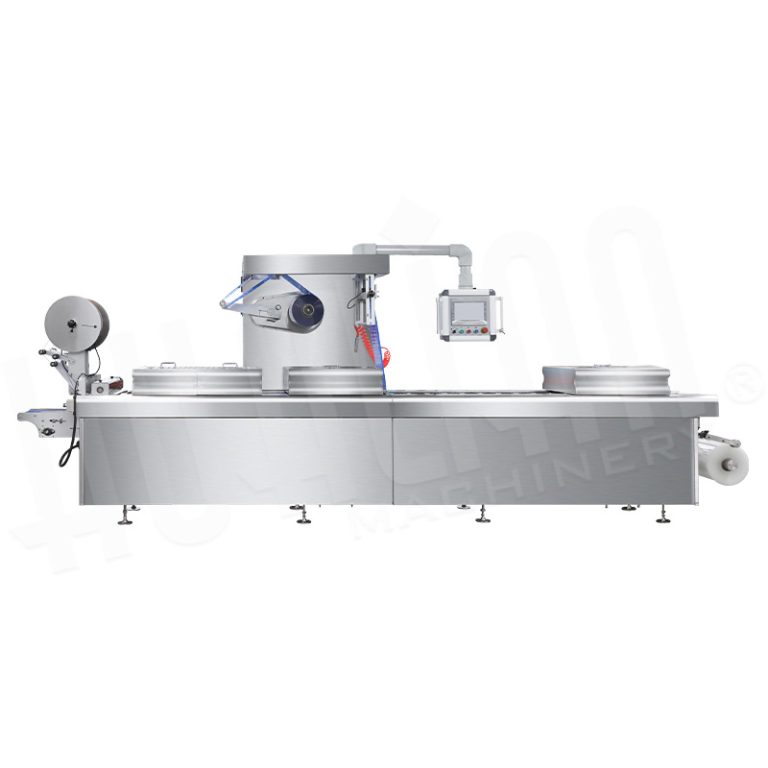
Hualian fully automatic Comida Tray Sealers are designed for large-scale industrial production, supporting continuous high-speed sealing, automatic tray feeding, film cutting, and MAP integrated packaging. The equipment features precise parameter control, stable sealing effect, and low defective rate. It can be flexibly matched with high-barrier materials and cold chain production lines, greatly improving production efficiency while maximizing food shelf life.
Diseño y cumplimiento de Hualian Food-Grade
Todo Hualian selladores de bandeja adopt strict food-grade design standards. The equipment contact parts are made of high-quality stainless steel and food-safe materials, with smooth surfaces and no sanitary dead corners, which is convenient for daily cleaning and disinfection. The whole machine complies with international food safety production specifications and GMP production standards, avoiding secondary pollution during packaging. Whether it is refrigerated fresh food, cooked food, or pharmaceutical auxiliary packaging, it can meet high-standard hygienic production requirements and help enterprises pass relevant industry certifications smoothly.
Mejores prácticas diarias de operación y mantenimiento
Standardized daily operation and preventive maintenance can stabilize the sealing performance of selladores de bandeja, avoid packaging defects caused by equipment failure, and ensure long-term consistent food fresh-keeping effects.
Configuración diaria y controles de calidad
Before daily production, operators need to complete equipment pre-inspection: check the flatness and cleanliness of the sealing mold, confirm the normal operation of the heating and pressing system, and calibrate temperature, pressure, and dwell time parameters. Conduct trial sealing tests with formal packaging materials, check the sealing tightness, flatness, and edge firmness of sample products, and start formal production only after confirming no defects. During production, conduct random sampling inspection at regular intervals to monitor real-time sealing quality.
Mantenimiento preventivo
Regular preventive maintenance is key to extending equipment service life and stabilizing performance. Daily maintenance includes cleaning residual film scraps, food debris, and surface dust to keep the equipment hygienic. Weekly maintenance focuses on checking the tightness of transmission parts and the sensitivity of temperature control sensors. Monthly and quarterly maintenance requires comprehensive calibration of sealing parameters, inspection of vulnerable parts such as heating strips and sealing gaskets, and timely replacement of aging parts to avoid unstable sealing quality caused by equipment aging.
Errores comunes y troubleshooting
In actual production, many enterprises fail to maximize food shelf life due to non-standard operation and management errors. Summarizing common mistakes and targeted troubleshooting methods can effectively improve packaging quality and fresh-keeping efficiency.
Sellos incompletos, paquetes con fugas y vida útil acortada
Incomplete sealing and micro leakage are the most common problems leading to shortened food shelf life. The main causes include unreasonable parameter setting, dirty sealing molds, offset tray placement, and aging sealing accessories. Once defective products are found, stop production immediately to check and clean the mold surface, recalibrate sealing temperature and pressure parameters, replace aging gaskets and heating parts, and standardize tray and film positioning operations to eliminate leakage risks fundamentally.
Cadena de frío y normas de almacenamiento
Many enterprises focus only on packaging quality but ignore post-packaging cold chain management. High-quality sealed packaging will also fail to preserve freshness if stored at excessive temperature or with frequent temperature fluctuations. Common mistakes include delayed cold chain docking, random stacking of products, and unclear temperature zoning. The solution is to establish a complete cold chain management system, realize seamless docking between packaging production and constant-temperature storage and transportation, and strictly implement classified storage and temperature monitoring standards.
Conclusión
Comida Tray Sealers are powerful tools for food enterprises to extend product shelf life, reduce food waste, and improve product competitiveness. Relying on airtight barrier sealing and MAP fresh-keeping technology, selladores de bandeja effectively isolate external pollution and inhibit food deterioration, laying a foundation for long-term food preservation.
Maximizing food shelf life cannot rely solely on equipment performance. It requires scientific matching of high-barrier packaging materials, accurate sealing parameter control, standardized daily operation and maintenance, and strict cold chain storage management. As a professional tray sealer supplier, Hualian provides high-quality food-grade tray sealing equipment and complete packaging fresh-keeping solutions, helping global food enterprises achieve efficient production, safe packaging, and longer food shelf life, reducing operating costs and enhancing market value.
Preguntas frecuentes
Q1: How much longer can food shelf life be extended with tray sealers?
A1: The shelf-life extension effect varies by food type and packaging method. Ordinary airtight sealing can extend the shelf life of refrigerated cooked food and fresh fruits by 1–2 times, while MAP modified atmosphere sealing can prolong the shelf life of fresh meat, seafood, and ready meals by 2–3 times under standard cold chain conditions.
Q2: What is the difference between ordinary sealing and MAP tray sealing?
A2: Ordinary tray sealing only achieves simple airtight isolation, while MAP tray sealing replaces the air inside the package with customized protective mixed gas. MAP can effectively inhibit bacterial growth and maintain food color and taste, delivering a far better fresh-keeping effect and longer shelf life than ordinary sealing.
Q3: What materials are suitable for Hualian tray sealers?
A3: Hualian tray sealers are compatible with all mainstream food-grade materials, including PP/PET food trays, high-barrier anti-fog films, oil-resistant sealing films, and biodegradable packaging films. They support refrigeration, freezing, and MAP packaging scenarios with strong material adaptability.
Q4: Why do perfectly sealed food products still spoil quickly?
A4: Rapid spoilage of well-sealed food is mostly caused by non-standard post-packaging management, including unstable cold chain temperature, unqualified packaging material barrier performance, tiny invisible sealing leaks, or overdue raw material production before packaging.
Q5: Are automatic tray sealers worth investing in for small food factories?
A5: Yes. Small and medium-sized food factories with stable output can significantly improve packaging efficiency, reduce manual errors, and stabilize sealing quality with automatic tray sealers, effectively reducing long-term food waste and operating costs.
Q6: How to avoid wrinkles and incomplete sealing during tray sealing?
A6: Ensure the sealing mold is clean and flat, place trays and films accurately without deviation, and set matched temperature, pressure, and dwell time according to material thickness. Regular replacement of aging sealing gaskets can effectively avoid wrinkling and incomplete sealing problems.
Q7: Can tray sealers be used for frozen food packaging?
A7: Absolutely. Equipped with low-temperature resistant packaging trays and films, Hualian tray sealers can complete high-quality sealing for frozen food. The sealed packages can withstand long-term low-temperature storage without film cracking or sealing failure.
Q8: What daily maintenance is required for tray sealers?
A8: Daily maintenance includes cleaning equipment residues and surface dirt, checking heating and pressing functions; weekly calibration of sealing parameters; regular replacement of vulnerable parts such as heating strips and gaskets to ensure stable and consistent sealing performance.
Q9: Do Hualian tray sealers meet food safety standards?
A9: All Hualian tray sealers adopt full food-grade stainless steel design, no sanitary dead corners, and all contact materials meet international food safety certification standards. They fully comply with GMP production specifications and are suitable for high-standard food processing production.
Q10: How to set the best sealing parameters for different packaging?
A10: There is no universal parameter standard. It is necessary to conduct pre-production trial sealing according to tray thickness, film material, and food type, adjust temperature, pressure, and dwell time step by step, and fix the optimal parameters after confirming flat, firm, and leak-free sealing effect.