Coffee packaging machines fall into several families, but the useful distinction is not simply “manual versus automatic.” You need to identify how the coffee will be dosed, whether the machine will form a bag or handle a premade package, how the package atmosphere will be managed, and where the finished pack goes next.
Quick answer: Choose a vertical form-fill-seal (VFFS) machine when you want to make bags from rollstock at repeatable volume. Choose a premade-pouch machine when the finished bag—such as a zipper pouch or valve bag—is central to the product. Use a semi-automatic filler and sealer for short runs and frequent SKU changes. Sachet and stick-pack machines suit portion packs, while rigid-container fillers serve cans and jars. In every case, match the bagger with the correct dosing system: weighing for beans and an auger or another tested powder filler for ground coffee.
This article classifies the main equipment types and explains where each one fits. For a broader treatment of capacity, cost, freshness, supplier evaluation, and acceptance testing, use our coffee packaging machine buying guide.
Table of Contents
ToggleA Coffee Packaging System Has Four Different Layers
Equipment quotations can look similar while covering very different scopes. One supplier may quote a bagger only; another may include a weigher, nitrogen flushing, coding, checkweighing, and discharge. Before comparing machine types, separate the system into four layers.
| System layer | What it does | Typical equipment |
|---|---|---|
| Dosing | Measures the target quantity of coffee | Multihead or linear weigher, net weigher, auger filler, volumetric filler |
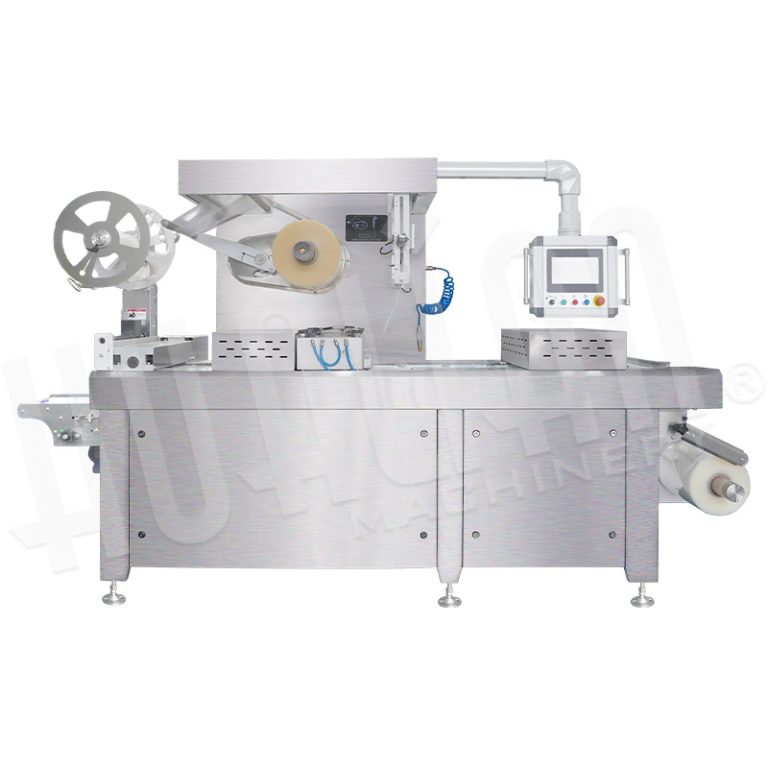
| Primary packaging | Forms or opens the package, receives the dose, and closes it | VFFS, premade-pouch machine, sachet or stick-pack machine, can or jar filler |
| Preservation and quality | Controls atmosphere and verifies the pack | Nitrogen flushing, vacuum, valve handling, seal control, checkweigher, metal detector |
| End of line | Prepares finished packs for distribution | Conveyor, labeler, case packer, carton sealer, palletizer, stretch wrapper |
This distinction prevents a common specification error: a multihead weigher and a VFFS machine are not competing alternatives. The weigher meters the beans; the VFFS machine makes and closes the bag. They work together.
Coffee Packaging Machine Application Matrix
| Machine family | Typical coffee | Typical package | Best fit | Main limitation to verify |
|---|---|---|---|---|
| Semi-automatic filler plus sealer | Beans, grounds, instant coffee | Premade bag or pouch | Short runs, many SKUs, staged automation | Operator cycle and sealing bottleneck |
| VFFS | Beans, grounds, instant granules or powder | Rollstock pillow, gusseted, or machine-supported specialty bag | Repeatable production with stable formats | Film behavior, factory height, and changeover |
| Premade-pouch fill and seal | Beans and grounds | Stand-up, zipper, flat-bottom, or valve pouch | Premium retail presentation and flexible pouch features | Pouch consistency, opening, and unit material cost |
| Sachet or stick pack | Instant powder or granules; portioned grounds | Single-serve sachet or stick | Portion packs, samples, hospitality products | Powder flow, sealing contamination, and multilane cleaning |
| Drip-bag or bag-in-bag system | Portioned ground coffee | Filter pack plus protective outer pouch | Single-cup pour-over products | Specialized materials and process complexity |
| Rigid-container filling line | Beans, grounds, instant coffee | Can, jar, bottle, or composite container | Rigid premium packs or specific distribution needs | Container handling, closure, and headspace control |
| Bulk bag filling and closing | Whole beans or industrial ingredients | Larger bag or liner | Foodservice, wholesale, or further processing | Weight range, dust, bag support, and closing method |
The matrix is a starting point, not a substitute for a product trial. The same coffee can behave differently after a change in roast, grind, bulk density, temperature, or time since processing.
1. Semi-Automatic Coffee Filling and Sealing Equipment
A semi-automatic work cell separates the main operations. A filler measures the coffee, an operator positions or transfers the pouch, and a sealer closes it. Coding and gas flushing may be separate or integrated into the sealing stage.
Choose it when
- You run short batches or change coffee and bag formats frequently.
- Your output does not justify automatic pouch feeding.
- You want to improve dosing or seal consistency before automating the whole process.
- You need an operator to inspect or manipulate a specialty pouch.
Avoid it when
- Manual pouch placement cannot meet your required saleable output.
- Labor availability or ergonomic risk makes repeated handling impractical.
- Your process requires tightly controlled timing between filling, flushing, and sealing.
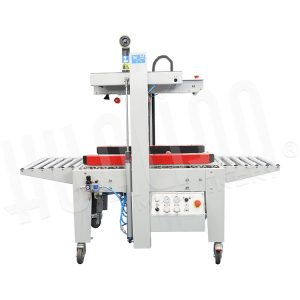
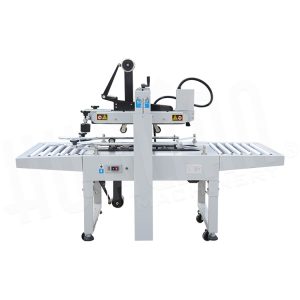
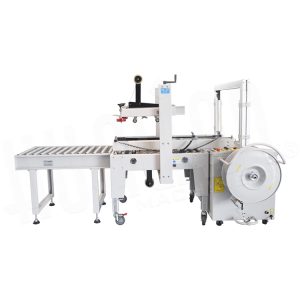
Do not size the filler in isolation. Measure the full operator cycle: collecting a pouch, opening it, positioning it, filling, transferring, flushing if required, sealing, inspecting, and placing the pack into the next container. Hualian’s industrial sealing machines can be reviewed as part of a staged system, but the bag material, filled weight, seal area, valve position, and conveyor arrangement still need to be confirmed.
2. Vertical Form-Fill-Seal Machines
A VFFS machine unwinds rollstock film, forms it around a tube, creates the longitudinal and transverse seals, receives a measured dose, and cuts the finished bag. The format is widely used because bag making, filling, and sealing occur in one automated process.
Choose it when
- You have repeatable production volume and relatively stable bag formats.
- Rollstock economics are important to the project.
- Your package can be produced reliably on the proposed forming set.
- You have enough ceiling height and suitable access for product feeding, dosing, and film handling.
Avoid it when
- Your brand depends on a complex premade pouch the machine cannot reproduce.
- You have many short runs and changeovers would consume a large share of production time.
- Your facility cannot accommodate the vertical layout or safe access to elevated equipment.
- The proposed rollstock and valve application have not been tested together.
VFFS does not determine the dosing method. Whole beans may arrive through a multihead or linear weigher, while ground coffee may be supplied by an auger filler. Confirm whether zipper application, a degassing valve, nitrogen flushing, date coding, and the required bag geometry are native functions, optional modules, or separate processes.
3. Premade-Pouch Filling and Sealing Machines
A premade-pouch system takes a finished bag from a magazine, grips it, opens it, receives the coffee, and seals the top. Machines may use a rotary arrangement or an inline path. This family is often considered when package appearance and features are central to the brand.
Choose it when
- You need stand-up, zipper, flat-bottom, shaped, or pre-valved pouches.
- You want to purchase converted pouches rather than form them from rollstock.
- You need packaging flexibility within the machine’s validated size range.
- Your retail package value can support the pouch and handling cost.
Avoid it when
- The pouch supplier cannot hold the required dimensional and material tolerances.
- The project is driven primarily by minimum packaging-material cost at stable, high volume.
- The zipper, valve, or bag geometry interferes with gripping, opening, filling, or sealing.
For this machine type, the pouch is a functional machine component. Test production pouches—not only plain samples—and document width, length, mouth flatness, stiffness, friction, zipper position, valve position, sealant layer, and allowable variation. A visually acceptable pouch may still fail to open or sit correctly in the grippers.
4. Sachet and Stick-Pack Machines
Sachet and stick-pack equipment forms small packages from rollstock, meters the product, and seals each portion. It is commonly applied to instant coffee, powdered mixes, samples, hotel portions, and other single-use formats.
Choose it when
- You need controlled single portions in a compact package.
- Your product flows consistently through a suitable powder, granule, or combination dosing system.
- Your volumes justify dedicated lanes, tooling, and packaging material.
Avoid it when
- Your ground coffee creates uncontrolled dust or product in the seal area.
- Your blend segregates between the hopper and individual lanes.
- Frequent formula changes make multilane cleaning and reconciliation impractical.
A multilane machine can produce many packs per cycle, but every lane must remain within the agreed weight and seal criteria. During a trial, compare lanes individually instead of accepting only the combined average.
5. Drip Coffee Bag and Bag-in-Bag Machines
Drip-bag equipment makes or handles a filter package, doses ground coffee, seals the inner pack, and may place it inside a barrier outer pouch. Some systems also apply hanging ears or other brewing supports.
This is a specialized format rather than a universal substitute for a standard sachet machine. Filter material, dose, grind behavior, inner seal, outer barrier pouch, nitrogen flushing, opening convenience, and brewing performance all interact.
Choose it for a defined single-cup program with validated consumables and sufficient volume. Avoid treating it as a low-risk add-on to a general coffee line. Hualian capability in this specialized category must be confirmed before it is presented as a product solution.
6. Rigid-Container Filling and Closing Lines
Coffee can also be packed into cans, jars, bottles, or composite containers. A line may include container unscrambling or infeed, dosing, settling, gas flushing, lid or closure application, induction sealing, labeling, and inspection.
Choose it when
- A rigid container is part of the product’s use experience or brand position.
- The container offers the distribution protection or reclosure you require.
- You can manage empty-container storage, feeding, and change parts.
Avoid it when
- Empty-container logistics, floor space, or unit cost conflict with the business case.
- Your expected container variation has not been tested through infeed, filling, and closing.
Do not assume that a coffee filler is also a complete canning or jarring line. Confirm exactly who supplies and integrates the closure, tamper evidence, coding, inspection, and label application.
7. Vacuum and Gas-Flushing Equipment
Vacuum and nitrogen flushing are process options, not complete coffee-machine categories by themselves. They can be incorporated into a chamber sealer, premade-pouch line, VFFS machine, or rigid-container line.
The Specialty Coffee Association identifies oxygen, moisture, temperature, and time as major freshness concerns, and discusses packaging interventions including nitrogen flushing, vacuum, and one-way valve bags in its coffee freshness overview. The correct equipment still depends on the coffee, package, distribution period, and the result you intend to verify.
Use nitrogen flushing when
- You have a defined package-atmosphere target and a way to measure residual oxygen.
- The package barrier and seal can maintain the intended atmosphere.
- Gas delivery, flow, timing, and consumption have been evaluated at production speed.
Do not assume
- A nitrogen inlet guarantees low residual oxygen.
- A one-way valve can compensate for a leaking heat seal.
- Stronger vacuum is automatically better for fresh roasted beans or package appearance.
Hualian manufactures vacuum packaging machines, but coffee suitability should be established with your actual roast condition, package structure, degassing strategy, and acceptance criteria.
8. Bulk Coffee Bag Filling and Closing Systems
Wholesale, foodservice, or further-processing applications may use larger bags rather than retail pouches. The line can include net weighing, bag support, filling, settling or deaeration, heat sealing, sewing, and discharge conveying.
Choose the closing method from the bag construction and distribution requirement. A heat-sealable liner, laminated bag, woven outer bag, and paper sack do not use the same closing process. Also check whether the filled bag can be supported through closing without pulling on the seal area.
For ground coffee or instant powder, dust collection and product containment may affect both seal quality and the working environment. For whole beans, transfer height and impact points may affect breakage.
9. Inspection and End-of-Line Equipment
A primary packaging machine can make a closed bag, but your commercial line may still require coding, checkweighing, metal detection, leak or seal inspection, case packing, carton sealing, palletizing, and stretch wrapping.
When reviewing Hualian’s packaging line solutions, define the line boundary and interfaces. The bagger, inspection system, case packer, and palletizer need compatible rates, signals, accumulation, reject logic, and recovery procedures. A group of individually capable machines is not automatically a balanced line.
How Dosing Systems Change the Application
| Dosing system | Common application | Why it may fit | What to test |
|---|---|---|---|
| Multihead weigher | Whole beans | Combines weighed portions and can support higher output | Weight variation, bean damage, drop height, sustained rate |
| Linear or net weigher | Whole beans | Straightforward weight-based filling for moderate output or larger doses | Feed stability, cutoff behavior, breakage, cycle time |
| Auger filler | Ground or instant coffee powder | Controls powder dose through auger rotation | Grind, bulk-density change, hopper level, dust, seal contamination |
| Volumetric cup filler | Stable, free-flowing granules | Simple volume-based dosing | Weight drift between batches and density changes |
A bagger may support more than one coffee product if the dosing system can be changed, but that does not make the conversion automatic. Review mechanical change parts, controls, cleaning, dust extraction, changeover time, storage of unused equipment, and the risk of cross-contamination.
Choose the Machine Family in Five Steps
- Define the coffee. State whole bean, grind or instant form, roast, bulk density, temperature, dust behavior, and time between processing and packaging.
- Lock the finished package. Specify premade pouch or rollstock, dimensions, fill weight, material, zipper, valve, print registration, closure, and required appearance.
- Calculate saleable output. Use bags per shift, available minutes, SKU schedule, changeovers, cleaning, and expected line efficiency—not only a maximum bags-per-minute number.
- Define the automation boundary. Decide whether the project ends at sealing or includes inspection, case packing, and palletizing.
- Run an application trial. Test actual coffee and production packaging against agreed weight, speed, seal, residual-oxygen, reject, and changeover criteria.
What to Send With Your Equipment Request
- Coffee type, roast or grind description, bulk density, and sample quantity
- Target fill weights and acceptable tolerance
- Bag or container drawings, materials, dimensions, and production samples
- Zipper, one-way valve, label, coding, and gas-flushing requirements
- Required saleable packs per shift and planned operating hours
- SKU count, batch sizes, and changeover frequency
- Factory layout, ceiling height, electrical supply, compressed air, and nitrogen source
- Existing upstream and downstream equipment
- Inspection, documentation, FAT, installation, training, and spare-parts requirements
If this information is incomplete, ask the supplier to identify assumptions explicitly. A low quotation based on a bagger alone should not be compared directly with an integrated line quotation.
Conclusion
The right coffee packaging machine type follows the product and finished package. VFFS suits rollstock-based, repeatable production; premade-pouch systems suit converted bags with retail features; semi-automatic cells support short runs and staged investment; sachet, stick-pack, drip-bag, rigid-container, and bulk systems serve narrower applications.
After selecting the machine family, specify the dosing system, atmosphere-control method, inspection scope, and end-of-line boundary. Then validate the complete configuration with your coffee and packaging material.
For an application review, send Hualian your coffee format, target weight, package samples, output per shift, SKU schedule, and factory utilities. These inputs allow the engineering team to compare a standalone machine, work cell, and integrated line on the same basis.
Frequently Asked Questions
What are the main types of coffee packaging machines?
The main families are semi-automatic filler-and-sealer cells, VFFS machines, premade-pouch filling and sealing machines, sachet and stick-pack machines, drip-bag systems, rigid-container filling lines, and bulk bag filling systems. Dosing, nitrogen flushing, inspection, and end-of-line equipment are additional system layers.
Which machine is used to package whole coffee beans?
Whole beans are commonly measured by a multihead, linear, or net weigher and packed by a VFFS or premade-pouch machine. The final choice depends on the bag format, output, bean-handling limits, changeover needs, and automation scope.
Which machine is used for ground coffee?
Ground coffee is commonly dosed with an auger filler and packed on a VFFS, premade-pouch, sachet, or rigid-container line. You should test bulk-density variation, dust control, product in the seal area, and cleaning.
What is the difference between VFFS and a premade-pouch machine?
VFFS makes bags from rollstock during production. A premade-pouch machine opens, fills, and seals bags that were converted beforehand. Compare film or pouch cost, required bag features, output, changeover, floor and height constraints, and package presentation.
Can one coffee packaging machine handle both beans and grounds?
The same primary bagger may handle both if it supports the package formats, but beans and grounds normally require different dosing and product-handling arrangements. Confirm change parts, controls, cleaning, dust extraction, and changeover time.
Is a nitrogen-flushing machine a separate machine type?
Not necessarily. Nitrogen flushing is a process module that can be integrated into several packaging-machine types. Specify the residual-oxygen target, measurement method, gas supply, consumption assumptions, and test conditions.
Are coffee capsule machines included in this comparison?
No. Capsule filling and sealing uses specialized formats, tooling, and supply chains. It should be evaluated as a separate project, and Hualian capability should be confirmed before a product recommendation is made.
What should be tested before choosing a machine type?
Test actual coffee and production packaging for sustained saleable output, fill-weight variation, product damage, pouch feeding, seal defects, residual oxygen where relevant, rejects, operator interventions, and changeover time.