跳到内容

在当今快节奏的市场环境下,消费者对产品包装的要求越来越高,“外观”、“方便”、“安全”等都在不断被推向更高的标准,同时企业也面临着劳动力成本上升、产能需求增加、传统的手工或低效的包装方式已不足以满足发展的需求。.
启动一个精心策划的 包装生产线 对于公司克服瓶颈至关重要,包括以下要素:
在效率提升、质量保证、成本优化、合规适应等方面。.
| 步 | 关键重点 | 核心点 |
|---|---|---|
| 1.规划 | 从最终目标开始 | - 产品类型(液体/粉末/固体/易碎品)-包装形式(袋/盒)-生产能力(当前和未来)-目标市场(国内和出口合规)-自动化水平(手动/半自动/全自动) |
| 2.设备选型 | 兼容性第一 | - 袋线:精确灌装+稳定封合+高效封合-盒线:高效装载+准确包装+安全封合 |
| 3.线布局 | 高效安全的安排 | - 线性工艺流程-机器之间的间隙≥1.2m-安全护栏和紧急停止装置-为升级预留空间-易于清洁和维护的设计 |
| 4.安装和调试 | 确保精度和安全性 | - 供应商主导安装-安全检查(护栏、接地、急停)-调试:单机→互动→满负荷测试(8- 24小时) |
| 5.培训与运营 | 人-机-过程协调 | - 分层培训(核心员工→整个团队)-标准SOP-维护周期-明确的安全协议 |
| 6.效率优化 | 持续改进 | - 监控OEE(薄弱环节)- SMED以实现快速转换-流程审查以消除隐藏的浪费-应用新技术升级 |
| 7.专业线路 | 专注行业的解决方案 | - 食品:卫生和安全-宠物食品:新鲜度和耐用性-工业:强度和可堆叠性-自动化:高效率,大规模 |
| 8.费用与成本 | 全周期成本管理 | - 初期建设-中期运营-长期维护 |
第1步:规划您的包装线
包装线规划的核心是“从最终目标出发”,即从产品特性和经营目标出发,推导出生产线的关键参数。跳过这一步,直接选择设备,很容易导致“设备与产品不匹配”、“产能过剩或不足”、“后续改造成本高”等问题。”
需要明确强调以下五个核心层面:
(1)产品类型:决定设备的核心功能
根据产品的不同形式,对包装设备的要求差异很大,这是规划的基本前提:
液体类型: 应强调防止泄漏,确保精确灌装(误差不超过±0.5%),设备的材料应耐腐蚀,并应包括泡沫抑制和液位控制等功能。.
粉末/颗粒: 需要解决与粉尘产生相关的问题(可安装粉尘收集装置),防止材料结块和堵塞(可添加混合和振动进料结构作为选项),同时确保均匀灌装。.
固体项目: If they have a regular shape, they need to be compatible with automatic feeding and positioning for packaging. If the shape is irregular, a customized grasping mechanism may be required.
Fragile items: Additional cushioning devices need to be added at the transportation, sealing, and stacking stages, and the speed of the production line should be controlled to prevent damage from collisions.
(2) Packaging format: Core categories for dividing production lines
The packaging format directly determines the equipment configuration of the production line. Currently, the main categories are “bag packaging” and “box packaging”.
Bag packaging: Suitable for powder or granular products with a single package weight ranging from 15 to 50 kg, or for small-sized retail packaging (such as snack or condiment pouches).
Box packaging: Suitable for products that require secondary packaging (such as pre-cooked food that is boxed and then put into a box), or for the protective packaging of large or fragile items.
(3) Production Capacity: Precisely matching the capacity of the equipment
Capacity planning should take into account both “current demand” and “expected growth over the next 1-3 years” to avoid situations where “insufficient capacity restricts growth” or “excess capacity leads to idle equipment”.
(4) Target Market: Compliance is of the utmost importance
The differences in regulations and standards between domestic and international markets can affect the labeling, material composition, and traceability features of packaging lines.
Domestic Market: Compliance with GB 7719 and GB 9683 is required. For the food industry, the equipment must pass the SC certification.
Export market: It is necessary to adapt to the regulations of the target country. For example, to export to the European Union, compliance with CE certification and FDA certification is required. To export to the United States, meeting FCC and OSHA requirements is necessary. Labels should include multilingual instructions and barcode traceability information.
(5) Automation Level: Balancing Costs and Efficiency
The choice of automation level should be made based on a comprehensive judgment of “labor cost,” “production demand,” and “product complexity”:
Manual production line: Suitable only for small batches and customized products. The equipment investment is low, but the labor cost is high, efficiency is low, and quality is unstable.
Semi-automatic line: Core processes are automated, while auxiliary processes are completed manually. It is suitable for medium-sized production capacities, has moderate investment, and offers high flexibility.
Automatic production line: The entire process, from raw material loading to finished product palletizing, is fully automated. It is suitable for large-scale, standardized products and offers high efficiency and low labor costs. However, the initial investment is high, and it requires a well-developed system for raw material supply and quality inspection.
步骤2:选择合适的包装设备
After identifying the specific needs, the process can move on to selecting the appropriate equipment.The core of equipment selection is “compatibility” – not necessarily the most advanced or expensive option, but rather one that perfectly matches the product’s characteristics, production capacity, and automation goals.
Combining the two mainstream categories, “bag packing production line” and “box packing production line,” the following provides an in-depth look at the core equipment functions and selection criteria:
(1) Bag packing production line: Focuses on “precise filling + stable sealing + efficient palletizing”
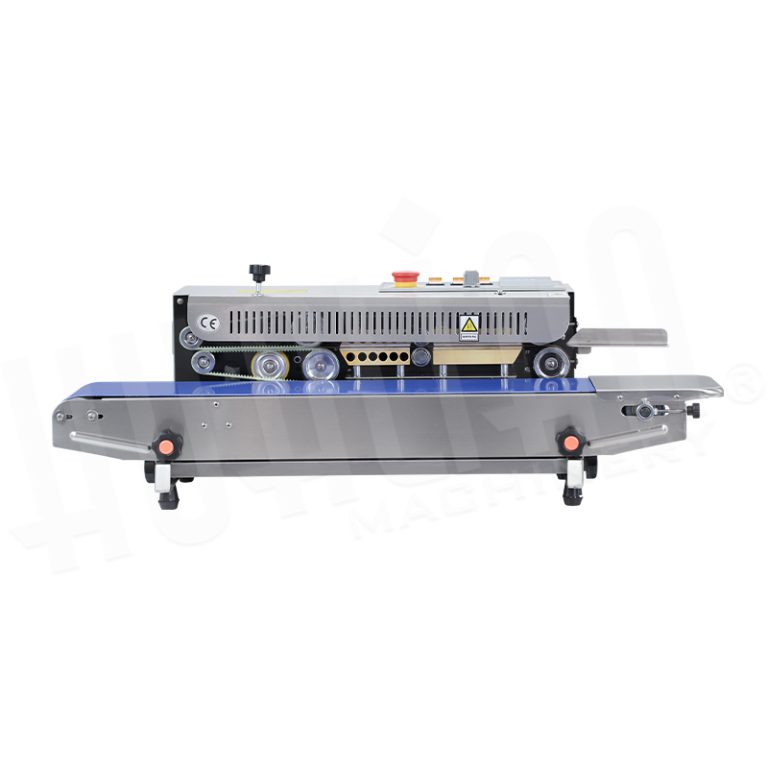
Filling machine, Bag packing machine, Sealing system, Palletizing robot and conveyor belt.
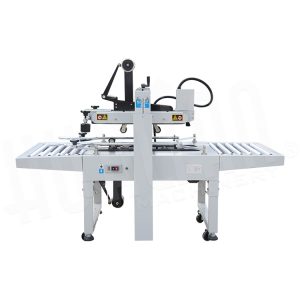
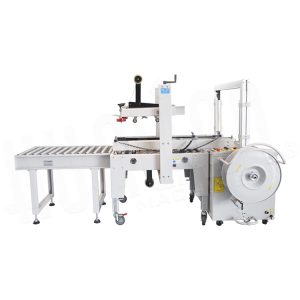
(2) Box packing production line: Focuses on “efficient loading + precise packing + secure sealing.”
This system is suitable for products such as ready-to-eat meals, bottled beverages, and electronic devices that require secondary packaging in the form of a cardboard box. The core objectives are to address issues such as “orderly loading of individual items,” “accurate placement in the box,” and “secure sealing of the cardboard box.” The typical equipment configuration is as follows:
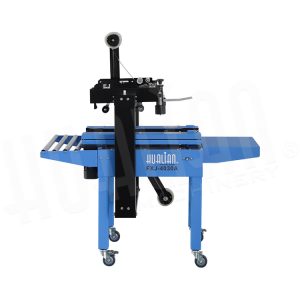
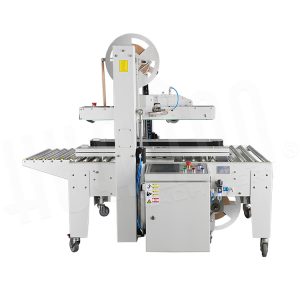
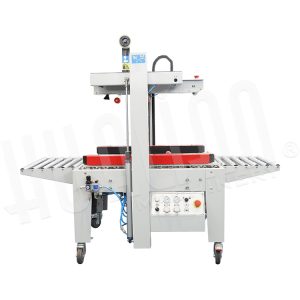
Feeding machine, Box delivery machine, Cassette machine, Sealing machine and Baling machine.
了解更多: Guide to Bagging Machine Solutions
步骤3:设计包装线布局
The layout of the packaging line is not just about “arranging equipment”; it is a comprehensive planning exercise. A well-thought-out layout can enhance production efficiency while ensuring operational safety and future expansibility.
(1) Core Design Principles:
Optimal Process Principle: Follow the “linear process” (input of raw materials → packaging → output of finished products) to avoid indirect and cross-delivery of materials, thereby reducing delivery time and energy consumption.
Safety first principle:
A clearance of ≥ 1.2m is reserved between equipment to facilitate employee inspections and maintenance.
High-speed operating equipment should be equipped with guardrails and emergency stop buttons to prevent potential safety incidents.
Electrical control cabinets and hydraulic systems should be kept away from sources of water and heat to prevent malfunctions.
Reserve space for expansion: When planning, it is essential to leave room for “equipment upgrades” or “capacity expansions.”
Balancing maintenance and cleaning:
A clearance of at least 30 cm from the bottom of the equipment is recommended for easy cleaning of the floor and maintenance purposes.
Industries with high hygiene requirements (such as food and pharmaceuticals) should have designated areas for storing cleaning tools when the layout is designed.
(2) Key Points for Implementation:
Creating a Detailed Layout Drawing: Use CAD or specialized layout software to create detailed drawings that include “equipment dimensions, channel width, location of raw material/finished product areas, and water and electrical interfaces.” Ensure that these drawings perfectly match the actual site conditions.
Simulation run test: Before confirming the blueprints, one can use the “Process Simulation” software to simulate the material transportation path to check for potential issues such as congestion or cross-path problems.
Record the “Completion Archive”: After the layout is finalized, meticulously record the “coordinates of equipment locations, positions of water and electricity interfaces, and the path of pipelines” to create the “Completion Archive,” which serves as a reference for future maintenance and renovations.
步骤4:安装和调试
Installation and debugging is a crucial step in the installation of the packaging line. If not performed properly, it may lead to a decline in equipment precision, unstable operation, and even cause safety incidents.
(1) Installation Phase:
Prioritize selecting a supplier to oversee the installation process.
Strict adherence to installation specifications is required.
Safety inspection: After installation, it is necessary to check if the guardrail, emergency stop button, and grounding device are properly installed and ensure that they meet safety standards.
(2) The debugging phase:
The goal of the debugging process is to “bring the production line up to the designed capacity and quality standards.” This can be achieved through a three-step approach:
Single-machine debugging: Testing the independent operation status of each piece of equipment individually.
Interactive testing: Running all the equipment in tandem to test “coordination.”
Load Testing: Conduct a continuous 8-24 hour load test based on “design capacity” to verify the stability of the production line.
第五步:培训和操作
The efficient operation of the packaging production line depends not only on the advanced nature of the equipment but also on the professional skills of the operators. Therefore, after the equipment installation and debugging are completed, sufficient resources must be allocated to conduct comprehensive training to achieve a deep level of compatibility between “people, machines, and processes”.
(1) Tiered training: from “core backbone” to “full-scale coverage”
Adopting a “pyramid-shaped” training model, where core backbone personnel are first trained, and then their knowledge is disseminated to the entire team, ensuring both the effectiveness and efficiency of the training.
(2) Establishing standardized operating procedures (SOPs) is crucial for avoiding operational deviations and ensuring product quality. These procedures should be tailored to the specific characteristics of the equipment and the needs of the production process, with detailed instructions for each operating step.
(3) Establish a comprehensive maintenance plan: This can include setting maintenance cycles and performing maintenance on a regular basis.
(4) Clear safety protocols: Plant the concept of “safety red line” firmly in everyone’s mind, establish strict safety protocols, and ensure their implementation through training and supervision.
第6步:优化包装线效率
The efficiency of packaging production lines is not static; it can be continuously improved through data monitoring, process optimization, and technological upgrades.
(1) Track and analyze the overall efficiency of equipment (OEE): Identify the “weak link” in efficiency, collect relevant data on a daily basis for calculation, break down the reasons for efficiency losses, and develop targeted improvement measures.
(2) Implementing Rapid Changeover (SMED): For enterprises that produce multiple product categories, changing equipment configurations (such as switching from producing 15 kg flour bags to 25 kg feed bags) is a significant cause of downtime. Through the use of rapid changeover technology, the time required for changeovers can be significantly reduced.
(3) Comprehensive Process Review and Optimization: Eliminating “Hidden Waste”: Throughout the entire process, from “raw material input” to “finished product storage,” there are often numerous instances of hidden waste. Regular review and optimization are necessary.
(4) Focus on the application of new technologies: The pace of technological advancement in the packaging industry is rapid, and the timely introduction of new technologies can lead to efficiency improvements.
了解更多: 优化包装线的6个基本技巧
了解更多: How to Reduce Downtime in Your Packaging Line
了解更多: When to Upgrade Your Packaging Line
第7步:专业包装线
The requirements and needs of different industries vary greatly, and general-purpose packaging lines often find it challenging to meet specialized demands. It is necessary to address the specific pain points of the industry and create a tailor-made professional production line.
(1) Food packaging line: With “hygiene and safety” as the core, it strictly controls aspects such as equipment design, material selection, and process management.
(2) Pet Food Packaging Line: Focuses on “Freshness and Durability”. Poor sealing of the packaging can lead to moisture and oxidation of the food, affecting both taste and nutritional value. If the durability of the packaging is insufficient, it is prone to damage during transportation, leading to customer complaints.
(3) Industrial packaging line: Prioritizing “strength and stackability” ensures that the packaging can withstand the jolting and compression during long-distance transportation, as well as the heavy pressure when stacked in a warehouse.
(4) Automated packaging line: Strives for higher efficiency and can be adapted for larger-scale production.
第8步:费用和成本考虑
The budget planning for the packaging production line is a crucial part; we need to plan for systematic cost management across the entire cycle, which includes “initial construction – mid-term operation – long-term maintenance”.
了解更多: Calculating ROI for Your Packaging Machine


华联-您的包装合作伙伴
In the construction of the packaging production line, “choosing the right partner” is equally important as “the technical solution itself.” 华联包装 has been deeply involved in the packaging industry for 15 years, focusing on five core areas: food, beverages, pet food, chemicals, and pharmaceuticals. With “customized solutions + full-cycle service” as its core, it has become a one-stop partner for enterprises from “concept design” to “stable operation.”
No matter what kind of problem you encounter, Hualian can provide you with a targeted solution. If you are interested in our products, please contact us as soon as possible.

One-Stop Packaging Solutions for 7 Industries!