Ir al contenido
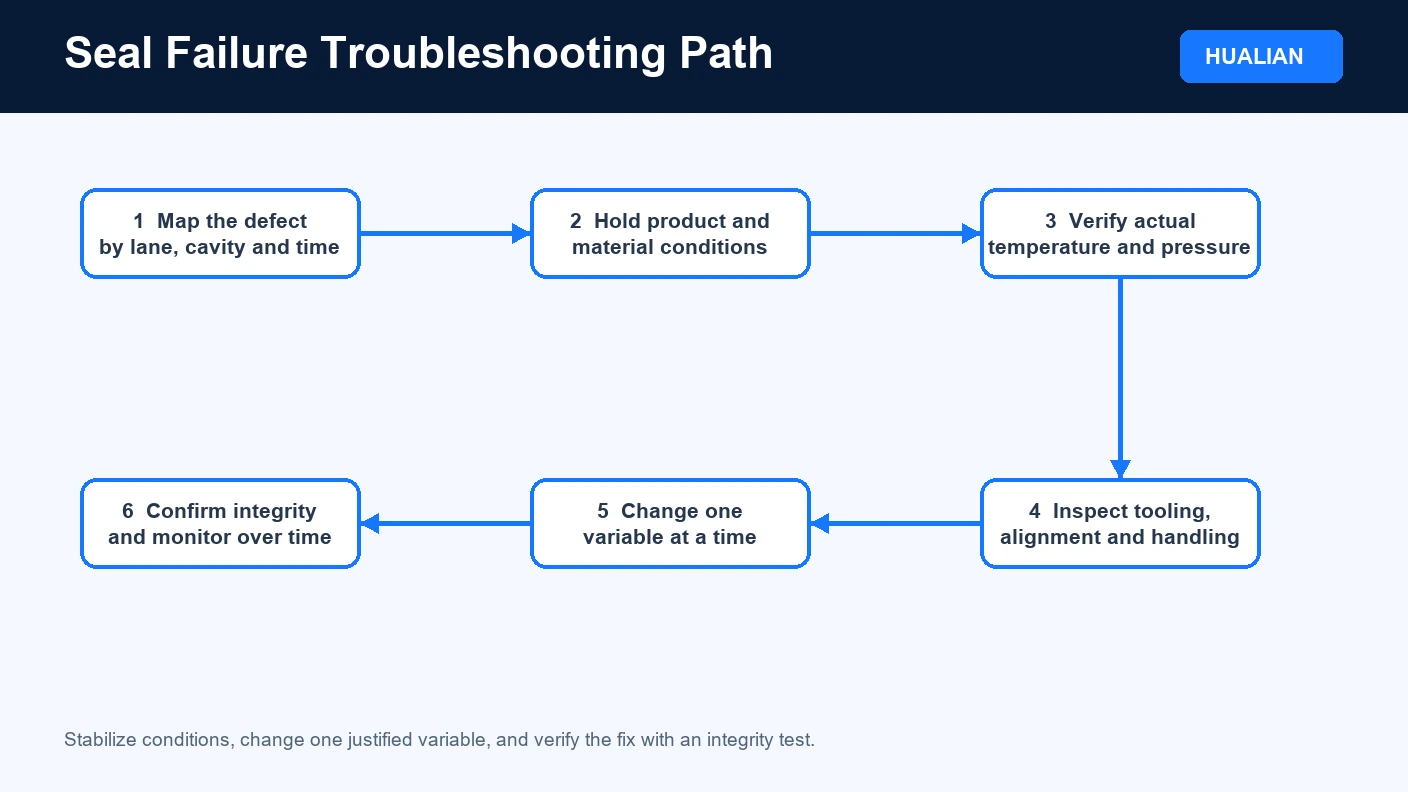
Inconsistent food-package seals should be investigated as a product–material–machine–method problem. Changing temperature without first describing the defect can hide the cause or create a second failure. A controlled troubleshooting process records where and when defects occur, changes one factor at a time and confirms the correction with an appropriate inspection or test.
Buyer focus: Treat this guide as a requirement-building tool. Confirm final equipment suitability with representative product, packaging materials, factory conditions and written acceptance criteria.
Describe and Map the Defect
Record the defect type, position, cavity or lane, time, SKU, material lot, product condition and machine settings. Separate continuous defects from intermittent events and mark whether the problem follows a tool position, material roll, operator action or production period.
Check Material Compatibility
Confirm the tray, pouch or film structure and the intended sealing surface. Review material revisions, storage, conditioning, thickness and damage. A material that looks similar may have a different sealant layer or operating window.
Inspect Seal-Area Contamination
Look for product, crumbs, powder, oil, moisture, wrinkles or trapped air across the seal path. Determine whether contamination starts during filling, transfer, package presentation or sealing. Correcting the source is more reliable than increasing heat to seal through it.
Review Temperature, Pressure and Dwell
These variables interact. Verify actual sensor readings, controller behavior and distribution across the tool before changing setpoints. Excessive heat or dwell can distort material or narrow the stable process window, while insufficient energy or contact can leave incomplete bonds.
Inspect Sealing Components and Alignment
Check jaw or tool surfaces, bands, heaters, sensors, pads, springs, bearings and parallel contact as applicable. Compare defects by lane or cavity. Wear, debris or misalignment can create a repeatable location pattern.
Check Film and Package Presentation
Observe tension, tracking, cutting, flange position, pouch presentation and package support. Wrinkles or movement during closing can interrupt uniform contact even when temperature and pressure are stable.
Use a Controlled Test Sequence
- Freeze the product and material condition
- Record the current settings and defect rate
- Change one justified variable
- Collect an adequate sample
- Use the same inspection method
- Confirm the result over time
- Restore and document approved settings
Confirm Seal Integrity
Visual inspection can identify some defects but may not establish package integrity by itself. Select test methods and acceptance criteria appropriate to the package and risk. For tray packs, the tray seal integrity testing guide explains the distinction between appearance, strength and leak detection.
Prevent Recurrence
Store approved recipes, identify material revisions, maintain sealing components, train operators and trend defects by location and cause. Escalate changes in product, package or test method through the site’s control process. Return to the equipment selection guide when recurring defects indicate a mismatch in the original requirement.
Stabilize the Process Before Changing Settings
Hold product temperature, package material lot, fill level and line speed as constant as possible. Confirm actual sensor readings and compare defects by lane, cavity, time and operator. A pattern limited to one cavity points toward local tooling or pressure; a pattern that follows a film roll suggests material or handling.
Change one justified variable at a time and record the original setting, test quantity and result. Raising temperature without checking contamination, pressure or dwell can distort materials and hide the real cause.
Confirm the Fix With an Appropriate Integrity Test
Visual appearance alone cannot prove package integrity. Select peel, burst, dye, bubble, vacuum-decay or other methods according to the package and risk. Define sample size and acceptance limits with quality personnel, then monitor the correction over time and across material lots.

Standards and Industry References
The following resources provide general guidance for equipment selection and review. Final requirements should be determined according to applicable regulations, customer standards and site-specific risk assessments.
Frequently Asked Questions
What causes inconsistent food package seals?
Common causes include contamination, material variation, incorrect temperature, pressure or dwell, worn tooling, poor alignment, wrinkles and unstable product presentation.
Should temperature be increased first?
No. Confirm actual temperature and inspect contamination, pressure, dwell, cooling, material compatibility and tool condition before changing setpoints.
Why are defects limited to one lane or cavity?
A repeatable location pattern often indicates local heater, pressure, alignment, tooling or surface-condition differences.
Can a seal look good but still leak?
Yes. Appearance does not necessarily prove strength or leak tightness, so use an appropriate integrity test and acceptance criterion.
How many variables should be changed during a trial?
Change one justified variable at a time whenever possible so the team can attribute the result and avoid creating a new interaction.
When should a packaging material supplier be involved?
Involve the supplier when failures follow a material lot, sealing window is unclear, structures changed or compatibility data is needed.
Turn your requirement into a testable HUALIAN proposal
Send product details, package samples, output targets, SKU range and factory conditions. We can review an appropriate equipment path and the evidence needed before purchase.
Related Resources
- How to Choose Food Packaging Equipment: A Practical Buyer’s Guide
- Food Packaging Machine RFQ Checklist
- Recommended next guide: How to Calculate Food Packaging Machine Capacity