콘텐츠로 건너뛰기
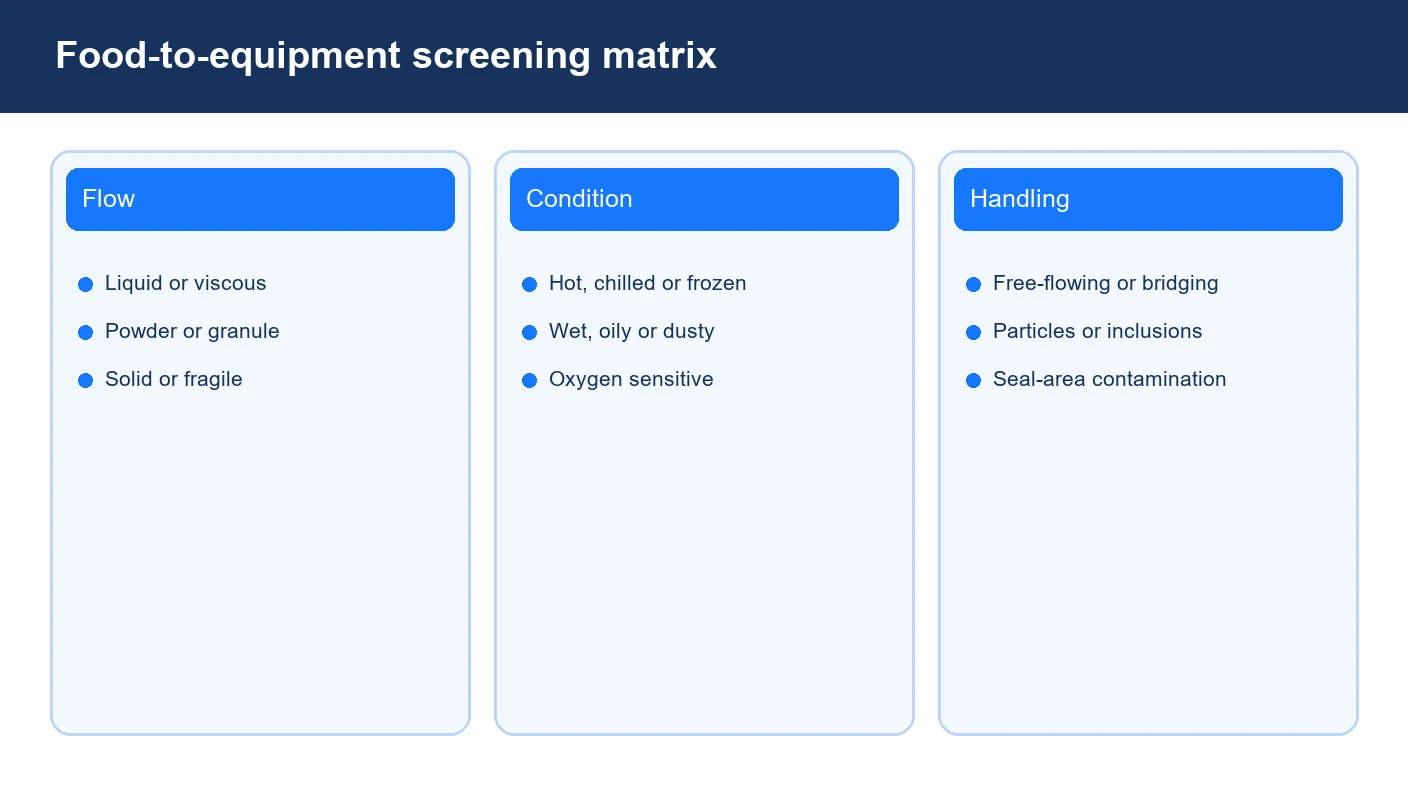
The same package format can require different equipment when the food changes. Flow behavior, particles, moisture, temperature, fragility and contamination risk affect feeding, dosing, sealing and cleaning. A useful equipment brief therefore describes the food at the moment of packaging, including normal variation and difficult operating conditions.
Buyer focus: Use the article as a screening framework. Final equipment suitability must be confirmed with representative product, packaging material and acceptance criteria.
Classify the Product Before Comparing Machines
| Product behavior | Questions to document |
|---|---|
| Liquid or paste | Viscosity range, particles, foaming, fill temperature and drip control |
| 가루 | Bulk density, dust, flowability, aeration and bridging |
| 과립 | Particle size, breakage, segregation and static |
| Solid pieces | Dimensions, orientation, stickiness and fragility |
| Fresh or frozen | Temperature, condensation, free liquid and handling damage |
Evaluate Flow, Dosing and Feeding
A product that changes viscosity with temperature or contains suspended pieces may need a different feeding path from a uniform liquid. Powders can trap air, generate dust or bridge in a hopper. Pieces may require counting, weighing, orientation or gentle transfer. Provide representative samples rather than relying only on a product name.
Account for Temperature, Moisture and Oil
Hot, chilled and frozen products affect contact materials, condensation and seal-area conditions. Free liquid, oil or crumbs can reach the sealing surface and interrupt bond formation. Define the actual product condition and the time between processing and packaging.
Protect Fragile and Irregular Foods
Product drop height, acceleration, compression and infeed control can damage bakery items, produce or irregular portions. Observe the entire route from upstream delivery to the finished package. A fast machine that creates breakage does not deliver useful capacity.
Match the Product With the Package
The package must contain and protect the food through filling, sealing, storage, transport and intended use. Compare formats using the packaging format decision guide. Product compatibility includes contact conditions, geometry, headspace and sealing-surface cleanliness.
Define Cleaning and Cross-Contact Controls
Document which parts contact the product, how they are accessed, the cleaning method and the expected product sequence. Frequent allergen or flavor changes can make disassembly and cleaning time a decisive part of equipment selection.
Test Normal and Worst-Case Conditions
Trials should include the expected product range, not only an ideal sample. Record product temperature, batch condition, packaging-material revision, settings, speed and results. Identify what was not tested and assign it to later qualification rather than assuming equivalence.
Turn Product Data Into a Supplier Brief
Combine the product profile with package dimensions, fill range, output, cleaning requirements and factory conditions. The RFQ checklist shows how to structure this information. Return to the complete equipment selection guide for the remaining decisions.
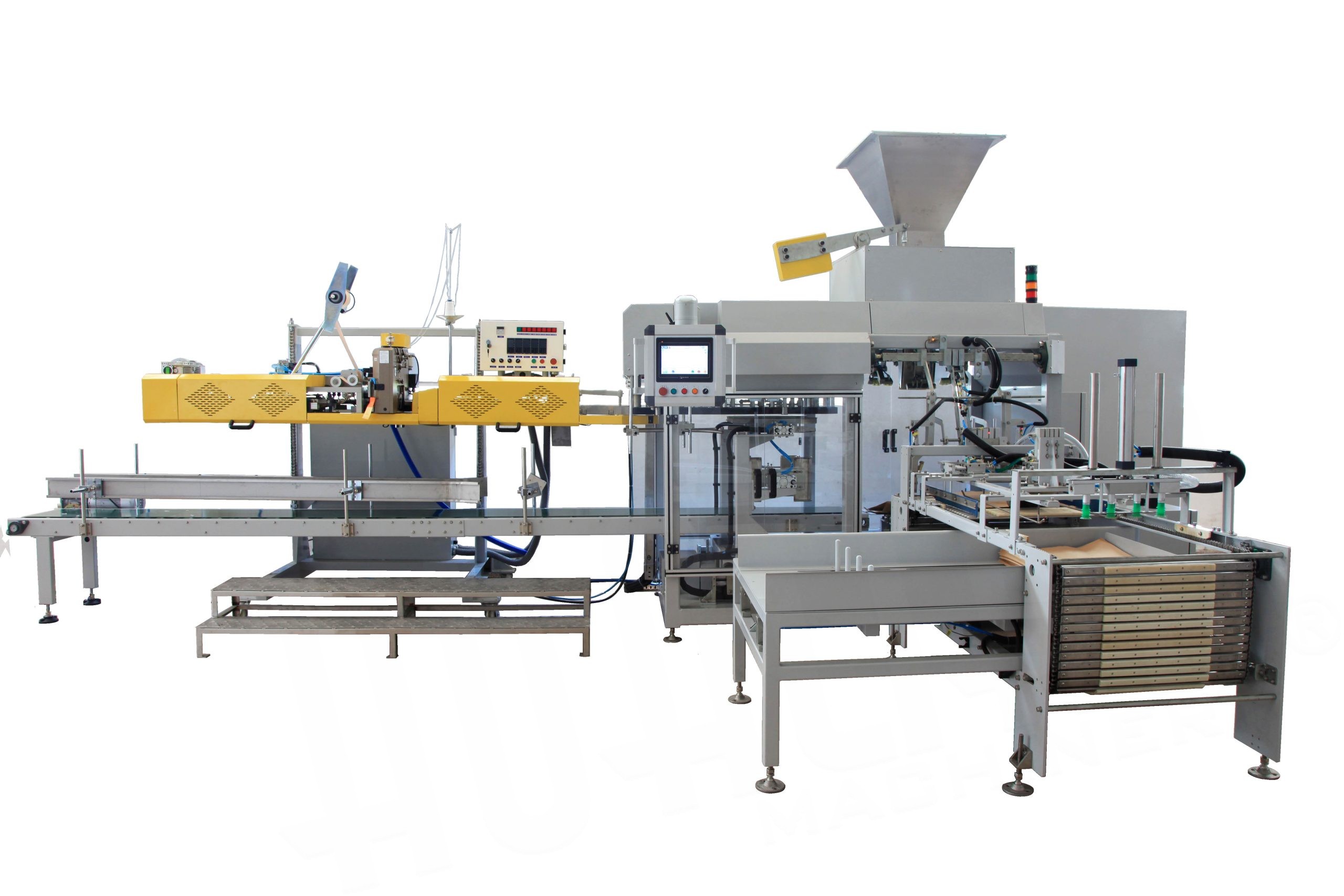
Evidence and standards to verify
Food equipment selection should reflect applicable hygiene and safety requirements. FDA CGMP guidance addresses cleanable food equipment; ISO 12100 provides machinery risk-assessment principles; and PMMI’s 2025 workforce study reports findings from 136 end-user and OEM respondents on skills, embedded guidance, remote support and targeted automation.
Frequently Asked Questions
Is viscosity enough to select a liquid filler?
No. Particles, foaming, temperature, accuracy, cleaning and container handling also affect the choice.
Why should suppliers receive physical product samples?
Samples reveal handling and contamination behavior that a short written description may not capture.
What is a worst-case product for testing?
It is a product condition within the intended operating range that is likely to be difficult to feed, fill, handle or seal.
Why must product temperature be specified?
Temperature can change viscosity, condensation, film behavior, seal contamination and the conditions required for a representative trial.
How should foods with particles be tested?
Use the largest expected particle size and normal product variation, then check dosing consistency, damage, dripping and seal-area contamination.
Can one filler handle liquids, pastes and particulates?
Sometimes, but only within a validated operating range. Pump, valve, nozzle, agitation and cleaning requirements may differ materially.
Discuss a testable packaging requirement with HUALIAN
Send product details, package samples, target output, SKU range and factory conditions. Use the same written requirement when comparing suppliers.
Related Resources
- How to Choose Food Packaging Equipment: A Practical Buyer’s Guide
- Food Packaging Equipment Hygienic Design Checklist
- Food Packaging Machine Factory Acceptance Test Checklist