跳到内容

对于中型食品制造商来说,合适的包装生产线并不是最快或自动化程度最高的选择,而是能够处理您的真实的食品和包装材料、生产所需数量的合格包装、支持您的混合物、适合您的清洁制度并保持团队操作和维护的实用性的系统。.
快速回答: 从需要消除的生产限制开始。在选择设备之前,定义食品、成品包装、所需的可销售产量、配料混合、转换、清洁方法和工厂接口。当需求变化、格式频繁变化或工厂其他部分无法支持连续生产时,独立的自动机器或模块化单元可能比完整的生产线更好。.
公司收入和员工数量并不能定义正确的自动化水平。两个规模相似的食品制造商可能有非常不同的需求。一个可能长时间生产两种稳定的产品,而另一个生产几十个小批量,需要频繁的过敏原清洁和包装更换。第一个可能受益于高度集成的生产线;第二种方法可以通过灵活的模块和精心保留的手动任务创造更多的价值。.
本指南帮助您定义适当的自动化边界,并将其转化为可测试的供应商要求。如果您仍在比较基本设备系列,请开始 食品包装设备采购指南.
根据生产复杂性定义您的操作
“中型”是有用的商业语言,但它不是设备规格。包装线供应商需要的是运营数据,而不是公司类别。从六个指标开始:
- 所需的可销售产量: 每班可接受的包装或箱子,而不仅仅是机器的最大循环速率。.
- 网络复杂度: 食物的数量、份量、包装尺寸、薄膜、托盘、标签、包装盒的形式。.
- 批次模式: 长期活动、短期运行、季节性高峰或频繁的产品发布。.
- 转换和清洁: 产品变更、过敏原控制、工具变更和消毒时间。.
- 劳动力约束: 人员配备、重复性工作、吊装、不一致或培训限制生产的地方。.
- 技术支持: 操作人员、维修技能、备件策略和安装后的响应时间。.
使用这些指标来描述您的自动化准备程度。不要将它们强制纳入一个通用评分。一个工厂可能已经准备好自动化配料和密封,但还没有准备好连接每个上游和下游流程。另一个工厂可能有稳定的初级包装,但由于劳动力约束在生产线的末端,因此需要进行装箱和装箱。.
从食品和成品包装开始
在食品进入包装流程的那一刻就定义食品。仅仅有产品名称是不够的。温度、湿度、油、颗粒、灰尘、粘性、脆性和正常的批次变化会改变食品的进料、分配、转移和密封方式。.
| 产品状况 | 需要记录的问题 |
|---|---|
| 粉末或细颗粒 | 堆密度、灰尘、通风、桥接、静电和密封污染 |
| 颗粒或碎片 | 粒度、破碎、偏析、取向和称重行为 |
| 液体或糊剂 | 粘度范围、颗粒、发泡、滴落和填充温度 |
| 新鲜、冷藏或冷冻食品 | 温度、冷凝、游离液体、操作损坏和受控条件外的时间 |
| 易碎或不规则食物 | 跌落高度、压缩、方向、附着力和可接受的损坏 |
在选择机器之前,还必须定义成品包装。说明您是否需要卷料袋、预制袋、真空袋、托盘、气调托盘、皮肤包装、热成型包装、纸箱或散装袋。提供图纸或样品、材料结构、尺寸、公差、密封表面、编码要求和用于验收成品包装的测试。.
使用 食品特性和设备匹配指南 有代表性的产品和包装样品应随后纳入供应商试验;空机成功运行并不能证明产品处理或包装质量。.
在选择设备之前绘制完整的流程图
绘制从产品供应到装运准备箱或托盘的流程。包括每个手动和自动任务:
产品供应→投料或配料→包装成型或装车→灌装→封箱→打码→检验→装箱→封箱→装箱
对于每个步骤,记录操作员时间、等待、手动转移、拒收、返工、补充、清洁、转换和重复停止。目的是找到真实的生产约束。如果密封缓慢且不一致,首先自动化包装不会增加离开生产线的可接受包装的数量。如果快速装袋机反复等待产品,购买更快的装袋机可以在不增加产量的情况下增加闲置产能。.
同时定义生产线边界。“全自动”可能只包括成型、灌装和密封,而产品装载、检验、装箱或托盘搬运则不在报价范围内。要求每个供应商标记哪些内容进入拟议系统,哪些内容退出拟议系统,以及哪些任务仍然需要操作员。.
选择符合约束的自动化范围
您通常可以考虑四种路径:独立的自动化机器,自动化单元,完整的集成生产线或分阶段自动化。.
| 自动化路径 | 在以下情况下选择 | 检查的主要风险 |
|---|---|---|
| 独立式自动机 | 一个操作是明确的约束和手动加载或卸载仍然是可行的。. | 操作员切换或相邻机器可能成为下一个瓶颈。. |
| 自动化包装单元 | 几个相关的操作应该一起运行,如配料,装袋和密封。. | 必须定义与保留的手动或自动过程的接口。. |
| 完整的集成生产线 | 需求、产品和包装都足够稳定,以证明协调的连续生产是合理的。. | 集成、恢复、维护和转换的复杂性会抵消劳动力的好处。. |
| 分阶段自动化 | 该业务正在增长,但需求、形式或资本时机仍不确定。. | 早期的设备必须包括可用的机械、电气和控制设备,以便扩展。. |
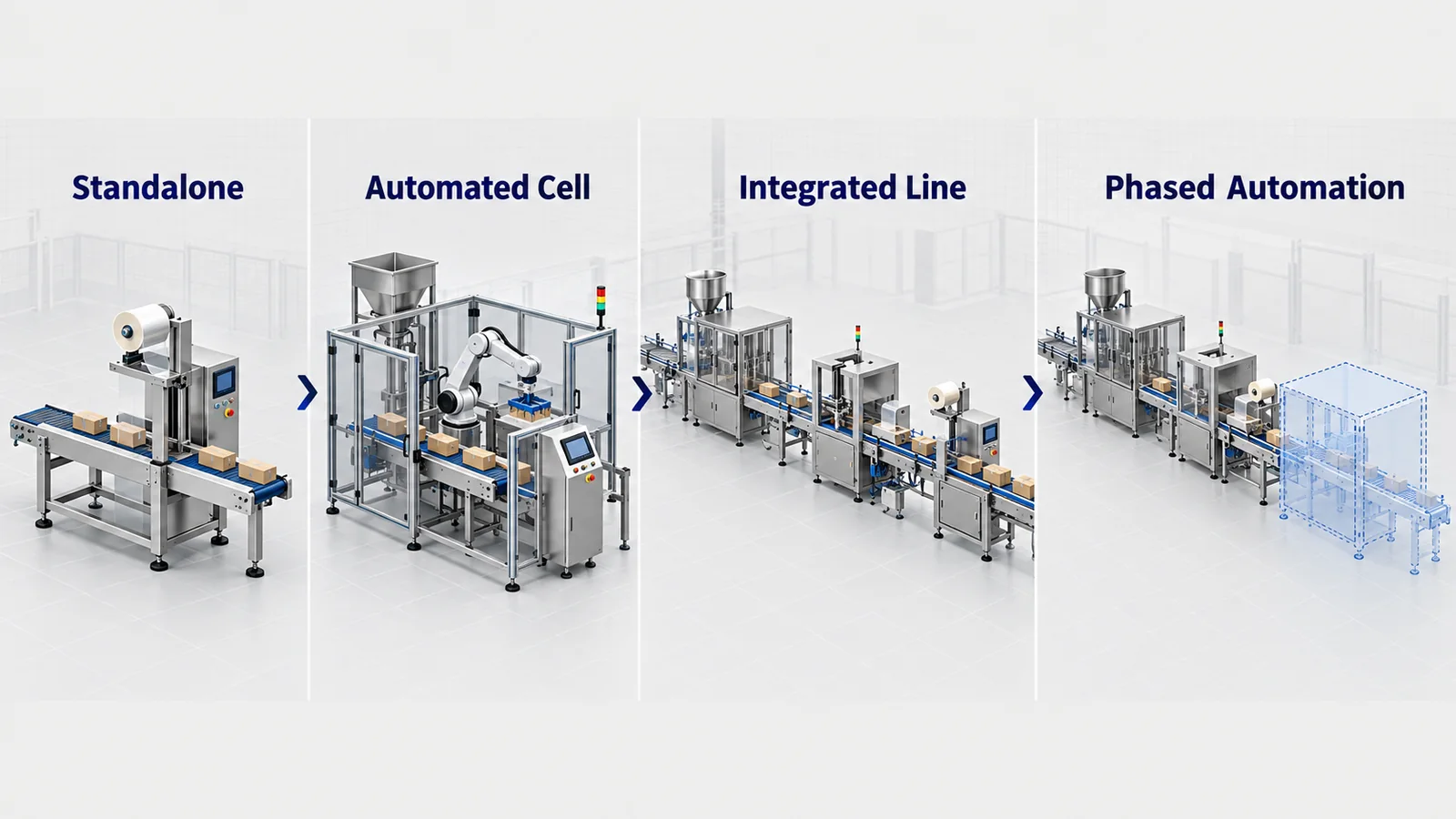
分阶段自动化通常适用于中型制造商,但只有在考虑到未来生产线的情况下才适用。工作高度、输送机方向、控制装置、防护装置、公用设施和占地面积会使后续集成变得容易或昂贵。 包装线解决方案 作为设备如何被视为更广泛过程的一部分而不是孤立机器的示例。.
指定可销售产量,而不是宣传册速度
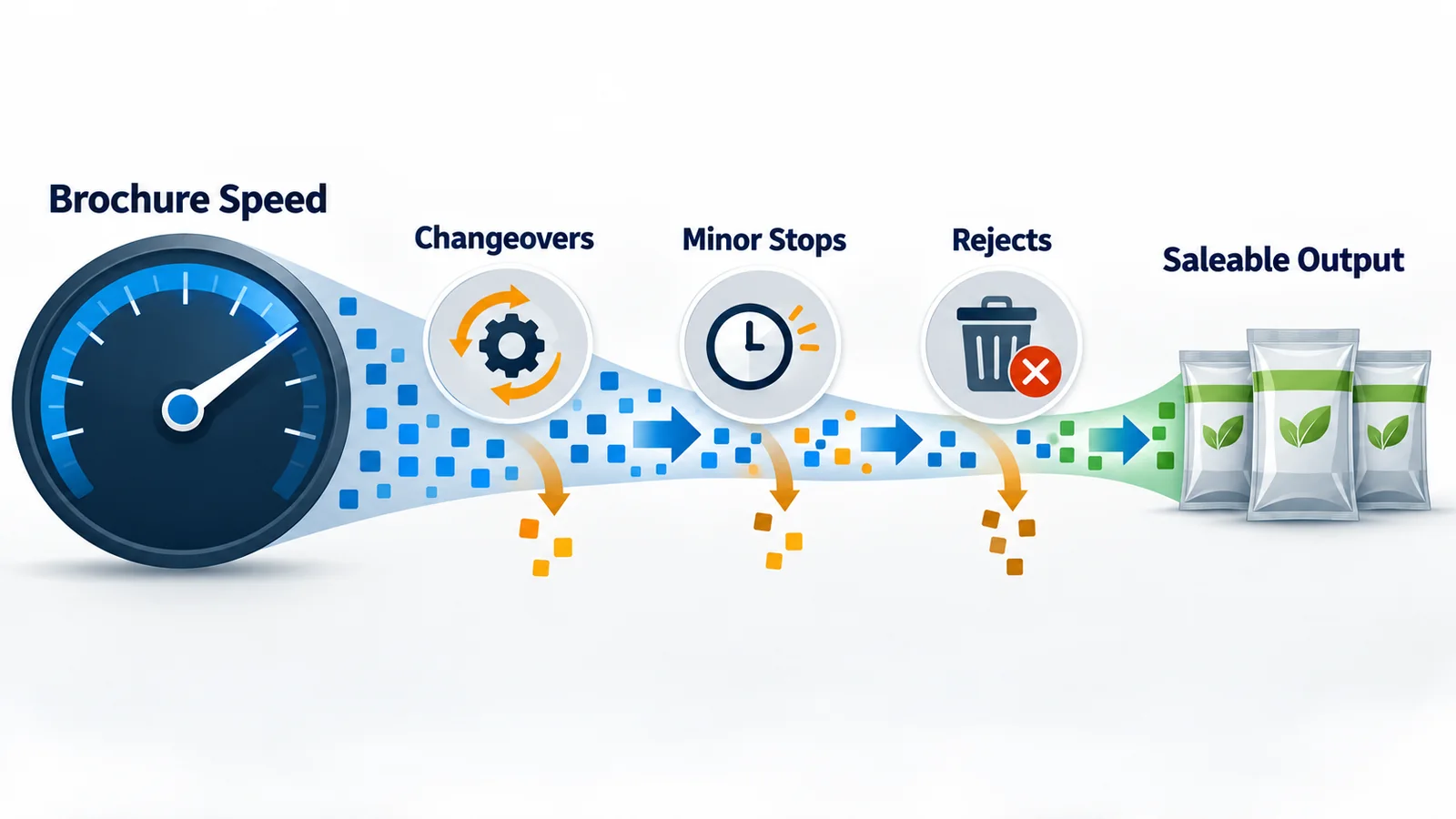
机器速度只有在其基础明确时才有意义。目录可能会显示在规定条件下的每分钟循环次数。您的业务需要在可用班次内获得合格的成品包装。产品供应、手动装载、换膜、清洁、转换、小停机、拒收和下游阻塞都会降低您的产量。.
在请求提案之前准备以下信息:
- 按车间和班次列出的所需可接受包装或箱
- 计划休息和卫生后几分钟内可生产
- 批量和转换次数
- 当前和预测需求
- 可接受的产品赠品、拒收品和包装缺陷
- 上游供应率和下游处理能力
- 合格包装的定义和测量方法
询问供应商哪些产品、材料、人员配备、测试持续时间和干预规则支持其提议的费率。 食品包装机生产能力计算 将需求转换为可比需求,并确定受约束的阶段。.
为每个客户构建产品和包装矩阵
一个运行一种理想产品的系统并不能证明它可以支持您的生产计划。为所有新产品SKU创建一个矩阵,并确定困难的极端:最小和最大的包装,最低和最高的填充,最脆弱的产品,最多灰尘的粉末,最苛刻的薄膜,最深的托盘或需要最长时间清洁的产品。.
对于每个产品包装组合,记录:
- 产品状态和灌装范围
- 包装尺寸和材料
- 所需工具和变更部件
- 存储配方或手动设置
- 密封、编码、标签和检验要求
- 清洁和交叉接触控制
- Expected batch length and target output
Then examine the changeover itself. Ask which guide rails, formers, molds, belts, nozzles, hoppers or recipes must change; which tasks require tools; how parts are identified and stored; and how the first acceptable pack is approved. A lower peak speed may be more productive when it enables faster, repeatable changeovers across short batches.
把卫生清洁作为生产要求
A stainless-steel exterior does not by itself prove that equipment is suitable for your cleaning task. Identify product-contact, splash and non-product zones. Review access, removable parts, joints, fasteners, hollow sections, cable routes, drainage and areas where food or cleaning liquid can collect.
Describe whether your process uses dry cleaning, wiping, foam cleaning or washdown, which chemicals are used and how often the machine must be disassembled. Frequent cleaning reduces available production time, so accessibility and restart checks affect both food-safety control and capacity.
In the United States, FDA requirements under 21 CFR 117.40 address equipment construction and cleanability for food operations; the exact requirements for your facility and market must be determined by qualified food-safety and engineering personnel. Review the FDA guidance referencing food-equipment CGMP requirements and use HUALIAN’s food packaging equipment hygienic-design checklist to structure a supplier review.
冻结布局之前规划工厂界面
An automatic machine can perform well in isolation and still fail to deliver useful line output when transfers and interfaces are unstable. Record the product entry condition, pack orientation, working heights, conveyor speeds, required accumulation, reject route and response when an upstream or downstream machine stops.
Your layout should show:
- Available length, width and height
- Columns, doors, drains, walls and access routes
- Operator, cleaning and maintenance space
- Raw-material, packaging-material and finished-goods movement
- Electrical supply, compressed air, vacuum, gases, extraction, water and network access
- Line direction, working height and upstream or downstream connections
- Space and interfaces reserved for future equipment
When several suppliers are involved, assign ownership for mechanical interfaces, controls, safety zones, software signals and complete-line testing. If the line fails to reach the agreed output, the contract should make it possible to identify who records the issue, who leads diagnosis and how corrective work is verified.
检查您的团队是否支持自动化
Automation can remove repetitive loading, sealing, handling or palletizing tasks, but it also changes the work. Operators may need to replenish materials, select recipes, perform quality checks, recover from alarms and verify changeovers. Maintenance teams may need to support sensors, drives, pneumatics, controls and connected-machine signals.
Ask each supplier to explain:
- The normal number and role of operators
- Daily, weekly and scheduled maintenance tasks
- Operator and maintenance training
- Alarm history, diagnostics and backup procedures
- Recommended critical and wear parts
- Remote and on-site support scope
- Expected response and spare-parts delivery arrangements for your location
Do not assume that “fully automatic” means unattended. Product and material replenishment, cleaning, quality release, format changes and technical intervention still need named owners.
比较总成本,而不仅仅是购买价格
Build the business case from your current losses and the proposed operating model. Direct labor may be important, but it is only one input. Include product giveaway, packaging-material waste, rework, rejected packs, overtime, unplanned stops, cleaning, changeovers, injuries or ergonomic risks and outsourced packing where applicable.
The investment scope may include the main machine, tooling, conveyors, accumulation, inspection, coding, guarding, utilities, installation, commissioning, training, spare parts and planned production interruption. Operating costs may include labor, film or containers, energy, cleaning, maintenance, wear parts and downtime.
Count additional capacity as a financial benefit only when demand, upstream production and downstream logistics can use it. A faster packaging line does not create value if the food process cannot supply it or the market cannot absorb the extra output.
将需求转化为可比的供应商建议书
Send each shortlisted supplier the same controlled requirement. Avoid asking only for “an automatic food packaging line.” Use the food packaging machine RFQ checklist to document the product, package, output, formats, utilities, hygiene, services and acceptance basis.
Compare proposals using the same dimensions:
| Decision area | Evidence to request |
|---|---|
| Product and package fit | Trial plan and results using representative products and materials |
| Saleable output | Defined test duration, accepted packs, rejects, stops and operator interventions |
| Formats and changeover | Tooling list, change sequence, required tools and first-pack approval |
| Hygiene and cleaning | Zone review, materials, access, disassembly and cleaning procedure |
| 一体化 | Layout, interface schedule, signal list, line response and ownership |
| 安全 | Applicable design basis, risk assessment and agreed protective measures |
| Serviceability | Maintenance plan, parts list, diagnostics, training and service scope |
| Commercial scope | Included modules, exclusions, delivery basis, services and warranty terms |
Machinery safety should be addressed through a risk-based process appropriate to the supplied system and destination. ISO 12100 describes general principles for machinery risk assessment and risk reduction; buyers and suppliers still need to determine the standards and legal requirements that apply to the actual project.
发货前检查所选行
Agree the factory acceptance test before the purchase order or design freeze, not after the machine is complete. The protocol should state the machine configuration, products, packaging materials, formats, test duration, permitted interventions, required output, package-quality checks and handling of open items.
Measure acceptable finished packs rather than reporting only cycles. Test normal start and stop, agreed alarm and recovery conditions, reject handling, recipes, guards, changeovers and cleaning access. Record settings, stops, rejects and interventions so results can be reproduced.
使用 food packaging machine FAT checklist to build the protocol. Keep site-dependent utilities, final interfaces and operator performance in a separate site acceptance plan rather than treating the factory test as proof of every site condition.
当全自动生产线是错误的选择
A complete line may be the wrong first investment when:
- Your food or package is still changing frequently.
- Demand is uncertain or strongly seasonal.
- You run many short batches with long cleaning requirements.
- One isolated operation is the dominant constraint.
- Upstream production cannot supply a stable flow.
- The factory lacks the maintenance resources to recover a connected line.
- Product and packaging materials have not been tested together.
- The financial case depends only on theoretical labor removal or peak speed.
In these conditions, choose a simpler machine, a modular cell or a phased plan when it can meet the required output with less integration risk. Preserve expansion options, but do not pay for complexity that your current products, demand and support structure cannot use.
一个实用的八步选择过程
- Define the food and finished package. Include real operating variation and acceptance methods.
- Map the complete current process. Record labor, losses, cleaning, transfers and recurring stops.
- Identify the real constraint. Separate capacity, quality, labor, safety and traceability problems.
- Build the product-package matrix. Include all required formats and difficult extremes.
- Specify saleable output. Use acceptable packs under representative production conditions.
- Choose the automation boundary. Compare a machine, cell, complete line and phased plan.
- Compare equivalent proposals. Align scope, tooling, interfaces, services and lifecycle assumptions.
- Validate the solution. Agree trials, FAT, site checks and unresolved-item closure before commissioning.
征求建议书前应准备的信息
- Food type, condition, temperature and handling risks
- Fill or portion range
- Package format, drawings, dimensions and material samples
- SKU list, batch sizes and change frequency
- Current and future acceptable output
- Cleaning method and cross-contact requirements
- Required coding, labeling, inspection and rejection
- Available layout and access route
- Electrical, air, vacuum, gas, water, extraction and network information
- 上游和下游设备
- Operator and maintenance resources
- Required trial and acceptance criteria
Plan a right-sized food packaging line
Send your food details, package samples, SKU range, current output, target output and available floor plan. HUALIAN can review the information with you and discuss an appropriate equipment path and the tests needed before selection.
常见问题
中型食品制造商的最佳包装线是什么?
There is no universal best line. The appropriate system depends on the food, finished package, saleable-output requirement, SKU mix, cleaning, factory interfaces, labor constraint and technical support available. Choose the simplest automation scope that can meet the written requirement with acceptable risk and room for planned growth.
食品制造商何时应该从半自动包装转向全自动包装?
Consider greater automation when demand and product formats are stable, repeated manual tasks create a measurable constraint, upstream and downstream processes can support continuous flow, and the plant can operate and maintain the integrated equipment. Frequent changes, unstable demand or limited technical support may favor semi-automatic or modular equipment.
您是否应该一次性实现整个包装线的自动化?
Not necessarily. Automate the dominant constraint first when one operation limits output or quality. A complete line is more appropriate when several connected operations must be coordinated and the complete production system is ready. If you automate in phases, define future interfaces before buying the first machine.
包装生产线的生产能力应如何计算?
Calculate the acceptable finished packs required over available production time. Include cleaning, changeovers, minor stops, rejects, replenishment and upstream or downstream constraints. Ask suppliers to demonstrate sustained saleable output with representative products and materials rather than quoting only maximum cycles.
一条自动包装线可以处理多种食品和包装尺寸吗?
It may handle a defined range, but every product-package combination creates requirements for feeding, tooling, recipes, sealing, inspection and cleaning. Build a matrix, identify the difficult extremes and test the contracted formats. Do not assume an untested combination is equivalent.
你如何比较两种包装线的报价?
Use the same product and package matrix, output definition, line boundary, factory conditions and acceptance criteria. Compare included modules, tooling, interfaces, staffing, services, documentation, spare parts and lifecycle assumptions. A lower quotation may exclude essential equipment or integration work.
包装生产线工厂验收测试应证明什么?
It should verify the ordered scope, agreed formats, sustained acceptable output, package quality, controls, safety functions, fault recovery, changeover, cleaning access and documentation under a written protocol. Site utilities and final connected-machine performance may require separate site acceptance tests.
结论
Choose an automated food packaging line from the operating requirement outward. Define your food and package, measure the real constraint, specify saleable output, account for SKU changes and cleaning, and decide which automation boundary your plant can support. Then compare suppliers using representative trials and measurable acceptance criteria.
For many mid-sized manufacturers, the strongest investment is not the most complex line. It is a right-sized system that produces acceptable packages consistently, can be maintained by the available team and can expand when demand and process stability justify the next stage.