콘텐츠로 건너뛰기

중간 규모의 식품 제조업체의 경우 올바른 포장 라인은 자동으로 가장 빠르거나 자동화 된 옵션이 아닙니다. 실제 식품 및 포장 재료를 처리하고, 필요한 수의 수용 가능한 팩을 생산하고, SKU 믹스를 지원하고, 청소 체제에 적합하며, 팀이 운영하고 유지 보수하는 데 실용적으로 남아 있습니다.
빠른 답변: 제거해야 하는 생산 제한조건부터 시작하십시오. 장비를 선택하기 전에 식품, 완성된 패키지, 필요한 판매 가능한 출력, SKU 믹스, 교체, 세척 방법 및 공장 인터페이스를 정의하십시오. 독립형 자동 기계 또는 모듈식 셀은 수요가 가변적이거나 형식이 자주 변경되거나 공장의 나머지 부분에서 지속적인 생산을 지원할 수 없는 경우에는 전체 라인보다 더 나은 투자가 될 수 있습니다.
회사 수익 및 사원 수는 자동화의 정확한 레벨을 정의하지 않습니다. 크기가 비슷한 두 식품 제조업체의 수요가 매우 다를 수 있습니다. 한 제조업체는 장기간 교대를 위해 두 개의 안정적인 제품을 실행할 수 있으며, 다른 하나는 알레르기 항원 청소 및 포장을 자주 변경해야 하는 수십 개의 짧은 배치를 생산할 수 있습니다. 첫 번째는 고도로 통합된 라인의 혜택을 누릴 수 있습니다. 두 번째는 유연한 모듈과 신중하게 유지된 수동 작업으로 더 많은 가치를 창출 할 수 있습니다.
이 설명서에서는 적절한 자동화 경계를 정의하고 이를 테스트 가능한 공급자 요구사항으로 전환하는 데 도움이 됩니다. 기본 장비 제품군을 비교하는 경우 다음과 같이 시작합니다. Food Packaging Equipment Buyer's Guide(식품포장장비 구매자 가이드).
프로덕션 복잡성에 따라 운영 정의Define your operation by production complexity
“중간 규모는 유용한 업무 언어이지만 장비 사양은 아닙니다. 패키지 라인 공급자는 회사 범주가 아닌 운영 데이터를 필요로 합니다. 다음 여섯 가지 지표로 시작합니다.
- 필요한 판매 가능 출력: 수용 가능한 팩 또는 교대 당 케이스, 기계의 최대 사이클 속도뿐만 아니라.
- SKU 복잡성: 음식, 부분, 패키지 크기, 필름, 트레이, 라벨 및 케이스 형식의 수.
- 배치 패턴: 긴 캠페인, 짧은 실행, 계절 피크 또는 자주 제품 출시.
- Changeover 및 청소: 제품 변경, 알레르겐 컨트롤, 도구 변경 및 위생 시간.
- 노무 제약조건: 직원 배치, 반복적인 작업, 리프팅, 불일치 또는 훈련이 생산을 제한하는 곳.
- 기술 지원: 운영자, 유지보수 기술, 예비 부품 전략 및 설치 후 사용 가능한 응답 시간.
이러한 지표를 사용하여 자동화 준비 상태를 설명합니다. 하나의 보편적 점수로 강제하지 마십시오. 공장은 투약 및 씰링을 자동화할 준비가 되어 있지만 모든 업스트림 및 다운스트림 프로세스를 연결할 준비는 되어 있지 않을 수 있습니다. 또 다른 공장은 안정적인 기본 포장을 가지고 있지만 작업 제약이 라인의 끝에 있기 때문에 케이스 처리와 팔레타이징이 필요합니다.
음식 및 완성된 패키지로 시작하기
포장 과정에 들어가는 순간 음식을 정의하십시오. 제품 이름만으로는 충분하지 않습니다. 온도, 습기, 기름, 입자, 먼지, 끈적거림, 취약성 및 정상적인 배치 변화는 음식의 공급, 부분, 이송 및 밀봉 방식을 바꿀 수 있습니다.
| 제품 상태 | 문서화할 질문 |
|---|---|
| 분말 또는 미세 입자 | Bulk density, dust, aeration, bridge, static 및 seal 오염 |
| Granules 또는 Pieces | 입자 크기, 파손, 분리, 방향 및 무게 동작 |
| 액체 또는 페이스트 | 점도 범위, 입자, 거품, 물방울 및 충전 온도 |
| 신선한, 냉장 또는 냉동 식품 | 온도, 응축, 자유 액체, 취급 손상 및 통제 조건 밖의 시간 |
| 깨지기 쉽거나 불규칙한 음식 | 낙하 높이, 압축, 방향, 접착 및 허용 가능한 손상 |
기계를 선택하기 전에 완성된 패키지도 정의해야 합니다. 롤스톡 백, 미리 만들어진 파우치, 진공 봉지, 트레이, 수정된 대기 트레이, 스킨 팩, 열형 팩, 상자 또는 벌크 백이 필요한지 여부를 명시하십시오. 도면이나 샘플, 재료 구조, 치수, 공차, 씰 표면, 코딩 요구 사항 및 완성된 팩을 수락하는 데 사용되는 테스트를 제공합니다.
사용 Food-Characteristics and Equipment Matching Guide (식품특성 및 장비 매칭 가이드) 어려운 제품 조건을 문서화하기 위해 대표적인 제품과 포장 샘플은 나중에 공급자 시험에 포함되어야 합니다. 성공적인 비어있는 기계 실행은 제품 처리 또는 패키지 품질을 증명하지 않습니다.
장비를 선택하기 전에 전체 프로세스 매핑
제품 공급에서 출하 준비 케이스 또는 팔레트로 프로세스를 그립니다. 모든 수동 및 자동 태스크가 포함됩니다.
제품 공급 → 공급 또는 투약 → 포장 성형 또는 적재 → 채우기 → 밀봉 → 코딩 → 검사 → 케이스 포장 → 케이스 밀봉 → 팔레타이징
각 단계에 대해 작업자 시간, 대기, 수동 이전, 거부, 재작업, 보충, 청소, 변경 및 반복 중지를 기록합니다. 이 목적은 실제 생산 제약을 찾는 것입니다. 밀봉이 느리고 일관성이 없는 경우 먼저 팔레타이징을 자동화하면 라인에서 허용 가능한 패키지 수가 증가하지 않습니다. 빠른 배거가 반복적으로 제품을 기다리는 경우더 빠른 베이거를 구입하면 출력을 늘리지 않고도 유휴 용량을 늘릴 수 있습니다.
라인 경계도 정의합니다. “완전 자동”은 폼, 충전 및 씰링만 포함할 수 있으며 제품 적재, 검사, 케이스 포장 또는 팔레트 처리는 견적 외부에 남아 있습니다. 제안된 시스템에 들어가는 항목, 종료 항목 및 운영자가 필요한 태스크를 각 공급자에게 표시하도록 요청합니다.
제약조건에 맞는 자동화 범위 선택
일반적으로 독립형 자동 기계, 자동 셀, 완전한 통합 라인 또는 단계적 자동화의 네 가지 경로를 고려할 수 있습니다.어느 것도 보편적으로 더 나은 것은 없습니다.
| 자동화 경로 | 언제 선택하세요 | 확인할 주요 위험 |
|---|---|---|
| 독립형 자동 기계 | 한 가지 작업은 명확한 제약이며 수동 적재 또는 방전은 여전히 실용적입니다. | 오퍼레이터 핸드오프 또는 이웃 머신이 다음 병목 현상이 될 수 있습니다. |
| 자동화된 패키징셀(Automated Packaging Cell) | 투약, 포장 및 밀봉과 같은 여러 관련 작업이 함께 실행되어야합니다. | 유지된 수동 또는 자동 프로세스와의 인터페이스를 정의해야 합니다. |
| 완전한 통합 라인 | 수요, 제품 및 패키지는 조정된 지속적인 생산을 정당화할 수 있을 만큼 충분히 안정적입니다. | 통합, 복구, 유지보수 및 전환의 복잡성은 노동 이익을 상쇄시킬 수 있습니다. |
| 단계적 자동화(Phase Automation) | 비즈니스는 성장하고 있지만 수요, 형식 또는 자본 타이밍은 여전히 불확실합니다. | 초기 장비에는 확장을위한 사용 가능한 기계적, 전기적 및 제어 조항이 포함되어야합니다. |
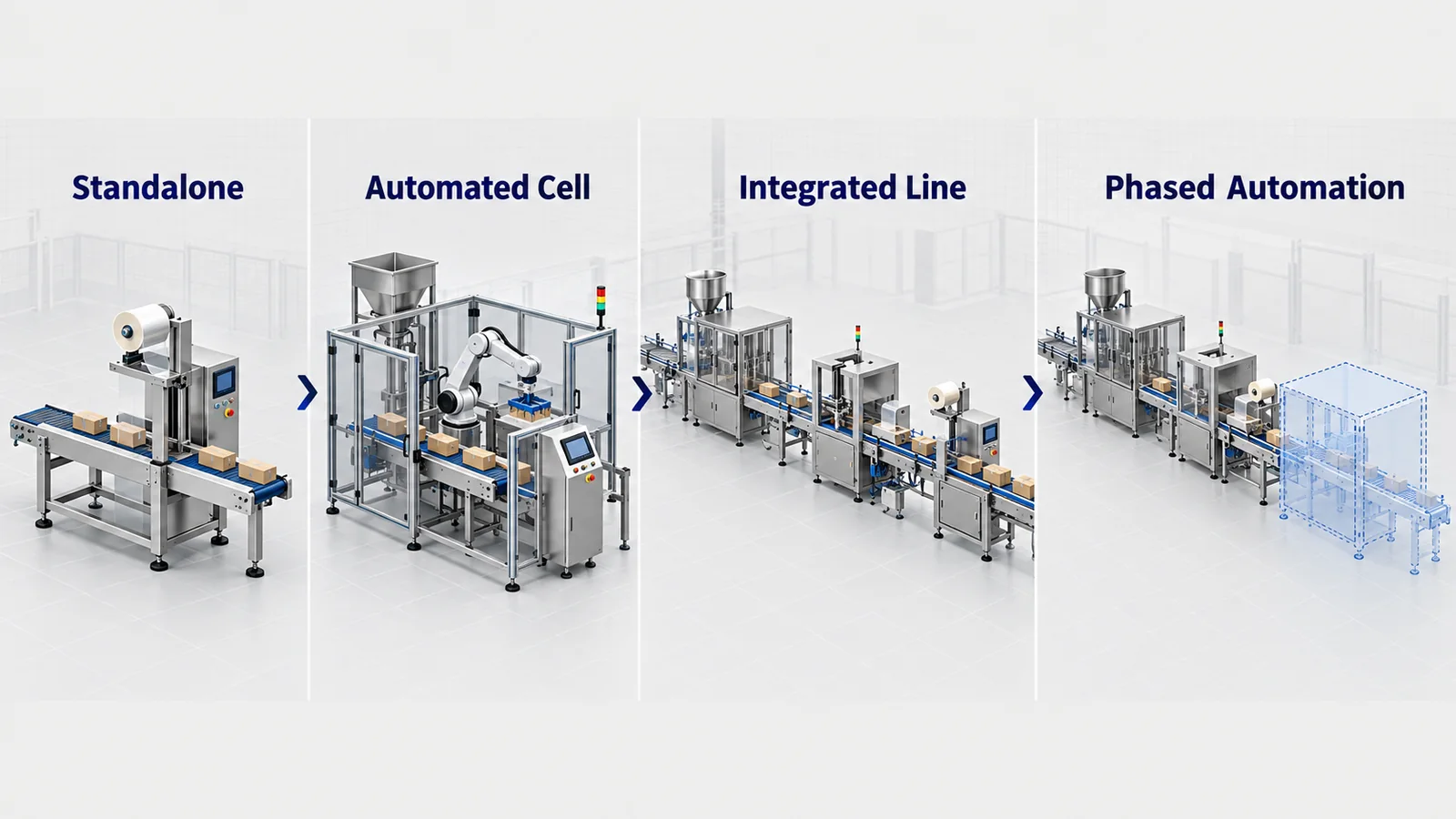
단계적 자동화는 중간 규모의 제조업체에게는 종종 실용적이지만 미래의 라인이 고려되는 경우에만 가능합니다.작업 높이, 컨베이어 방향, 컨트롤, 경비, 유틸리티 및 바닥 공간은 나중에 통합을 쉽거나 비싸게 만들 수 있습니다.HUALIAN의 패키지 라인 솔루션 장비를 격리된 기계가 아니라 더 넓은 공정의 일부로 간주할 수 있는 방법에 대한 예입니다.
브로셔 속도가 아닌 판매 가능한 출력 지정
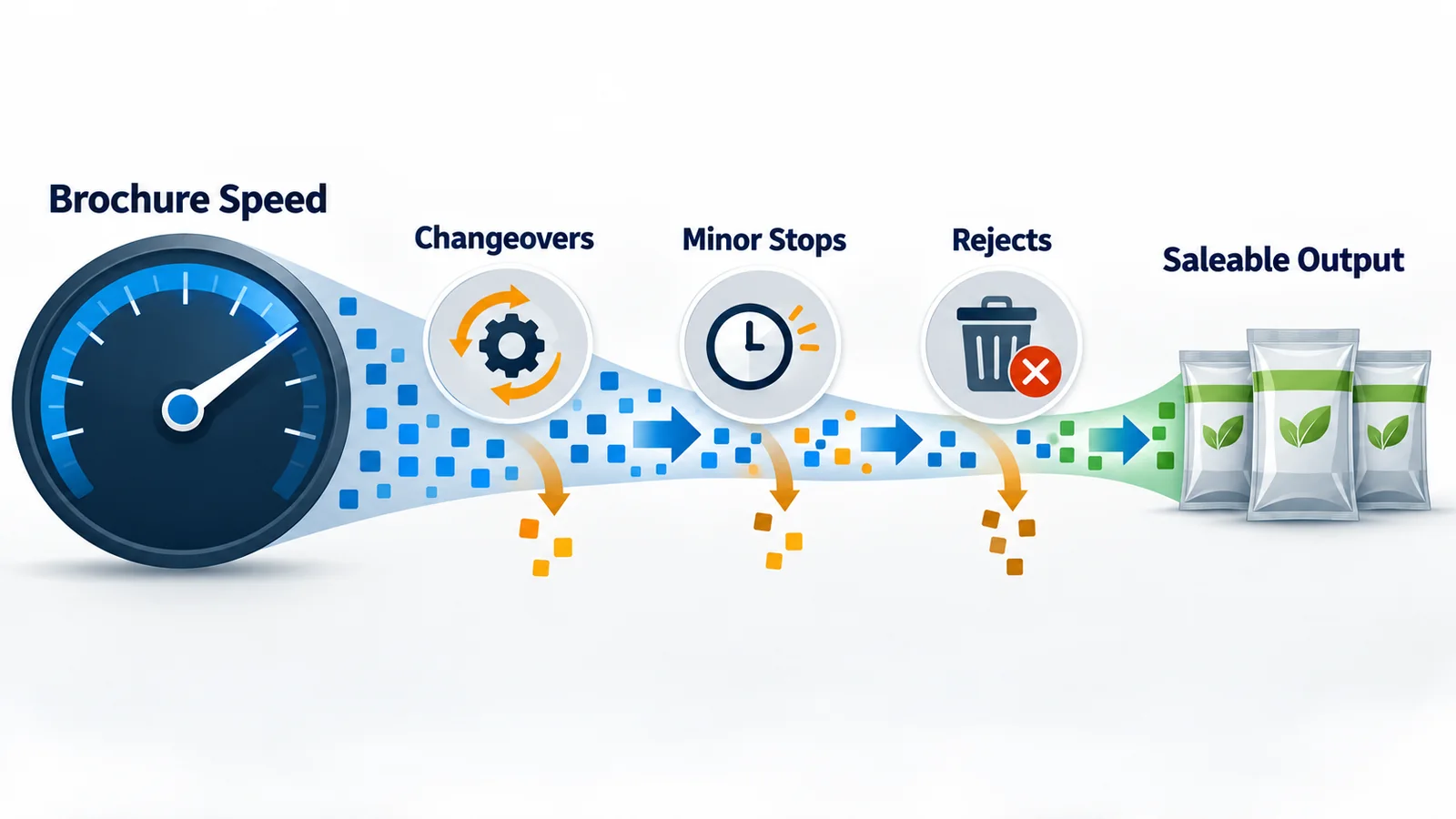
기계 속도는 기본이 명확한 경우에만 의미가 있습니다. 카탈로그에는 정의된 조건에서 분당 사이클이 표시될 수 있습니다. 사용 가능한 교대 시간 동안 허용 가능한 완료 팩이 필요합니다. 제품 공급, 수동 적재, 필름 변경, 청소, 교체, 사소한 중지, 거부 및 다운스트림 차단 모두 판매 가능한 출력이 감소합니다.
제안서를 요청하기 전에 다음 정보를 준비하십시오.
- SKU 및 작업교대별 필요한 수락 가능한 팩 또는 케이스
- 계획된 휴식 시간과 위생 시간 후 생산 가능 분
- 배치 크기 및 변경 수
- 현재 및 예측 수요
- 허용 가능한 제품 선물, 거부 및 패키지 결함
- 업스트림 공급 비율 및 다운스트림 처리 능력
- 허용 가능한 팩에 대한 정의 및 측정 방법
공급자에게 제안된 비율을 지원하는 제품, 자재, 인력, 테스트 기간 및 개입 규칙을 물어보십시오. 식품 포장 기계 용량 계산 수요를 비교할 수 있는 요구사항으로 변환하고 제한된 단계를 식별합니다.
모든 SKU에 대한 제품 및 패키지 매트릭스 구축Build a Product and Package Matrix for Every SKU
하나의 이상적인 제품을 실행하는 시스템은 생산 일정을 지원할 수 있다는 것을 증명하지 못합니다. 모든 출시 SKU에 대한 매트릭스를 만들고 가장 작고 가장 큰 팩, 가장 낮고 높은 채우기, 가장 취약한 제품, 먼지가 많은 파우더, 가장 까다로운 필름, 가장 깊은 트레이 또는 가장 긴 청소 요구 사항을 가진 제품을 식별하십시오.
각 제품-패키지 조합에 대해 다음을 기록합니다.
- 제품 상태 및 채우기 범위
- 패키지 치수 및 재질
- 필요한 도구 및 부품 교체
- 저장된 배합식 또는 수동 설정
- 씰, 코드, 라벨 및 검사 요구 사항
- 청소 및 교차 접촉 컨트롤
- 예상 배치 길이 및 대상 출력
Then examine the changeover itself. Ask which guide rails, formers, molds, belts, nozzles, hoppers or recipes must change; which tasks require tools; how parts are identified and stored; and how the first acceptable pack is approved. A lower peak speed may be more productive when it enables faster, repeatable changeovers across short batches.
위생 및 청소를 생산 요구 사항으로 취급하다.
A stainless-steel exterior does not by itself prove that equipment is suitable for your cleaning task. Identify product-contact, splash and non-product zones. Review access, removable parts, joints, fasteners, hollow sections, cable routes, drainage and areas where food or cleaning liquid can collect.
Describe whether your process uses dry cleaning, wiping, foam cleaning or washdown, which chemicals are used and how often the machine must be disassembled. Frequent cleaning reduces available production time, so accessibility and restart checks affect both food-safety control and capacity.
In the United States, FDA requirements under 21 CFR 117.40 address equipment construction and cleanability for food operations; the exact requirements for your facility and market must be determined by qualified food-safety and engineering personnel. Review the FDA guidance referencing food-equipment CGMP requirements and use HUALIAN’s food packaging equipment hygienic-design checklist to structure a supplier review.
레이아웃을 동결하기 전에 팩토리 인터페이스 계획
An automatic machine can perform well in isolation and still fail to deliver useful line output when transfers and interfaces are unstable. Record the product entry condition, pack orientation, working heights, conveyor speeds, required accumulation, reject route and response when an upstream or downstream machine stops.
Your layout should show:
- Available length, width and height
- Columns, doors, drains, walls and access routes
- Operator, cleaning and maintenance space
- Raw-material, packaging-material and finished-goods movement
- Electrical supply, compressed air, vacuum, gases, extraction, water and network access
- Line direction, working height and upstream or downstream connections
- Space and interfaces reserved for future equipment
When several suppliers are involved, assign ownership for mechanical interfaces, controls, safety zones, software signals and complete-line testing. If the line fails to reach the agreed output, the contract should make it possible to identify who records the issue, who leads diagnosis and how corrective work is verified.
팀이 자동화를 지원할 수 있는지 확인합니다.Check whether your team can support the Automation.
Automation can remove repetitive loading, sealing, handling or palletizing tasks, but it also changes the work. Operators may need to replenish materials, select recipes, perform quality checks, recover from alarms and verify changeovers. Maintenance teams may need to support sensors, drives, pneumatics, controls and connected-machine signals.
Ask each supplier to explain:
- The normal number and role of operators
- Daily, weekly and scheduled maintenance tasks
- Operator and maintenance training
- Alarm history, diagnostics and backup procedures
- Recommended critical and wear parts
- Remote and on-site support scope
- Expected response and spare-parts delivery arrangements for your location
Do not assume that “fully automatic” means unattended. Product and material replenishment, cleaning, quality release, format changes and technical intervention still need named owners.
가격만 비교하지 않고 총 비용을 비교하십시오.
Build the business case from your current losses and the proposed operating model. Direct labor may be important, but it is only one input. Include product giveaway, packaging-material waste, rework, rejected packs, overtime, unplanned stops, cleaning, changeovers, injuries or ergonomic risks and outsourced packing where applicable.
The investment scope may include the main machine, tooling, conveyors, accumulation, inspection, coding, guarding, utilities, installation, commissioning, training, spare parts and planned production interruption. Operating costs may include labor, film or containers, energy, cleaning, maintenance, wear parts and downtime.
Count additional capacity as a financial benefit only when demand, upstream production and downstream logistics can use it. A faster packaging line does not create value if the food process cannot supply it or the market cannot absorb the extra output.
요구사항을 비교 가능한 공급자 제안으로 전환
Send each shortlisted supplier the same controlled requirement. Avoid asking only for “an automatic food packaging line.” Use the food packaging machine RFQ checklist to document the product, package, output, formats, utilities, hygiene, services and acceptance basis.
Compare proposals using the same dimensions:
| Decision area | Evidence to request |
|---|---|
| Product and package fit | Trial plan and results using representative products and materials |
| Saleable output | Defined test duration, accepted packs, rejects, stops and operator interventions |
| Formats and changeover | Tooling list, change sequence, required tools and first-pack approval |
| Hygiene and cleaning | Zone review, materials, access, disassembly and cleaning procedure |
| 완성 | Layout, interface schedule, signal list, line response and ownership |
| 안전 | Applicable design basis, risk assessment and agreed protective measures |
| Serviceability | Maintenance plan, parts list, diagnostics, training and service scope |
| Commercial scope | Included modules, exclusions, delivery basis, services and warranty terms |
Machinery safety should be addressed through a risk-based process appropriate to the supplied system and destination. ISO 12100 describes general principles for machinery risk assessment and risk reduction; buyers and suppliers still need to determine the standards and legal requirements that apply to the actual project.
선적 전에 선택한 라인 검증
Agree the factory acceptance test before the purchase order or design freeze, not after the machine is complete. The protocol should state the machine configuration, products, packaging materials, formats, test duration, permitted interventions, required output, package-quality checks and handling of open items.
Measure acceptable finished packs rather than reporting only cycles. Test normal start and stop, agreed alarm and recovery conditions, reject handling, recipes, guards, changeovers and cleaning access. Record settings, stops, rejects and interventions so results can be reproduced.
사용 food packaging machine FAT checklist to build the protocol. Keep site-dependent utilities, final interfaces and operator performance in a separate site acceptance plan rather than treating the factory test as proof of every site condition.
완전한 자동 라인이 잘못된 선택 일 때
A complete line may be the wrong first investment when:
- Your food or package is still changing frequently.
- Demand is uncertain or strongly seasonal.
- You run many short batches with long cleaning requirements.
- One isolated operation is the dominant constraint.
- Upstream production cannot supply a stable flow.
- The factory lacks the maintenance resources to recover a connected line.
- Product and packaging materials have not been tested together.
- The financial case depends only on theoretical labor removal or peak speed.
In these conditions, choose a simpler machine, a modular cell or a phased plan when it can meet the required output with less integration risk. Preserve expansion options, but do not pay for complexity that your current products, demand and support structure cannot use.
실용적인 8단계 선택 과정
- Define the food and finished package. Include real operating variation and acceptance methods.
- Map the complete current process. Record labor, losses, cleaning, transfers and recurring stops.
- Identify the real constraint. Separate capacity, quality, labor, safety and traceability problems.
- Build the product-package matrix. Include all required formats and difficult extremes.
- Specify saleable output. Use acceptable packs under representative production conditions.
- Choose the automation boundary. Compare a machine, cell, complete line and phased plan.
- Compare equivalent proposals. Align scope, tooling, interfaces, services and lifecycle assumptions.
- Validate the solution. Agree trials, FAT, site checks and unresolved-item closure before commissioning.
제안을 요청하기 전에 준비해야 할 정보
- Food type, condition, temperature and handling risks
- Fill or portion range
- Package format, drawings, dimensions and material samples
- SKU list, batch sizes and change frequency
- Current and future acceptable output
- Cleaning method and cross-contact requirements
- Required coding, labeling, inspection and rejection
- Available layout and access route
- Electrical, air, vacuum, gas, water, extraction and network information
- 업스트림 및 다운스트림 장치
- Operator and maintenance resources
- Required trial and acceptance criteria
Plan a right-sized food packaging line
Send your food details, package samples, SKU range, current output, target output and available floor plan. HUALIAN can review the information with you and discuss an appropriate equipment path and the tests needed before selection.
자주 묻는 질문
중간 크기의 식품 제조업체를위한 최고의 포장 라인은 무엇입니까?
There is no universal best line. The appropriate system depends on the food, finished package, saleable-output requirement, SKU mix, cleaning, factory interfaces, labor constraint and technical support available. Choose the simplest automation scope that can meet the written requirement with acceptable risk and room for planned growth.
식품 제조업체는 언제 반자동 포장에서 완전 자동 포장으로 전환해야합니까?
Consider greater automation when demand and product formats are stable, repeated manual tasks create a measurable constraint, upstream and downstream processes can support continuous flow, and the plant can operate and maintain the integrated equipment. Frequent changes, unstable demand or limited technical support may favor semi-automatic or modular equipment.
전체 패키지 라인을 한 번에 자동화해야합니까?
Not necessarily. Automate the dominant constraint first when one operation limits output or quality. A complete line is more appropriate when several connected operations must be coordinated and the complete production system is ready. If you automate in phases, define future interfaces before buying the first machine.
패키지 라인 용량은 어떻게 계산됩니까?
Calculate the acceptable finished packs required over available production time. Include cleaning, changeovers, minor stops, rejects, replenishment and upstream or downstream constraints. Ask suppliers to demonstrate sustained saleable output with representative products and materials rather than quoting only maximum cycles.
하나의 자동 포장 라인이 여러 음식과 패키지 크기를 처리 할 수 있습니까?
It may handle a defined range, but every product-package combination creates requirements for feeding, tooling, recipes, sealing, inspection and cleaning. Build a matrix, identify the difficult extremes and test the contracted formats. Do not assume an untested combination is equivalent.
두 개의 포장 라인 인용문을 어떻게 비교합니까?
Use the same product and package matrix, output definition, line boundary, factory conditions and acceptance criteria. Compare included modules, tooling, interfaces, staffing, services, documentation, spare parts and lifecycle assumptions. A lower quotation may exclude essential equipment or integration work.
포장 라인 공장 수락 테스트는 무엇을 증명해야합니까?
It should verify the ordered scope, agreed formats, sustained acceptable output, package quality, controls, safety functions, fault recovery, changeover, cleaning access and documentation under a written protocol. Site utilities and final connected-machine performance may require separate site acceptance tests.
결론
Choose an automated food packaging line from the operating requirement outward. Define your food and package, measure the real constraint, specify saleable output, account for SKU changes and cleaning, and decide which automation boundary your plant can support. Then compare suppliers using representative trials and measurable acceptance criteria.
For many mid-sized manufacturers, the strongest investment is not the most complex line. It is a right-sized system that produces acceptable packages consistently, can be maintained by the available team and can expand when demand and process stability justify the next stage.