コンテンツへスキップ

中規模の食品メーカーにとって、適切なパッケージングラインは自動的に最速または最も自動化されたオプションではありません。これは、本物の食品や包装材料を処理し、必要な数の許容可能なパックを生産し、SKUミックスをサポートし、洗浄レジームに適合させ、チームが運用および維持するために実用的であり続けるシステムです。.
クイック回答: 除去する必要のある生産制約から始めます。機器を選択する前に、食品、完成パッケージ、販売可能な生産量、SKUミックス、切り替え、洗浄方法、工場インターフェースを定義します。需要が変動したり、頻繁にフォーマットが変更されたり、工場の他の部分が連続生産をサポートできない場合は、スタンドアロンの自動機械またはモジュラーセルが完全なラインよりも優れた投資になるかもしれません。.
会社の収益と従業員数は、自動化の正しいレベルを定義するものではありません。同じ規模の2つの食品メーカーは、非常に異なるニーズを持つ可能性があります。1つは、長期間のシフトで2つの安定した製品を生産し、もう1つは、頻繁なアレルゲン洗浄とパッケージングの変更を必要とする数十の短いバッチを生産します。1つ目は、高度に統合されたラインの恩恵を受けるかもしれません。2つ目は柔軟なモジュールと手作業でより価値を生み出すかもしれません.
このガイドは、適切なオートメーション境界を定義し、それをテスト可能なサプライヤ要件に変えるのに役立ちます。まだ基本的な機器ファミリを比較している場合は、 食品包装機器バイヤーズガイド.
生産の複雑さでオペレーションを定義する
“「中規模」は便利なビジネス言語ですが、機器仕様ではありません。包装ラインのサプライヤーは、企業カテゴリーではなく、運用データを必要とします。6つの指標から始めましょう。
- 必要な販売可能な出力: 転位ごとの受諾可能なパックか箱、機械の最高周期率だけでなく。.
- SKU複雑性: 食品の数、部分、パッケージサイズ、フィルム、トレイ、ラベル、ケースフォーマット。.
- バッチパターン 長いキャンペーン、短い期間、季節的なピークまたは頻繁な製品発売。.
- 変更およびクリーニング 製品の変更、アレルゲン制御、ツーリングの変更および衛生時間。.
- 労働制約: 人員配置、反復作業、持ち上げ、一貫性または訓練が生産を制限する場所。.
- テクニカルサポート: オペレータ、維持の技術、予備品の作戦および取付けの後で利用できる応答時間。.
これらの指標を使用して、自動化の準備状況を説明します。1つの普遍的なスコアに強制しないでください。あるプラントでは、投薬とシールを自動化する準備はできていても、上流と下流のすべてのプロセスを接続する準備はできていないかもしれません。別のプラントでは、安定した一次包装がありますが、作業の制約がラインの最後にあるため、ケース処理とパレタイジングが必要です。.
料理と完成したパッケージから始める
食品が包装プロセスに入った瞬間に定義します。製品名だけでは十分ではありません。温度、水分、油、粒子、ほこり、粘着性、壊れやすさ、通常のバッチバリエーションによって、食品の供給方法、部分、移動方法、シール方法が変わります。.
| 製品の状態 | 文書に関する質問 |
|---|---|
| 粉末または微粒子 | 見掛け密度、塵、通気、橋、静的およびシールの汚染 |
| 顆粒または部分 | 粒径、破損、偏析、配向、計量挙動 |
| 液体またはペースト | 粘度範囲、粒子、発泡、滴下、充填温度 |
| 生鮮、冷蔵、冷凍食品 | 温度、結露、遊離液体、取り扱い損傷、制御された条件外時間 |
| 壊れやすい食品や不規則な食品 | 低下の高さ、圧縮、オリエンテーション、付着および受諾可能な損傷 |
機械を選ぶ前に終了するパッケージはまた定義されなければなりません。鉄道袋、既製の袋、真空袋、皿、変更された大気の皿、皮のパック、thermoformedパック、カートンまたはバルク袋を必要とするかどうか述べて下さい。デッサンかサンプル、物質的な構造、次元、許容、シールの表面、コーディングの条件および終了するパックを受け入れるのに使用されるテストを提供して下さい。.
を使用します。 食品特性と機器マッチングガイド 代表的な製品および包装サンプルは後でサプライヤーの試験に含めるべきである;成功した空の機械の運転はプロダクトの取り扱いまたはパッケージの品質を証明しない。.
機器を選択する前にプロセス全体をマップする
製品供給から出荷可能なケースまたはパレットまでのプロセスを描画します。すべての手動および自動タスクを含めてください:
製品の供給→供給または投薬→パッケージの成形またはローディング→充填→シール→コーディング→検査→ケースパッキング→ケースシール→パレタイジング
各ステップのために、記録的なオペレータ時間、待っている、手動移動、拒絶、再加工、補充、クリーニング、転換および繰り返しの停止。目的は実質の生産の制約を見つけることです。密封が遅く、一貫性がなければ、最初にパレットで運搬することを自動化することはラインを去る受諾可能なパッケージの数を増加しません。速い袋詰め業者が繰り返しプロダクトを待てば、より速いバガーを買えば出力を増やさずにアイドル容量を増やす.
ライン境界も定義します。「フルオート」は成形、充填、密封のみを対象とし、製品の積載、検査、ケース梱包、パレットの取り扱いは見積書の外に残ります。提案されたシステムに入るもの、出るもの、オペレーターが必要なタスクをすべてのサプライヤーにマークするよう依頼します。.
制約に合ったオートメーションスコープの選択
通常、スタンドアロン自動機械、自動セル、完全な統合ライン、フェーズドオートメーションの4つの方法が考えられます。.
| オートメーションパス | いつ選ぶか | チェックすべき主なリスク |
|---|---|---|
| 独立自動機械 | 1つの操作は明確な制約であり、手動負荷または放電は実用的です。. | オペレータハンドオフや隣接するマシンが次のボトルネックになります。. |
| 自動包装セル | 投与、袋詰め、シールなど、複数の関連作業を一緒に実行する必要があります。. | 保持された手動または自動プロセスとインターフェイスを定義する必要がある。. |
| 完全統合ライン | 需要、製品、パッケージは安定しており、協調的な継続生産を正当化する。. | 統合、復旧、メンテナンス、切り替えの複雑さは、労働利益を相殺できます。. |
| フェーズオートメーション | 事業は成長していますが、需要、フォーマット、資本タイミングは不確実です。. | 初期の設備には、拡張のための機械的、電気的、制御が必要です。. |
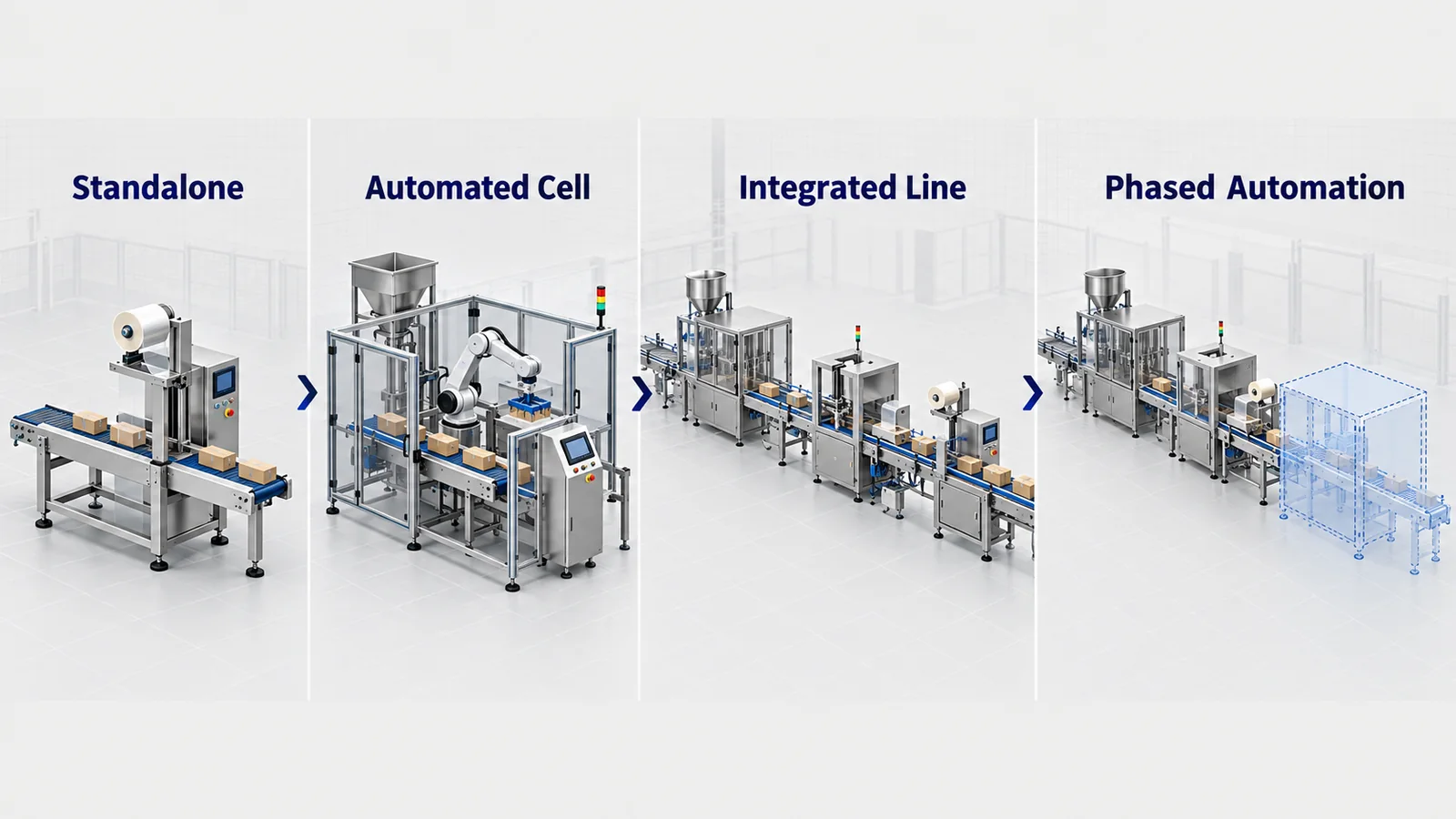
段階的自動化は中規模メーカーにとって実用的ですが、将来のラインが考慮されている場合に限ります。作業高さ、コンベア方向、制御、ガード、ユーティリティ、床面積は、後の統合を容易にするか高価にすることができます。HUALIANのレビュー 包装ライン解決 機器を孤立した機械ではなくより広いプロセスの一部として考えることができる例です.
カタログ速度ではなく、販売可能な出力を指定する
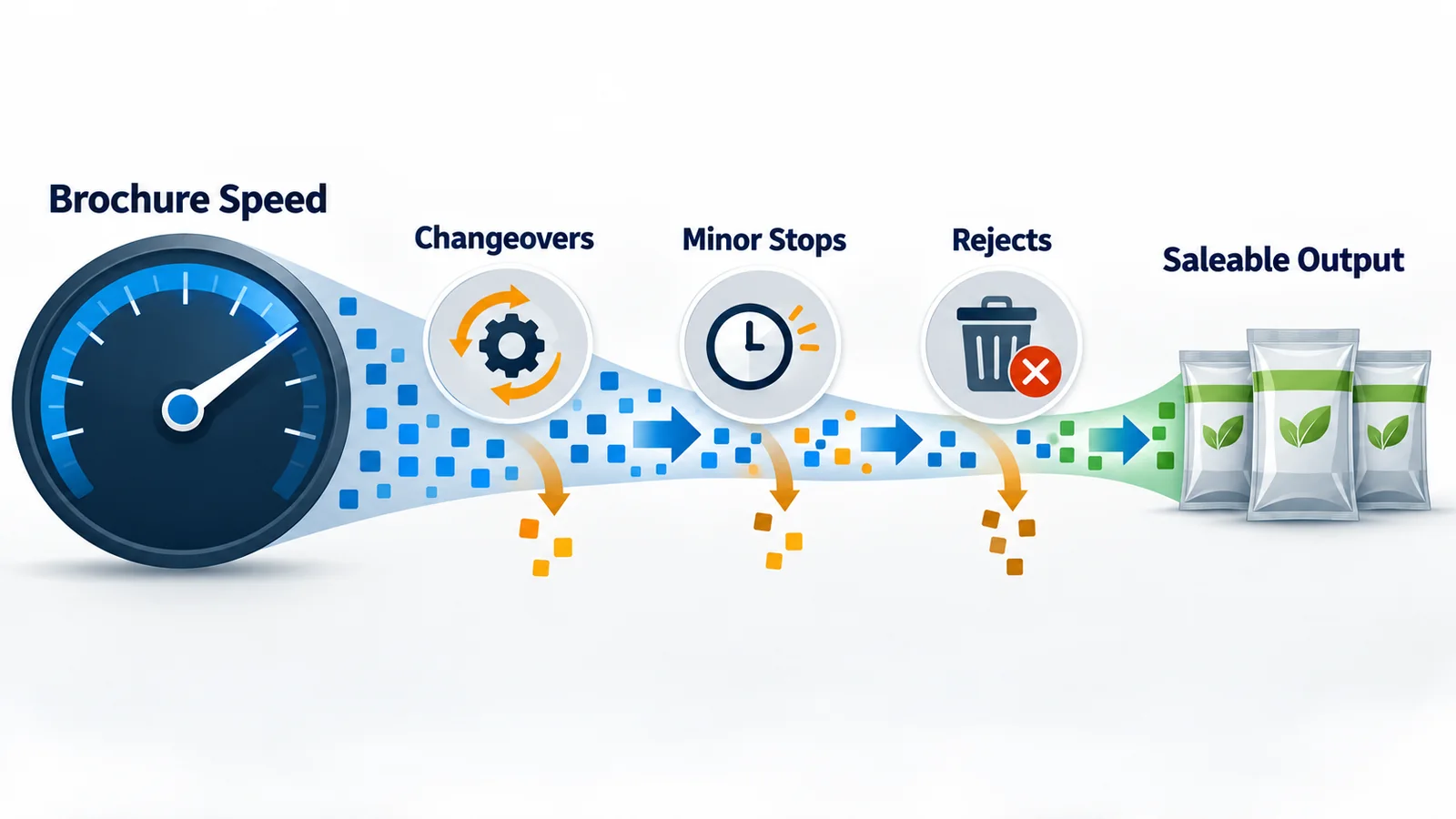
機械の速度は、その根拠が明確である場合にのみ意味を持ちます。カタログには、定義された条件下で毎分のサイクルが表示されます。お客様のビジネスには、利用可能なシフトで許容可能な完成パックが必要です。製品供給、手動ローディング、フィルム交換、クリーニング、切り替え、マイナーストップ、拒否、ダウンストリームブロックはすべて、販売できる出力を減少させます。.
提案を依頼する前に以下の情報を準備してください。
- SKUおよびシフト別に必要な許容可能なパックまたはケース
- 計画休憩と衛生の後に利用可能な生産分
- バッチサイズと切り替え回数
- 需要の現状と予測
- 受諾可能な製品のプレゼント、拒絶およびパッケージの欠陥
- 上流供給率と下流処理能力
- 許容可能なパックの定義と測定方法
サプライヤーに、提案されたレートをサポートする製品、材料、人員、試験期間、介入ルールを尋ねます。 食品包装機械容量の計算 需要を比較可能な要件に変換し制約された段階を特定します.
各SKUの製品とパッケージのマトリックスを作成する
1つの理想的な製品を稼働させるシステムでは、生産スケジュールをサポートできることは証明できません。すべての打ち上げSKUのマトリックスを作成し、困難な極端なものを特定します。最小と最大のパック、最小と最大の充填、最も壊れやすい製品、最も汚れた粉末、最も要求の厳しいフィルム、最も深いトレイ、または最も長い洗浄要件を持つ製品です。.
製品とパッケージの組み合わせごとに、以下を記録します。
- 製品状態と充填範囲
- パッケージ次元および材料
- Required tooling and change parts
- Stored recipe or manual settings
- Seal, code, label and inspection requirements
- Cleaning and cross-contact controls
- Expected batch length and target output
Then examine the changeover itself. Ask which guide rails, formers, molds, belts, nozzles, hoppers or recipes must change; which tasks require tools; how parts are identified and stored; and how the first acceptable pack is approved. A lower peak speed may be more productive when it enables faster, repeatable changeovers across short batches.
衛生と清掃を生産要件として扱う
A stainless-steel exterior does not by itself prove that equipment is suitable for your cleaning task. Identify product-contact, splash and non-product zones. Review access, removable parts, joints, fasteners, hollow sections, cable routes, drainage and areas where food or cleaning liquid can collect.
Describe whether your process uses dry cleaning, wiping, foam cleaning or washdown, which chemicals are used and how often the machine must be disassembled. Frequent cleaning reduces available production time, so accessibility and restart checks affect both food-safety control and capacity.
In the United States, FDA requirements under 21 CFR 117.40 address equipment construction and cleanability for food operations; the exact requirements for your facility and market must be determined by qualified food-safety and engineering personnel. Review the FDA guidance referencing food-equipment CGMP requirements and use HUALIAN’s food packaging equipment hygienic-design checklist to structure a supplier review.
レイアウトを凍結する前にファクトリーインターフェースを計画する
An automatic machine can perform well in isolation and still fail to deliver useful line output when transfers and interfaces are unstable. Record the product entry condition, pack orientation, working heights, conveyor speeds, required accumulation, reject route and response when an upstream or downstream machine stops.
Your layout should show:
- Available length, width and height
- Columns, doors, drains, walls and access routes
- Operator, cleaning and maintenance space
- Raw-material, packaging-material and finished-goods movement
- Electrical supply, compressed air, vacuum, gases, extraction, water and network access
- Line direction, working height and upstream or downstream connections
- Space and interfaces reserved for future equipment
When several suppliers are involved, assign ownership for mechanical interfaces, controls, safety zones, software signals and complete-line testing. If the line fails to reach the agreed output, the contract should make it possible to identify who records the issue, who leads diagnosis and how corrective work is verified.
チームがオートメーションをサポートできるか確認する
Automation can remove repetitive loading, sealing, handling or palletizing tasks, but it also changes the work. Operators may need to replenish materials, select recipes, perform quality checks, recover from alarms and verify changeovers. Maintenance teams may need to support sensors, drives, pneumatics, controls and connected-machine signals.
Ask each supplier to explain:
- The normal number and role of operators
- Daily, weekly and scheduled maintenance tasks
- Operator and maintenance training
- Alarm history, diagnostics and backup procedures
- Recommended critical and wear parts
- Remote and on-site support scope
- Expected response and spare-parts delivery arrangements for your location
Do not assume that “fully automatic” means unattended. Product and material replenishment, cleaning, quality release, format changes and technical intervention still need named owners.
購入価格だけではなく、トータルコストを比較する
Build the business case from your current losses and the proposed operating model. Direct labor may be important, but it is only one input. Include product giveaway, packaging-material waste, rework, rejected packs, overtime, unplanned stops, cleaning, changeovers, injuries or ergonomic risks and outsourced packing where applicable.
The investment scope may include the main machine, tooling, conveyors, accumulation, inspection, coding, guarding, utilities, installation, commissioning, training, spare parts and planned production interruption. Operating costs may include labor, film or containers, energy, cleaning, maintenance, wear parts and downtime.
Count additional capacity as a financial benefit only when demand, upstream production and downstream logistics can use it. A faster packaging line does not create value if the food process cannot supply it or the market cannot absorb the extra output.
要件を比較可能なサプライヤー提案に変える
Send each shortlisted supplier the same controlled requirement. Avoid asking only for “an automatic food packaging line.” Use the food packaging machine RFQ checklist to document the product, package, output, formats, utilities, hygiene, services and acceptance basis.
Compare proposals using the same dimensions:
| Decision area | Evidence to request |
|---|---|
| Product and package fit | Trial plan and results using representative products and materials |
| Saleable output | Defined test duration, accepted packs, rejects, stops and operator interventions |
| Formats and changeover | Tooling list, change sequence, required tools and first-pack approval |
| Hygiene and cleaning | Zone review, materials, access, disassembly and cleaning procedure |
| インテグレーション | Layout, interface schedule, signal list, line response and ownership |
| 安全性 | Applicable design basis, risk assessment and agreed protective measures |
| Serviceability | Maintenance plan, parts list, diagnostics, training and service scope |
| Commercial scope | Included modules, exclusions, delivery basis, services and warranty terms |
Machinery safety should be addressed through a risk-based process appropriate to the supplied system and destination. ISO 12100 describes general principles for machinery risk assessment and risk reduction; buyers and suppliers still need to determine the standards and legal requirements that apply to the actual project.
出荷前に選択ラインを検証
Agree the factory acceptance test before the purchase order or design freeze, not after the machine is complete. The protocol should state the machine configuration, products, packaging materials, formats, test duration, permitted interventions, required output, package-quality checks and handling of open items.
Measure acceptable finished packs rather than reporting only cycles. Test normal start and stop, agreed alarm and recovery conditions, reject handling, recipes, guards, changeovers and cleaning access. Record settings, stops, rejects and interventions so results can be reproduced.
を使用します。 food packaging machine FAT checklist to build the protocol. Keep site-dependent utilities, final interfaces and operator performance in a separate site acceptance plan rather than treating the factory test as proof of every site condition.
完全な自動ラインが間違った選択である場合
A complete line may be the wrong first investment when:
- Your food or package is still changing frequently.
- Demand is uncertain or strongly seasonal.
- You run many short batches with long cleaning requirements.
- One isolated operation is the dominant constraint.
- Upstream production cannot supply a stable flow.
- The factory lacks the maintenance resources to recover a connected line.
- Product and packaging materials have not been tested together.
- The financial case depends only on theoretical labor removal or peak speed.
In these conditions, choose a simpler machine, a modular cell or a phased plan when it can meet the required output with less integration risk. Preserve expansion options, but do not pay for complexity that your current products, demand and support structure cannot use.
実用的な8段階の選択プロセス
- Define the food and finished package. Include real operating variation and acceptance methods.
- Map the complete current process. Record labor, losses, cleaning, transfers and recurring stops.
- Identify the real constraint. Separate capacity, quality, labor, safety and traceability problems.
- Build the product-package matrix. Include all required formats and difficult extremes.
- Specify saleable output. Use acceptable packs under representative production conditions.
- Choose the automation boundary. Compare a machine, cell, complete line and phased plan.
- Compare equivalent proposals. Align scope, tooling, interfaces, services and lifecycle assumptions.
- Validate the solution. Agree trials, FAT, site checks and unresolved-item closure before commissioning.
提案を依頼する前に準備すべき情報
- Food type, condition, temperature and handling risks
- Fill or portion range
- Package format, drawings, dimensions and material samples
- SKU list, batch sizes and change frequency
- Current and future acceptable output
- Cleaning method and cross-contact requirements
- Required coding, labeling, inspection and rejection
- Available layout and access route
- Electrical, air, vacuum, gas, water, extraction and network information
- Upstream and downstream equipment
- Operator and maintenance resources
- Required trial and acceptance criteria
Plan a right-sized food packaging line
Send your food details, package samples, SKU range, current output, target output and available floor plan. HUALIAN can review the information with you and discuss an appropriate equipment path and the tests needed before selection.
よくある質問
中規模の食品メーカーに最適な包装ラインは何ですか?
There is no universal best line. The appropriate system depends on the food, finished package, saleable-output requirement, SKU mix, cleaning, factory interfaces, labor constraint and technical support available. Choose the simplest automation scope that can meet the written requirement with acceptable risk and room for planned growth.
食品メーカーはいつ半自動包装から完全自動包装に移行すべきでしょうか?
Consider greater automation when demand and product formats are stable, repeated manual tasks create a measurable constraint, upstream and downstream processes can support continuous flow, and the plant can operate and maintain the integrated equipment. Frequent changes, unstable demand or limited technical support may favor semi-automatic or modular equipment.
包装ライン全体を一度に自動化すべきですか?
Not necessarily. Automate the dominant constraint first when one operation limits output or quality. A complete line is more appropriate when several connected operations must be coordinated and the complete production system is ready. If you automate in phases, define future interfaces before buying the first machine.
包装ライン容量はどのように計算すればよいですか?
Calculate the acceptable finished packs required over available production time. Include cleaning, changeovers, minor stops, rejects, replenishment and upstream or downstream constraints. Ask suppliers to demonstrate sustained saleable output with representative products and materials rather than quoting only maximum cycles.
1つの自動包装ラインで複数の食品やパッケージサイズに対応できますか?
It may handle a defined range, but every product-package combination creates requirements for feeding, tooling, recipes, sealing, inspection and cleaning. Build a matrix, identify the difficult extremes and test the contracted formats. Do not assume an untested combination is equivalent.
2つのパッケージングラインの見積もりをどのように比較しますか?
Use the same product and package matrix, output definition, line boundary, factory conditions and acceptance criteria. Compare included modules, tooling, interfaces, staffing, services, documentation, spare parts and lifecycle assumptions. A lower quotation may exclude essential equipment or integration work.
包装ライン工場受入試験は何を証明すべきですか?
It should verify the ordered scope, agreed formats, sustained acceptable output, package quality, controls, safety functions, fault recovery, changeover, cleaning access and documentation under a written protocol. Site utilities and final connected-machine performance may require separate site acceptance tests.
結論
Choose an automated food packaging line from the operating requirement outward. Define your food and package, measure the real constraint, specify saleable output, account for SKU changes and cleaning, and decide which automation boundary your plant can support. Then compare suppliers using representative trials and measurable acceptance criteria.
For many mid-sized manufacturers, the strongest investment is not the most complex line. It is a right-sized system that produces acceptable packages consistently, can be maintained by the available team and can expand when demand and process stability justify the next stage.