콘텐츠로 건너뛰기
소개
If you’re comparing industrial packaging machines to speed up your production line, you’re in the right place. This guide walks you through every major type of automatic packing machine, how to choose one, and where to find reliable packaging solutions for your industry.
What Is Industrial Packaging Machine
An industrial packaging machine is equipment designed to automate the process of filling, sealing, wrapping, labeling, or palletizing products at scale. Instead of relying on manual labor, you use these machines to package goods faster, more consistently, and with far less waste. Whether you run a food production plant, a pharmaceutical facility, or an e-commerce fulfillment center, an industrial packaging machine helps you cut labor costs, reduce human error, and meet growing order volumes without sacrificing quality.
As your business scales, manual packaging quickly becomes a bottleneck. That’s why more companies are investing in automatic packaging machines — they deliver consistent seal quality, precise fill weights, and higher throughput, all while freeing up your workforce for higher-value tasks.

Types of Industrial Packaging Machines
There are many categories of packaging solutions, each built for a specific product type, material, or packaging format. Understanding the differences helps you narrow down what fits your operation best.
밀봉 기계
A sealing machine closes bags, pouches, or containers using heat, pressure, or induction technology. You’ll find these on nearly every production line, from snack food bags to industrial chemical pouches, because a reliable seal directly protects product freshness and shelf life.
Filling Machines
Filling machines measure and dispense powders, liquids, granules, or pastes into bags, bottles, or containers with high accuracy. If your product requires precise weight or volume control, this is one of the first machines you should evaluate.
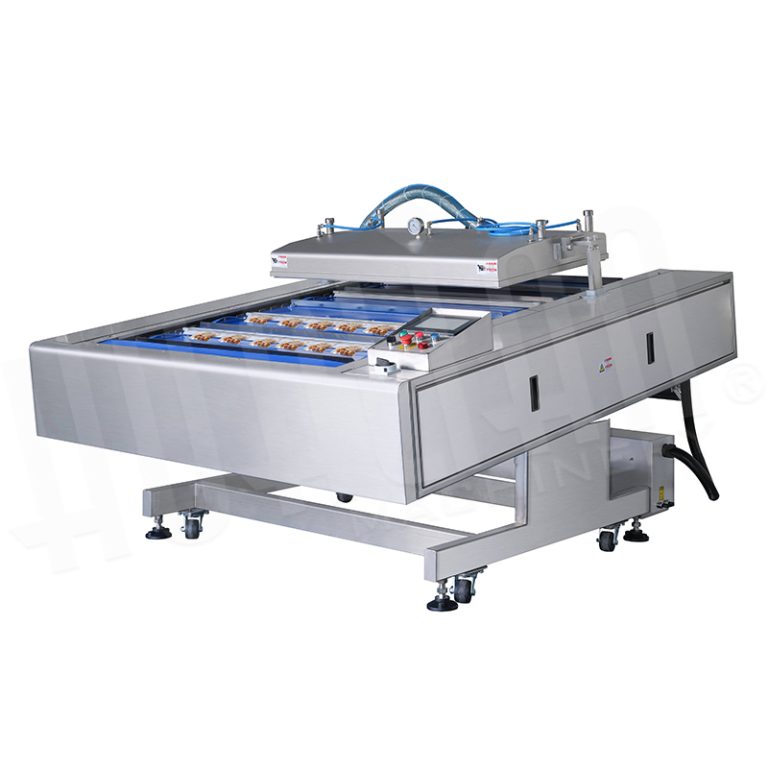
진공 포장 기계
A vacuum packaging machine removes air from a package before sealing, which extends shelf life and prevents oxidation. This is especially popular for meat, seafood, cheese, and other perishable goods that need longer storage stability.
트레이 밀봉 기계
Tray sealing machines seal pre-formed trays with a film lid, commonly used for ready meals, fresh produce, and deli products. You get an attractive, tamper-evident presentation that also supports modified atmosphere packaging (MAP).
열적 성형 포장 기계
These machines form packaging directly from a roll of film, then fill and seal it in one continuous process. Thermoforming is ideal when you need custom-shaped packaging at high volume with minimal material waste.
Bagging Machines
Bagging machines automatically fill and close bags for products like pet food, fertilizer, animal feed, and chemical powders. If your product is sold in bulk bags of 5kg to 50kg or more, this category is worth prioritizing.
Cartoning Machines
Cartoning machines erect, fill, and close cardboard cartons, giving your product a retail-ready appearance. You’ll see these widely used in pharmaceuticals, cosmetics, and consumer goods where branding and shelf presentation matter.
Coding & Labeling Machines
Coding and labeling machines print batch numbers, expiration dates, and barcodes directly onto packaging. Regulatory compliance and traceability depend heavily on accurate, high-speed coding — especially in food and pharmaceutical industries.
Strapping Machines
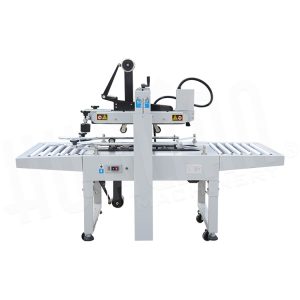
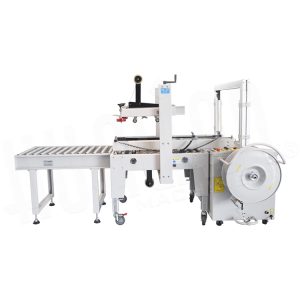
Strapping machines secure boxes, pallets, or bundles with plastic or steel straps for safe transport. If you ship heavy or bulky goods, strapping adds an extra layer of stability during logistics.
Wrapping Machines
Wrapping machines apply stretch film or shrink film around products or pallets to protect them from dust, moisture, and shifting during transit. This is a low-cost way to improve product protection across your supply chain.
Palletizing Machines
Palletizing machines stack cartons or bags onto pallets automatically, which is essential for high-volume warehouses and distribution centers. Automating this final step significantly reduces manual lifting and speeds up outbound logistics.
How to Choose the Right Industrial Packaging Machine
Choosing the right automatic packing machine isn’t just about price — it’s about matching the equipment to your product, output goals, and long-term business needs. Rushing this decision is one of the most common reasons companies end up replacing equipment within just a few years, so it’s worth slowing down and working through each factor systematically. Here’s a closer look at what actually matters before you sign a purchase order.
| 요인 | 고려해야 할 사항 |
|---|---|
| Product Properties & Packaging Requirements | Powder, liquid, granule, or solid; bag, pouch, tray, or carton format |
| 생산 능력 | Required output per hour/day and future scalability |
| 자동화 수준 | Semi-automatic vs fully automatic packaging machine |
| Space & Layout Planning | Available floor space, line integration, and workflow |
| 예산 및 ROI | Upfront cost vs long-term labor and material savings |
| Compliance & Industry Standards | Food-grade, pharmaceutical, or hazardous material regulations |
| Vendor Support & After-sales Service | Installation, training, spare parts, and response time |
| Flexibility & Changeover | Ability to switch between product sizes or materials quickly |
| Safety & Ease of Operation | Operator training needs and built-in safety features |
Product Properties & Packaging Requirements
Start by defining exactly what you’re packaging. A free-flowing powder behaves very differently from a sticky paste or an irregularly shaped solid, and the packaging format you need — stand-up pouch, flat bag, tray, or carton — will narrow your machine options considerably. Getting this step wrong is the single biggest cause of poor fill accuracy and seal failures down the line.
생산 능력
Look beyond your current order volume and think about where your business will be in two to three years. If you choose a machine that just barely covers today’s demand, you may find yourself shopping for a replacement sooner than expected. A slightly higher capacity machine often costs less over time than upgrading twice.
자동화 수준
Decide whether a semi-automatic or fully automatic packaging machine makes more sense for your labor costs and shift patterns. Fully automatic lines reduce headcount needs and improve consistency, but semi-automatic machines can be a smart, lower-cost entry point if your volumes are still growing.
Space & Layout Planning
Measure your available floor space and consider how the new machine will integrate with your existing conveyors, filling stations, or palletizing equipment. Poor layout planning is a common cause of workflow bottlenecks, even when the machine itself performs well.
예산 및 ROI
Compare the upfront investment against the labor savings, reduced material waste, and higher throughput you’ll gain over time. A slightly higher initial cost often pays for itself within months if it means fewer rejects and less manual labor.
Compliance & Industry Standards
If you’re in food, pharmaceuticals, or chemicals, your machine needs to meet specific hygiene, safety, or hazardous-material handling standards. Confirm certifications upfront rather than discovering a compliance gap during an audit.
Vendor Support & After-sales Service
Even the best-built machine will eventually need maintenance, spare parts, or operator training. A supplier that offers responsive technical support and readily available spare parts can be the difference between a few hours of downtime and a few weeks.
Flexibility & Changeover
If you run multiple SKUs, bag sizes, or materials, prioritize machines with quick-changeover parts and adjustable settings. This flexibility keeps your line productive even as your product mix evolves.
Safety & Ease of Operation
An intuitive interface and built-in safety guards reduce training time and lower the risk of workplace accidents. Operators who can run the machine confidently from day one help you avoid costly slowdowns during onboarding.
Taking time to assess each of these factors upfront saves you from costly mistakes later — an undersized machine can throttle your growth, while an oversized one wastes capital you could invest elsewhere.
Industrial Packaging by Application
Different industries have very different packaging needs, and choosing industry-specific packaging solutions makes a real difference in efficiency, compliance, and shelf appeal. Here’s what you should know about the priorities in each sector.
Food and Beverage
Food packaging lines need hygienic, food-grade materials and designs that are easy to clean and sanitize between runs. You’ll often rely on vacuum packaging machines or modified atmosphere packaging (MAP) to extend shelf life for products like meat, dairy, snacks, and ready meals. Fast changeover is also critical, since food producers frequently rotate between multiple SKUs, flavors, and package sizes within a single shift.
Pet Food and Feed
Pet food and animal feed producers typically deal with large volumes of granules, kibble, or pellets that need to be bagged quickly and accurately. Heavy-duty bagging machines with dust control and reinforced seals are essential here, since these products are often packed in bags ranging from a few kilograms to bulk sizes over 25kg. Consistent weight accuracy also matters for regulatory labeling and customer trust.
의약품
Pharmaceutical packaging is one of the most tightly regulated applications, requiring precision filling, tamper-evident sealing, and clear batch coding for full traceability. Cartoning machines and coding systems work together here to ensure every unit meets labeling requirements and can be tracked from production through distribution. Even small errors in dosage or coding can trigger compliance issues, so accuracy and validation matter more than speed alone.
Chemicals and Fertilizers
Chemical and fertilizer packaging often involves abrasive, corrosive, or hazardous materials, so equipment needs to be built with durable, wear-resistant components. Robust bagging and strapping machines help ensure safe handling and secure transport, while proper sealing prevents leakage or contamination during storage and shipping. Compliance with hazardous material handling standards is non-negotiable in this sector.
Daily Chemicals and E-commerce
Daily chemical products — like detergents, personal care items, and household goods — along with e-commerce fulfillment, both benefit from flexible filling and wrapping machines that can adapt to frequent SKU changes. Since order volumes and packaging formats can shift quickly in these industries, quick-changeover capability and reliable automatic packing machines help you keep pace with demand without constant manual reconfiguration.
Matching your packaging machine to your specific application not only improves output but also protects product quality all the way through distribution.
FAQ
How do I choose an industrial packaging machine supplier?
Look for a supplier with proven industry experience, transparent technical support, and a track record of after-sales service — not just the lowest quote.
Can one packaging machine handle multiple bag materials and sizes?
Many modern automatic packing machines are designed with adjustable settings and quick-changeover parts, allowing you to switch between bag materials and sizes with minimal downtime.
Why Hualian Packaging Solution Stands Out?
Hualian combines decades of manufacturing expertise with customizable packaging solutions tailored to your product and industry. From filling and sealing to full-line automation, Hualian’s engineering team supports you from initial consultation through installation and long-term maintenance — helping you get reliable equipment and a partner you can count on.
결론
Choosing the right industrial packaging machine directly impacts your efficiency, product quality, and bottom line. Ready to upgrade your production line? Contact Hualian today for a tailored packaging solution and get a free consultation with our packaging experts.