콘텐츠로 건너뛰기
Hygienic design evaluation asks whether packaging equipment can be cleaned, inspected and returned to service using the facility’s defined method. A stainless-steel exterior alone does not answer that question. Buyers should review product-contact zones, joints, access, drainage, change parts, utilities and documentation with production, sanitation, quality, maintenance and safety teams.
Buyer focus: Treat this guide as a requirement-building tool. Confirm final equipment suitability with representative product, packaging materials, factory conditions and written acceptance criteria.
Define the Hygiene Task
Describe the foods, contamination routes, cleaning chemicals, cleaning frequency and required disassembly. Separate product-contact, splash and non-product zones. Use a risk-based review rather than applying the same requirement to every surface.
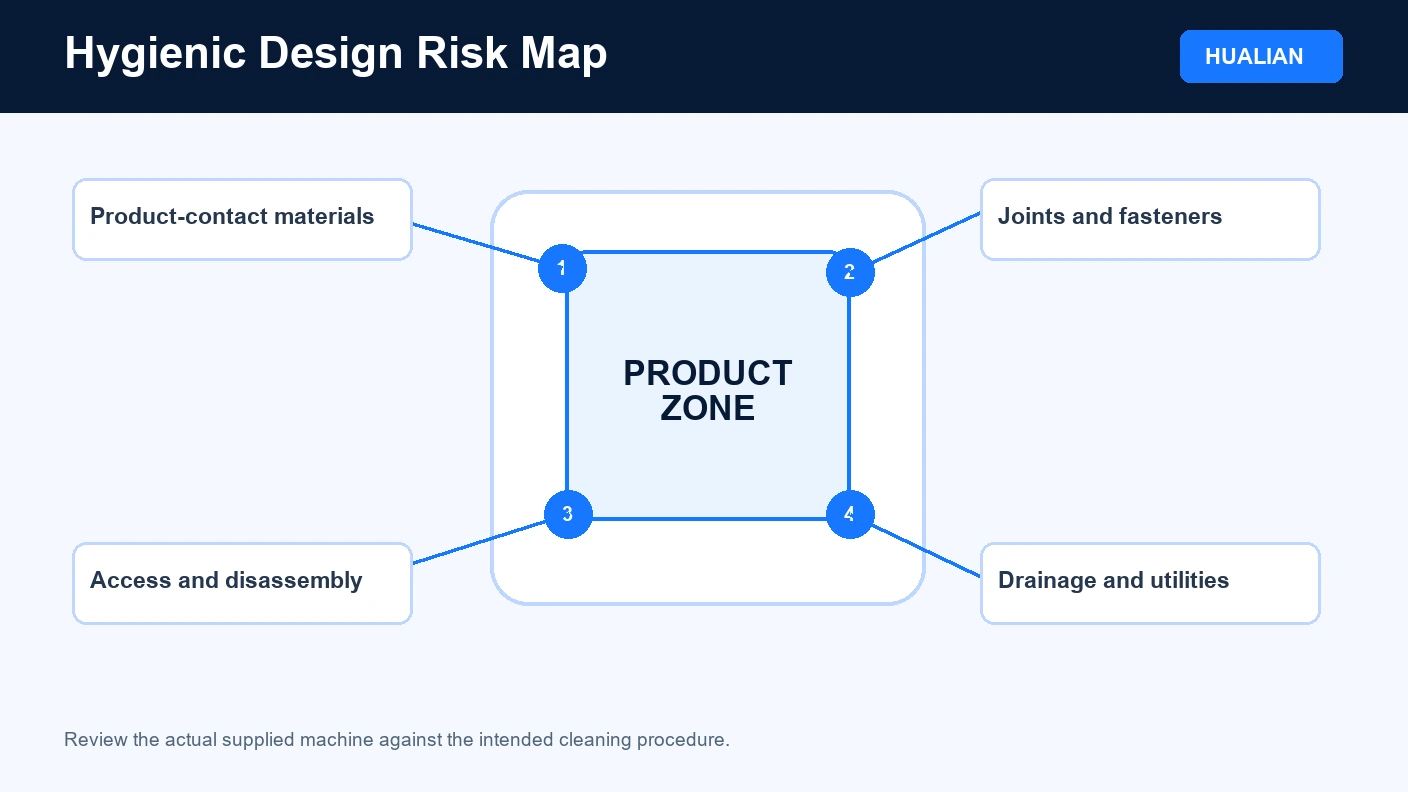
Check Materials and Product-Contact Surfaces
Ask for the materials used in product-contact parts, coatings, seals and lubricants. Surfaces should be suitable for the food and cleaning regime, inspectable and free from damage that traps residue. Documentation should identify the actual supplied components.
Inspect Joints, Welds and Fasteners
Review seams, overlaps, threads, hollow sections and penetrations near product zones. Look for crevices, exposed threads, rough transitions or inaccessible gaps. Ask how frames and tubes are closed and how moisture entry is prevented.
Check Access and Disassembly
Operators must be able to reach areas included in the cleaning procedure. Identify which guards, belts, hoppers, tooling and product-contact components are removed; record tools, lifting needs, storage and verification before restart.
Evaluate Drainability
Observe horizontal surfaces, channels, cable routes, trays and enclosed areas where liquid can remain. Review the installed machine angle and site floor conditions, not only a showroom image.
Review Conveyors, Cables and Utilities
Check belt edges, rollers, supports, sensors, cable conduits, pneumatic tubing and utility connections. Components should be positioned so inspection and cleaning are possible without creating uncontrolled contamination routes.
Match Design With the Cleaning Method
Dry cleaning, controlled wet cleaning and washdown place different demands on equipment and components. Define the intended procedure and verify chemical, temperature and ingress limitations with the relevant suppliers. The EHEDG guideline catalogue identifies relevant hygienic-design topics, including packaging systems and cleaning verification.
Verify Cleaning, Do Not Assume It
Create a written procedure, train responsible staff and define inspection or validation evidence appropriate to the risk. Include reassembly checks and the first-product release process. A design review reduces risk but does not replace site validation.
Hygienic Design Review Record
- Zone and hazard reviewed
- Surface or component
- Cleaning and inspection access
- Material documentation
- Drainage observation
- Removal tools and handling
- Verification method
- Open action and owner
Use this record within the food packaging equipment selection process.
Convert Hygiene Requirements Into Supplier Evidence
Do not accept “food grade” or “washdown” as complete answers. Ask the supplier to mark product-contact and splash zones on drawings, identify materials and surface treatments, list the components removed for cleaning, and state restrictions for water pressure, chemical concentration and temperature. Photograph access points during a demonstration and record any tools or lifting aids required.
A useful review also distinguishes design evidence from site evidence. Drawings, certificates and manuals show design intent. A cleaning trial with representative soil, followed by inspection or an agreed verification method, shows whether the intended procedure works in practice.
Score Findings by Risk and Corrective Action
Classify each finding as acceptable, clarification required, modification required before shipment, or site-controlled. Give priority to hidden product traps, hollow structures, poor drainability and components that cannot tolerate the intended cleaning method. Every open item should have an owner, due date and verification record.

Standards and Industry References
The following resources provide general guidance for equipment selection and review. Final requirements should be determined according to applicable regulations, customer standards and site-specific risk assessments.
Frequently Asked Questions
What is hygienic design in food packaging equipment?
It is the design of surfaces, joints, access, drainage and components so contamination risks can be controlled through effective cleaning, inspection and maintenance.
Does stainless steel automatically make equipment hygienic?
No. Stainless steel may be suitable, but hygienic performance also depends on geometry, finish, joints, access, drainage and cleaning compatibility.
Should every packaging machine be fully washdown?
No. The required design should match the food risk and validated cleaning method. Dry-clean areas and wet-clean areas can require different controls.
What evidence should a buyer request?
Request zone drawings, material declarations, cleaning instructions, component ingress ratings, disassembly steps and results from representative cleaning or acceptance trials.
Who should approve hygienic design?
Production, sanitation, quality, maintenance, engineering and safety should review the design together because each team sees different failure modes.
When should hygienic design be reviewed?
Review it during specification, design approval and FAT, then verify it again after installation under the site cleaning procedure.
Turn your requirement into a testable HUALIAN proposal
Send product details, package samples, output targets, SKU range and factory conditions. We can review an appropriate equipment path and the evidence needed before purchase.
Review Automatic Food Thermoforming Vacuum Skin Packaging Machine
Related Resources
- How to Choose Food Packaging Equipment: A Practical Buyer’s Guide
- Food Packaging Machine RFQ Checklist
- Recommended next guide: How to Calculate Food Packaging Machine Capacity