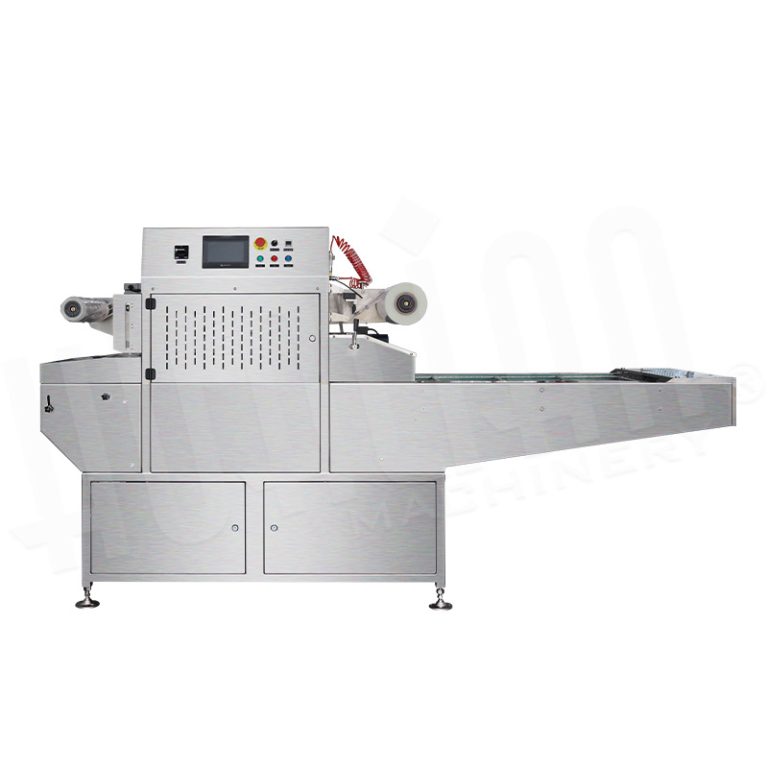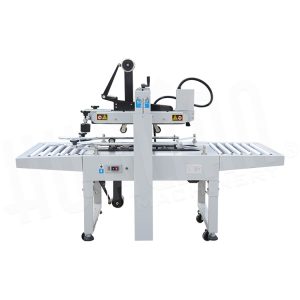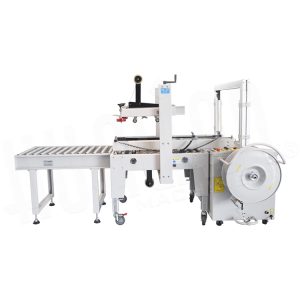
A factory acceptance test (FAT) should prove that a sausage packaging machine was built to the approved specification and can repeatedly produce acceptable packs under agreed test conditions. It is not a showroom demonstration and it does not replace site acceptance, food-safety validation, or shelf-life studies. Use this checklist to define measurable tests before the machine is built.
สารบัญ
สลับWhat the FAT Should Establish
- The supplied machine and options match the approved order and drawings.
- Safety devices, controls, recipes, alarms, and failure responses work as specified.
- Representative sausages and packaging materials run at the agreed output and quality.
- Changeover, cleaning access, maintenance, and documentation are usable.
- Open issues are recorded with owners, due dates, and retest requirements.
1. Agree on the Test Protocol Before the FAT
The buyer and supplier should approve the protocol early enough to influence design. For each test, state the purpose, method, instrumentation, sample size or duration, pass/fail limit, data to record, and person responsible. Define whether a failure stops the test, requires correction and repetition, or becomes an agreed punch-list item.
Identify which party supplies sausages, trays, bags, films, labels, gases, coding consumables, cases, test instruments, and operators. Confirm quantities and delivery dates with enough allowance for setup, testing, and retest.
2. Verify Documents and Approved Scope
- Purchase specification and approved deviations
- General arrangement and final machine dimensions
- Process and instrumentation information where applicable
- Electrical, pneumatic, vacuum, gas, and cooling drawings
- Component list with agreed makes and models
- Tooling and format-part list
- Safety risk assessment and required declarations
- Software and recipe list, user levels, and backup method
- Operation, sanitation, maintenance, and spare-parts manuals
- Calibration certificates for instruments used in acceptance
3. Inspect Construction and Workmanship
Compare model, serial number, dimensions, line direction, working height, access, and utility connections with approved drawings. Inspect frames, welds, fasteners, guards, doors, wiring, hoses, labels, finishes, conveyors, seal stations, cutting parts, vacuum piping, gas components, and lubrication points.
For food-contact and splash areas, review surface condition, drainage, crevices, hollow members, exposed threads, product traps, removable parts, and access for cleaning and inspection. Record every deviation with photographs and drawing references.
4. Test Safety Functions
Test every emergency stop, guard switch, access door, overload, pressure or vacuum interlock, temperature protection, fault reset, and restart condition included in the specification. Verify that energy isolation points are identifiable and accessible. Confirm that recovery after an interruption does not create unexpected movement or release an uninspected package.
The FAT is not a substitute for the buyer’s site-specific safety review. Site interfaces, upstream and downstream hazards, final guarding, and local compliance must be verified again after installation.
5. Verify Utilities and Baseline Operation
Record actual voltage, frequency, current where required, compressed-air pressure and consumption, cooling conditions, vacuum performance, gas supply conditions, and ambient test conditions. Compare them with the specified plant utilities.
Run the machine empty and check rotation, tracking, indexing, temperature control, lubrication, leaks, noise or vibration concerns, HMI response, counters, alarms, and stop/start behavior. An empty run confirms mechanisms; it does not prove product performance.
6. Verify Tooling and Every Contracted Format
Check tool identity, cavity dimensions, forming depth, sealing profile, cut shape, easy-open features, code position, and label area against approved pack drawings. Confirm that tools and change parts are marked and supplied with safe handling and storage arrangements.
Run every contracted format, not only the easiest one. Include the largest, smallest, deepest, most delicate, or otherwise highest-risk configuration identified during design review.
7. Use Representative Sausages and Packaging Materials
Test products at the intended packaging temperature with representative size, curvature, casing, moisture, and oil. Include normal production variation. Use the approved bags, bottom and top webs, trays, lidding films, labels, gas, and coding consumables.
If substitutes are unavoidable, document them and identify which tests must be repeated during site acceptance. A successful run with different film or idealized product does not prove the contracted package.
8. Run a Defined Production Test
Specify test duration, target output, allowable stops, reject handling, staffing, and data collection before the FAT. Measure good packs, rejects by reason, stops, downtime, film or bag changes, and operator intervention. Report:
Good-pack rate = accepted packs 梅 total packs produced.
Do not accept a capacity statement based solely on cycle speed. For cyclic equipment, record cavities per cycle and actual cycles. For manually loaded systems, state the number of operators and whether loading pace was sustainable and safe.
9. Inspect Pack Quality
Use predefined criteria appropriate to the package. These may include:
- Correct product count or weight and arrangement
- No unacceptable sausage deformation, casing damage, or trapped product
- Acceptable vacuum appearance or measured package atmosphere
- Clean seal area without channels, wrinkles, burns, or incomplete contact
- Cut profile, separation, perforation, and easy-open performance
- Correct code and label content, readability, and position
- No package damage through conveyor transfer and rejection
Visual inspection is valuable but may not be sufficient to establish package integrity. Agree on appropriate leak, seal-strength, atmosphere, or other tests with the buyer’s packaging and quality specialists. Preserve samples from the beginning, middle, end, and challenge conditions.
10. Verify Vacuum or MAP Process Control
For Vacuum Packaging
Record the recipe, pump configuration, evacuation sequence, indicated vacuum or pressure, seal settings, and cycle time. Challenge loading, wet or oily surfaces, and the most difficult pack geometry within approved limits.
For MAP Packaging
Record gas identity and supply conditions, gas recipe, evacuation and flushing sequence, residual oxygen or headspace measurement method, sampling time, seal settings, and results across the run. The agreed criterion must come from the validated package process, not from a generic marketing claim.
Both methods are forms of reduced-oxygen packaging. The FDA Food Code shows why food-safety and storage controls must be addressed by the processor in addition to mechanical acceptance.
11. Challenge Alarms and Recovery
Simulate conditions such as missing product, missing bag or tray, film end, film break or misalignment, low air, low gas, loss of vacuum, temperature deviation, guard opening, downstream blockage, upstream starvation, label fault, reject-bin condition, and power interruption where these functions are included.
Verify alarm text, safe response, fault history, operator guidance, product disposition, and controlled restart. Confirm that questionable packs are identified rather than silently returned to good production.
12. Demonstrate Changeover and Cleaning Access
Have the intended personnel perform a complete format change with normal tools and safety procedures. Time shutdown, cooling where necessary, tool removal, cleaning, installation, recipe selection, adjustment, first-pack checks, and release to production.
Demonstrate removal and access for sanitation. Review how food residue, film pieces, labels, and liquids are removed. Record heavy parts, special tools, pinch points, difficult access, and opportunities for incorrect reassembly.
13. Review Maintenance and Spare Parts
Demonstrate access to vacuum pumps, filters, seal bars, heaters, thermocouples, cutters, chains, belts, sensors, valves, lubrication points, and electrical cabinets. Review maintenance intervals, consumables, wear parts, special tools, diagnostic functions, software backup, and restoration.
Physically check the contracted spare-parts package against the list. Confirm part numbers, lead times, storage requirements, and which items must be stocked locally.
14. Close the FAT With Controlled Records
The final report should include protocol version, participants, date, machine identification, test conditions, materials and product lots, settings, raw data, samples, photographs or video references, deviations, corrective actions, and signatures.
Classify open items by impact. State whether shipment is permitted, which items must be closed before shipment, and which will be retested at site. Changes made after acceptance should be documented and evaluated for retest.
What the FAT Does Not Prove
- Long-term reliability or maintenance cost
- Performance with untested products and materials
- Final output with site utilities, operators, and connected equipment
- Food safety, legal compliance, or shelf life of the finished sausage
- Completion of installation qualification or site acceptance
FAT Summary Checklist
- Approved protocol and measurable pass/fail criteria
- Correct machine, components, options, tooling, and documentation
- Construction, hygiene, safety, and utility checks
- All contracted formats tested with representative inputs
- Defined sustained production run and recorded good output
- Package-quality and process-control measurements
- Alarm, stop, recovery, and reject challenges
- Changeover, cleaning, maintenance, and spares review
- Signed report, punch list, shipment decision, and retest plan
Frequently Asked Questions
How long should a FAT production run last?
Long enough to expose realistic loading, material, temperature, replenishment, and stop/restart behavior. Define duration from project risk and output rather than using one universal number.
Should every sausage SKU be tested?
Test every contracted format and the products representing the important extremes. Untested combinations should be clearly reserved for site trials or later validation.
Can the supplier choose the acceptance limits?
The supplier can propose limits, but the buyer must approve criteria that support its product, package, process, regulatory, and commercial requirements before the test.
Send this checklist with your request for quotation and tailor it to the approved user requirements. Hualian can then identify the required samples, instruments, run conditions, and evidence before scheduling the FAT.