Ir al contenido
Introducción
En el entorno competitivo de la fabricación y distribución modernas, la eficiencia del embalaje afecta directamente la rentabilidad, la satisfacción del cliente y la expansión comercial de las empresas. Al elegir una solución de envasado, las empresas a menudo se enfrentan a una decisión clave: ¿invertir en una línea de envasado semiautomática o en una línea de envasado automática? Ambas soluciones integran la máquina ensacadora automática, el sistema de medición y llenado. El sistema de cierre de bolsas y la máquina selladora son los componentes principales, peroExisten diferencias significativas en términos de nivel de automatización, requisitos operativos y retorno de la inversión (ROI).
Este artículo proporcionará un análisis detallado de los principios de funcionamiento y las diferencias principales de los dos tipos, y le guiará para elegir la línea de envasado adecuada para su negocio, al tiempo que destacará la serie de productos confiables de Hualian.
Líneas de envasado semiautomáticas: cómo funcionan
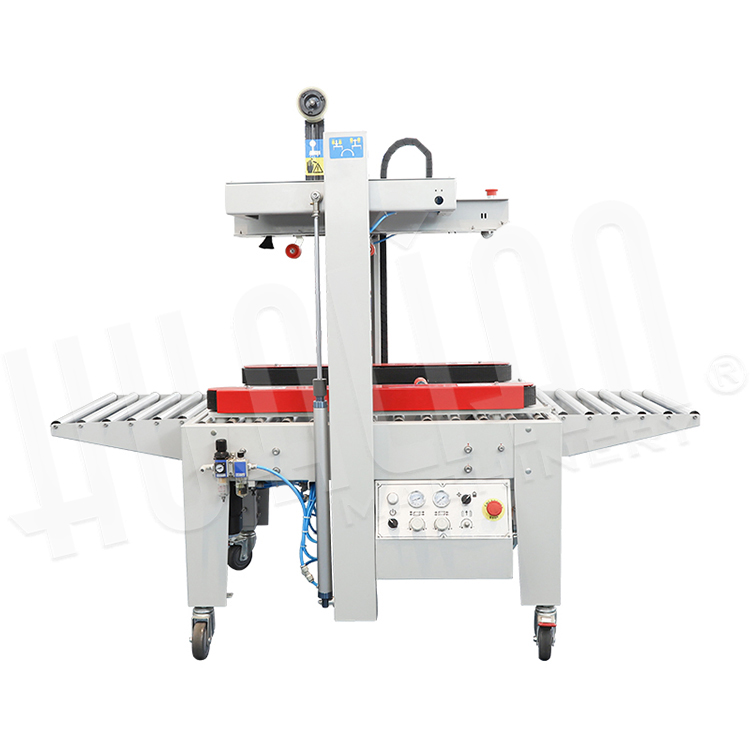
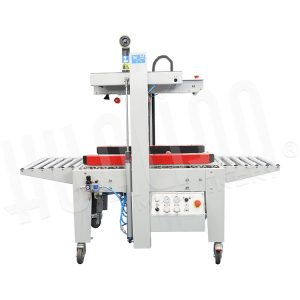
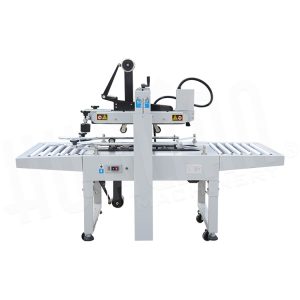
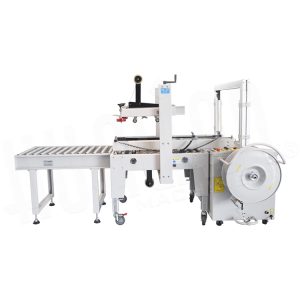
Las líneas de envasado semiautomáticas combinan la carga manual con sellado, flejado o embolsado automatizados para optimizar procesos clave y al mismo tiempo controlar los costos de mano de obra, lo que las hace ideales para pequeñas y medianas empresas. Los operadores colocan cajas o bolsas en el transportador y las máquinas se encargan de las tareas principales. En el Línea automática de empaquetado con fleje para cajas de cartón, las cajas se sellan en la parte superior e inferior y se sujetan con bandas de PP simples o dobles, con controles PLC que garantizan una tensión constante y un sellado preciso, mientras que las correas de doble transmisión y los transportadores reforzados estabilizan las cajas más pesadas.
En embolsado, la máquina embolsadora automática de boca abierta alimenta bolsas vacías, detecta su ubicación, las llena con precisión, elimina el aire y las transporta a la unidad de sellado automáticamente. Los mecanismos de cambio rápido permiten una rápida adaptación a diferentes tamaños de bolsas.
Al combinar la guía manual con la automatización, las líneas de envasado semiautomáticas ofrecen eficiencia, coherencia y flexibilidad, proporcionando una solución rentable para optimizar los flujos de trabajo de producción.
Líneas de envasado totalmente automáticas: cómo funcionan
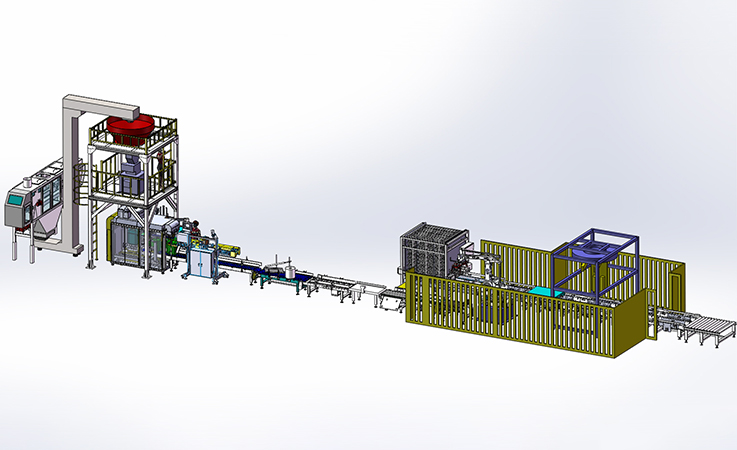
Líneas de envasado totalmente automáticas integre todos los procesos clave (pesaje, embolsado, sellado y paletizado automáticos) en un flujo de trabajo fluido y no tripulado. Los sistemas de control inteligentes gestionan cada etapa con alta precisión, garantizando una calidad constante y minimizando errores. Diseñadas para la producción en masa, estas líneas funcionan las 24 horas del día, los 7 días de la semana con una supervisión mínima, manteniendo la estabilidad y la eficiencia incluso en operaciones de gran volumen.
Por Automatizar completamente el proceso de embalaje., las empresas pueden lograr la máxima productividad, un estricto control de calidad y importantes ahorros en costos laborales, lo que hace que estos sistemas sean ideales para entornos de producción a gran escala y de alto nivel.
Línea de envasado semiautomática versus totalmente automática: diferencias clave
Velocidad de producción
Semiautomática: la línea de ensacado semiautomática de Hualian procesa aproximadamente entre 13 y 17 bolsas por minuto, y la línea de encartonado maneja alrededor de 10 cajas por minuto. La velocidad está limitada por la operación manual.
Automático: Logre entre 600 y 1200 bolsas por hora con la línea de envasado totalmente automática de Hualian. Su sistema todo en uno de medición, llenado, embolsado y sellado garantiza un envasado rápido, preciso y consistente, lo que ayuda a que su operación alcance la máxima eficiencia y producción para la producción de partículas de plástico a gran escala.
Número de máquinas y complejidad del sistema
Semiautomático: compuesto por 2 o 3 unidades principales; por ejemplo, la línea de ensacado incluye una máquina ensacadora automática y un sistema de sellado de bolsas, mientras que la línea de empaque de cajas incluye una máquina de sellado de cajas y una unidad flejadora. El sistema es compacto, fácil de integrar, sencillo de mantener y puede operarse sin conocimientos técnicos profesionales.
Automático: integra más de 5 dispositivos interconectados (incluidos robots paletizadores y transportadores), el diseño del sistema es más complejo y se requieren instalaciones y técnicos profesionales para su operación.

Consideraciones presupuestarias
Semiautomático: con una inversión inicial más baja (generalmente 30–55% menos que las líneas completamente automáticas), las soluciones semiautomáticas de Hualian, incluidas líneas de ensacado como la máquina ensacadora automática de boca abierta y la línea automática de envasado y sellado de cajas, ofrecen a las empresas una entrada rentable al envasado automatizado.
Automático: La inversión inicial es alta, pero el coste operativo a largo plazo es menor (reduciendo mano de obra y reduciendo errores). La línea automática de Hualian aporta un considerable retorno de la inversión a los fabricantes de alta producción.
Volumen de producción y necesidades operativas
Semiautomático: Adecuado para pequeñas y medianas producciones o empresas con cambios frecuentes de productos, flexible, se puede adaptar a una variedad de tipos de bolsas/cajas y tipos de productos, y es fácil de cambiar.
Automático: Adecuado para alta producción o empresas que necesitan funcionar 24 horas al día, 7 días a la semana, mejor para productos individuales y líneas con pocos cambios.

Elegir las líneas de embalaje adecuadas para su negocio
La elección de una línea de envasado semiautomática o una línea de envasado automática depende de las necesidades y objetivos únicos de la empresa.
Factores a considerar al seleccionar una línea de envasado
Escala de producción: evaluar la producción promedio diaria/semanal, cuando la producción diaria es menor a 500 unidades, la línea semiautomática es más económica; La línea automática es más rentable cuando se producen más de 1000 unidades.
Usabilidad manual y costo: Si la mano de obra es suficiente y el costo es bajo, la línea semiautomática puede ahorrar inversión en equipos con asistencia manual; Si la mano de obra es escasa o costosa, una línea completamente automática puede reducir la dependencia del trabajo manual.
Consistencia del producto: Las empresas con un solo producto o pocas SKU pueden maximizar la eficiencia con una línea completamente automática; La flexibilidad de las líneas semiautomáticas es más ventajosa para empresas con productos diversos o cambios frecuentes de productos.
Presupuesto y ciclo de retorno de la inversión: El coste inicial de la línea semiautomática es bajo y el retorno de la inversión se puede conseguir en un corto periodo de tiempo (6-12 meses). La inversión inicial de la línea totalmente automática es grande, pero puede ahorrar costos a largo plazo y el ciclo de retorno de la inversión suele ser de 12 a 22 meses.
Plan de crecimiento futuro: Si hay un plan de expansión dentro de 2 o 3 años, la línea totalmente automática puede satisfacer directamente la creciente demanda sin actualizaciones significativas.
Cómo determinar qué líneas de envasado se adaptan a sus necesidades
Calcule la producción actual y proyectada: Calcule la producción diaria/semanal basándose en datos históricos y prediga tendencias de crecimiento futuras.
Evaluar los costos laborales: Calcule el costo total anual del embalaje manual y compárelo con el costo del equipo automatizado para analizar posibles ahorros.
Analizar la complejidad del producto: Si necesita adaptarse a múltiples tipos de bolsas/cajas o tipos de productos, elija como prioridad una línea semiautomática con alta flexibilidad; Si el producto es estable y único, dé prioridad a una línea eficiente y totalmente automática.
Consulta al equipo profesional de Hualian: Los expertos de Hualian analizarán su proceso de producción, las especificaciones del producto y el presupuesto, y recomendarán la solución óptima; Si necesita equilibrar las ventajas de la semiautomática y la totalmente automática, también hay disponibles configuraciones personalizadas.
Por qué Hualian es su socio de confianza para la automatización de envases
Como proveedor confiable de líneas de envasado semiautomáticas y totalmente automáticas, Hualian ofrece ventajas únicas a empresas de todos los tamaños:
Portafolio completo de productos: Hualian ofrece líneas de envasado profesionales semiautomáticas (en bolsas, en cajas) y completamente automáticas, con componentes principales que incluyen una máquina ensacadora automática (máquina ensacadora automática), un sistema de llenado con medición (el sistema de medición y llenado, el sistema de cierre de bolsas y el paletizador robótico adoptan un diseño duradero y un rendimiento estable).
Capacidad de personalización: Adapte la línea de producción de acuerdo con las especificaciones de su producto (como el tamaño de la bolsa/caja, la densidad del producto) y los requisitos de producción para garantizar una compatibilidad perfecta con el flujo de trabajo existente.
Calidad confiable del producto: el equipo ha sido sometido a un estricto control de calidad y los componentes principales están fabricados con materiales de alta calidad, que pueden soportar un uso industrial de alta intensidad. El diseño se centra en reducir el tiempo de inactividad y la dificultad de mantenimiento.
Soporte de servicio de extremo a extremo: desde la consulta inicial, el diseño personalizado hasta la instalación en el sitio, la capacitación del operador y el servicio posventa, Hualian brinda soporte integral, que incluye asistencia técnica las 24 horas, los 7 días de la semana y una red global de suministro de repuestos.
Soluciones rentables: Las líneas semiautomáticas brindan a las pequeñas empresas una opción de automatización asequible, mientras que las líneas completamente automáticas brindan retornos de inversión a largo plazo al ahorrar mano de obra y mejorar la eficiencia.
Preguntas frecuentes
P1: ¿Cuál es la principal diferencia entre las líneas de envasado semiautomáticas y totalmente automáticas?
A1: La diferencia fundamental radica en el grado de intervención humana. La línea semiautomática requiere que el operador complete el proceso de ensacado/apertura de la caja, carga, etc., mientras que la línea completamente automática no requiere participación humana en todo el proceso desde la alimentación hasta el apilado. La línea semiautomática de Hualian es flexible y rentable, mientras que la línea totalmente automática se centra en la velocidad y la eficiencia.
P2: ¿Qué línea de envasado es mejor para mi volumen de producción?
A2: La línea semiautomática es más rentable cuando la producción diaria es inferior a 500 unidades; El retorno de la inversión de la línea totalmente automática es mayor cuando se producen más de 1000 unidades. Para el rango de producción intermedio, Hualian puede proporcionar soluciones personalizadas.
P3: ¿Cuánta mano de obra se requiere para las líneas semiautomáticas frente a las totalmente automáticas?
A3: Una línea semiautomática suele requerir de 1 a 2 operadores por turno (responsables de alimentar y mover materiales); Solo se necesita un operador para supervisar y mantener la línea completamente automática por turno, y puede funcionar desatendida durante mucho tiempo, lo que reduce aún más la necesidad de mano de obra.
P4: C¿Una línea semiautomática o completamente automática maneja múltiples tamaños de bolsas o cajas?
A4: Sí. La línea semiautomática de Hualian es fácil de cambiar y puede adaptarse rápidamente a varios tamaños; La línea completamente automática puede equiparse con componentes ajustables (como la configuración variable del tipo de bolsa de la máquina ensacadora automática), admite una variedad de tamaños y solo el tiempo de cambio es ligeramente más largo que el de la línea semiautomática.
P5: ¿Cuál es la diferencia de costo y ROl entre las líneas semiautomáticas y completamente automáticas?
A5: El costo inicial de las líneas semiautomáticas es 30-55% menor que el de las líneas completamente automáticas, y el ciclo de retorno de la inversión suele ser de 6 a 12 meses; El ciclo de retorno de la inversión de la línea totalmente automática es de 12 a 2 años, pero puede ahorrar hasta 70% de costos laborales a largo plazo y tiene la capacidad de expandir el negocio.
Conclusión
La elección entre un línea de envasado semiautomática y un línea de envasado automático afectará la eficiencia operativa, los costos laborales y el potencial de crecimiento de una empresa. Las líneas semiautomáticas son adecuadas para pequeñas y medianas empresas con productos diversos o presupuestos limitados, brindando soluciones de automatización flexibles y económicas; La línea completamente automática es una opción ideal para grandes empresas con alta producción, productos estables o que realizan operaciones las 24 horas del día, los 7 días de la semana, que pueden lograr una producción estable y de alta velocidad y generar ahorros de costos a largo plazo.
La acumulación profesional de Hualian en dos tipos de líneas de embalaje, combinada con capacidades personalizadas y servicios integrales, garantiza que le proporcionemos soluciones de embalaje que satisfagan sus necesidades comerciales. Ya sea que recién esté ingresando al campo de la automatización de empaques o esté planeando actualizar su línea de producción existente, la experiencia y los productos de Hualian pueden ayudarlo a optimizar su proceso de empaque.
Para saber más sobre Hualian semiautomático y líneas de envasado automático, o a programar una consulta personalizada, visita su sitio web oficial.