Zum Inhalt wechseln
Einführung
Die wachsende Nachfrage nach Lebensmittelverpackungsmaschinen
In der High-Stakes-Lebensmittelindustrie ist die Verpackung nicht mehr nur ein Container-es ist ein kritischer Faktor für die Produktion von Lebensmitteln. Shelf-Life-Verlängerung, Lebensmittelsicherheit, Und Wettbewerbsfähigkeit der Marke. Wie die Nachfrage nach Modifizierte Atmosphäreverpackung Und Vakuumhautverpackung Wenn die Lebensmittelhersteller wachsen, stehen sie vor einer entscheidenden strategischen Entscheidung: Versiegelung vs. Thermoformen.
Bei der Auswahl der richtigen Ausrüstung geht es nicht nur um Geschwindigkeit, sondern auch um die Optimierung Ihrer Gesamtbetriebskosten. Während beide Technologien darauf abzielen, das Produkt zu schützen, arbeiten sie nach unterschiedlichen mechanischen Prinzipien und eignen sich für unterschiedliche Produktionsmaßstäbe.
Die Bedeutung der Auswahl der richtigen Ausrüstung
Die Auswahl der geeigneten Verpackungsmaschine ist nicht nur eine Frage der betrieblichen Effizienz – es ist eine strategische Entscheidung, die sich direkt auf die Produktionskosten, die Qualität des Endprodukts und die allgemeine Wettbewerbsfähigkeit des Marktes auswirkt. Zu den am weitesten verbreiteten Lösungen im industriellen Lebensmittelbereich gehören Schalenversiegelungsmaschinen Und Thermoformierungspackmaschinen. Während beide Technologien dem primären Ziel dienen, das Produkt zu schützen, basieren sie auf grundlegend unterschiedlichen mechanischen Prinzipien und sind auf unterschiedliche Produktionsmaßstäbe und Geschäftsanforderungen ausgerichtet. Das Verständnis ihrer Unterschiede ist für die Optimierung Ihres ROI von entscheidender Bedeutung.

Hualian bietet eine breite Palette zuverlässiger Lebensmittelverpackungsmaschinen an
Was ist der Tablettversiegeler?
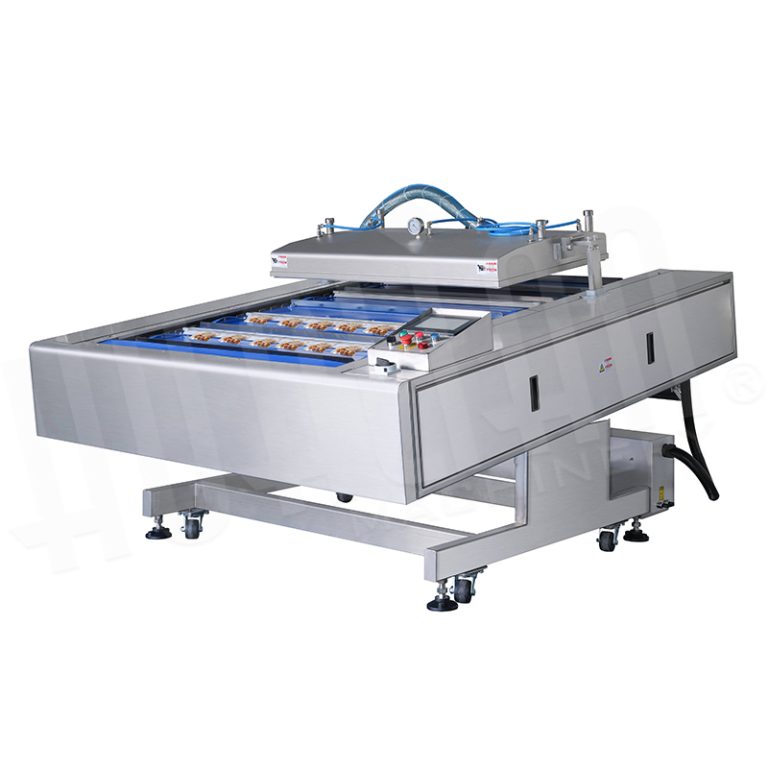
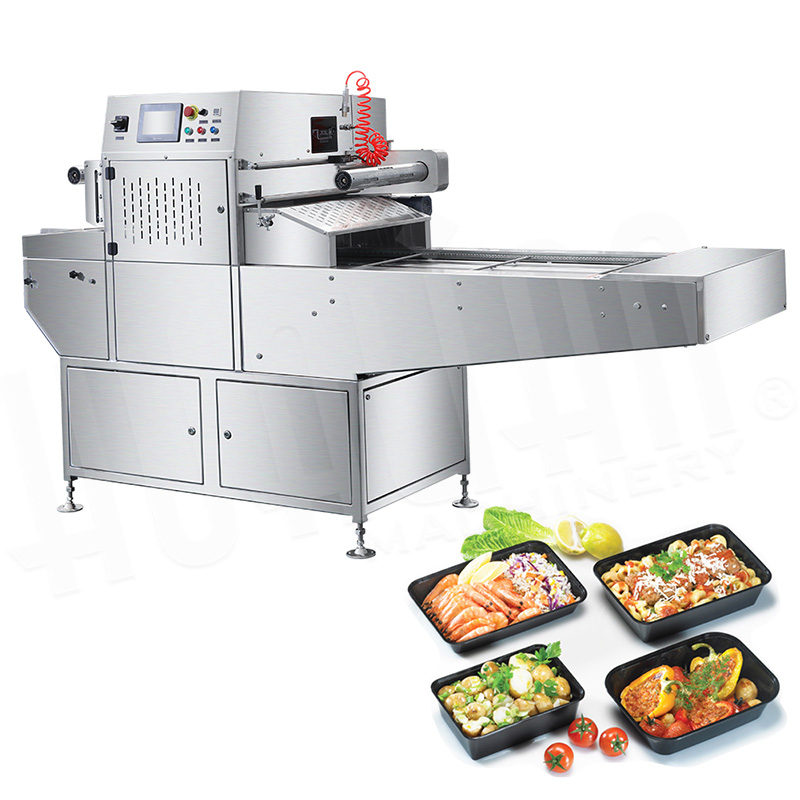
A Tablettversiegelungsmaschine wird verwendet, um vorgeformte Tabletts mit Nahrung mit Wärme und Druck abzudichten. Diese Maschinen verwenden oft KARTE (Modifizierte Atmosphäreverpackung) oder Vakuumhautverpackung Haltbarkeit zu verlängern. Tablettversiegelungen sind ideal für kleine bis mittlere Produktionslinien und bieten Flexibilität beim Umgang mit verschiedenen Tabletttypen und -materialien.
Hualian Pack bietet eine umfassende Palette an Schalenversiegelungslösungen, von halbautomatischen bis hin zu vollautomatischen Maschinen, einschließlich Modellen wie der HVT-450M MAP Schalenversiegelungsmaschine, HVT-450R Rotationsverpackungsmaschine mit modifizierter Atmosphäre, HVT-450A Vollautomatischer Schalenversiegler, Und HVT-350AZ Einzeiliger MAP-Vakuumschalenversiegler, um verschiedenen Produktionsanforderungen gerecht zu werden.
Erfahren Sie mehr: 3 Arten von Tablettverpackungen, die Sie wissen sollten
Erfahren Sie mehr: Wie funktioniert modifizierte Atmosphäreverpackungen?
Was ist die Thermoformenverpackungsmaschine?
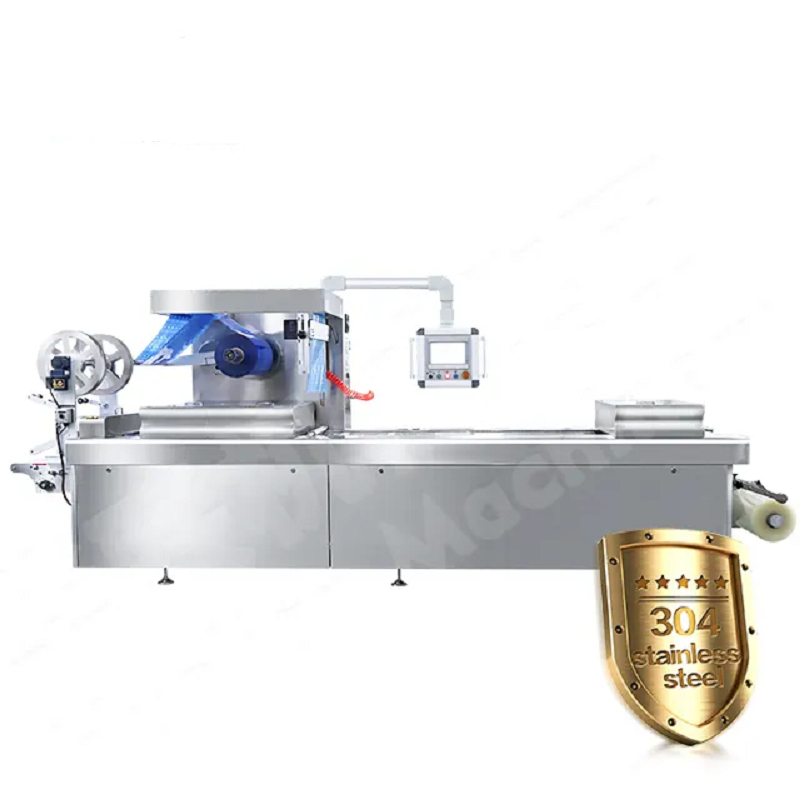
A Thermoformierungspackungsmaschine bildet das Tablett oder das Paket aus einem flachen Film in der Maschine selbst. Sobald das Produkt gebildet wurde, ist das Produkt in einem kontinuierlichen Prozess gefüllt und versiegelt. Thermoformiermaschinen werden typischerweise in Produktionsumgebungen mit hohem Volumen verwendet, in denen Automatisierung, Hygiene und Designanpassung oberste Prioritäten sind.
Hualian Pack bietet eine Reihe von Tiefzieh-Vakuumverpackungslösungen an, um unterschiedliche Produktionsanforderungen zu erfüllen, einschließlich der HVR-A(Q) Kompakte MAP Thermoform-Vakuumverpackungsmaschine, Die HVR-A Tiefzieh-Vakuumverpackungsmaschine der Mittelklasse, und die HVR-S Aluminiumfolien-Thermoform-Vakuumverpackungsmaschine.

Tablettversiegelung vs Thermoformierungspackungsmaschine: 12 Unterschiede
| Aspekt | Tablettversiegelungsmaschine | Thermoformierungspackungsmaschine |
|---|---|---|
| Wie es funktioniert | Versiegelte vorgefertigte Tabletts mit Film | Macht Tabletts aus dem Film, füllt und versiegelt sich dann |
| Verpackungsmethode | Unterstützt die Karten- und Vakuum -Hautverpackung | Unterstützt auch Karte und Vakuum mit mehr Formkontrolle |
| Geschwindigkeit | Gut für kleine bis mittlere Produktion | Schneller, am besten für die großflächige Produktion |
| Kosten | Niedrigere Anfangskosten | Höhere Vorabkosten, können aber Materialien sparen |
| Tablettquelle | Verwendet gekaufte Tabletts | Macht Tabletts im Haus aus Roll Stock Film |
| Wartung | Einfache und niedrige Kosten für die Wartung | Komplexer, braucht qualifizierte Techniker |
| Raum benötigt | Kompakt, passt in kleine Räume | Größere Maschine braucht mehr Platz |
| Benutzerfreundlichkeit | Einfach zu bedienen | Erfordert geschultes Personal |
| Verpackungslook | Tolles Aussehen, besonders für Vakuumhautpackungen | Ermöglicht benutzerdefinierte Formen und Designs |
| Flexibilität | Arbeitet mit vielen Tabletttypen und -materialien | Am besten für Standardverpackungen mit hoher Volumen |
| Hygiene | Sauber, aber einige manuelle Schritte beteiligten | Sehr hygienisch aufgrund der vollständigen Automatisierung |
| Am besten für | Delikate oder niedrigvolumige Lebensmittel | Standardisierte, hochvolumige Lebensmittel wie Fleisch oder Fertiggerichte |
Arbeitsprinzip
Der primäre mechanische Unterschied liegt in der Art und Weise, wie die Verpackung erstellt wird. A Tablettversiegelungsmaschine ist für die Arbeit mit vorgefertigten Tabletts konzipiert, die dem System zugeführt werden. In diese fertigen Schalen wird das Produkt manuell oder automatisch eingelegt, anschließend bringt die Maschine eine Oberfolie auf und versiegelt diese mit Hitze und Druck.
Im Gegensatz dazu a Thermoformierungspackungsmaschine ist ein “All-in-One”-System. Es werden keine vorgefertigten Tabletts verwendet; Stattdessen werden die Schalen im eigenen Haus aus einer Rolle Rohfolie geformt. Die Maschine erhitzt die Folie, bringt sie mithilfe von Vakuum oder Druck in die gewünschte Form, ermöglicht das Einfüllen des Produkts und versiegelt sie anschließend mit einer Oberfolie – alles in einem kontinuierlichen, synchronisierten Arbeitsablauf.
Verpackungsmethode
Beide Systeme sind hinsichtlich der Konservierungstechniken äußerst vielseitig. Tablettversiegelungen eignen sich hervorragend für die Standard-Heißversiegelung und Modifizierte Atmosphäreverpackung (Karte), Dabei wird die Luft in der Schale durch ein Schutzgasgemisch ersetzt, um den Verderb zu verlangsamen.
Thermoformmaschinen sind auch hervorragend für MAP- und Standard-Vakuumverpackungen geeignet. Da die Schale während des Prozesses jedoch direkt aus der Folie geformt wird, ermöglichen Thermoformer oft eine genauere Kontrolle über die endgültige Tiefe und Struktur der Verpackung und stellen so sicher, dass sich die Folie perfekt an das Produkt anpasst und so ein sicheres Finish gewährleistet.
Produktionseffizienz
Wenn es um den Durchsatz geht, ist der Thermoformierungspackungsmaschine ist im Allgemeinen für Großserienbetriebe im industriellen Maßstab konzipiert. Da es mit einer kontinuierlichen Bewegung arbeitet und mehrere Kavitäten gleichzeitig formen kann, bietet es deutlich höhere Produktionsgeschwindigkeiten als die meisten Batch-Systeme.
Tablettversiegelungen eignen sich besser für mittelgroße Betriebe oder Produktionsumgebungen, in denen Flexibilität wichtiger ist als reine Geschwindigkeit. Obwohl hochwertige Inline-Schalenversiegler sehr schnell sind, werden sie häufig von Unternehmen bevorzugt, die im Laufe des Tages häufig ihre Produktlinien wechseln müssen.
Kosten & Investition
Die finanzielle Eintrittsbarriere ist ein wesentliches Unterscheidungsmerkmal. Tablettversiegelungen erfordern eine viel geringere Anfangsinvestition und kosten in der Regel 30–501 TP3T weniger als eine vollständige Thermoformanlage. Dies macht sie zur ersten Wahl für kleine und mittlere Unternehmen (KMU) oder Unternehmen, die neue Produktlinien auf den Markt bringen.
Thermoformierungspackmaschinen Aufgrund ihrer komplexen “Form-Füll-Siegel”-Technik sind die Vorabkosten höher. Für Großproduzenten sind die Verpackungsmaterialkosten jedoch langfristig oft niedriger, da Rollenfolie deutlich günstiger ist als der Kauf vorgefertigter Schalen.
Verpackungsmaterialquelle
Das Supply Chain Management variiert zwischen diesen beiden Maschinen stark. Tablettversiegelungen Sie sind auf eine externe Versorgung mit vorgefertigten Tabletts angewiesen, was ein zuverlässiges Lieferantenmanagement und eine beträchtliche Lagerfläche für die Lagerung großer Stapel leerer Tabletts erfordert.
Thermoformiermaschinen bieten mehr Unabhängigkeit. Durch die interne Herstellung von Schalen aus kompakten Folienrollen können Hersteller ihre Abhängigkeit von Schalen-Drittanbietern verringern, die Transportkosten senken (da eine Folienrolle Tausende von Schalen produziert) und ihren eigenen Materialbestand besser kontrollieren.
Wartung & Reparatur
Die mechanische Komplexität hat direkten Einfluss auf den Wartungsbedarf. Tablettversiegelungen haben typischerweise einfachere mechanische Strukturen und weniger bewegliche Teile, die in der “Formungs”-Phase beteiligt sind. Dies erleichtert die Wartung und führt in der Regel zu geringeren Reparaturkosten über die Lebensdauer der Maschine.
Thermoformiermaschinen sind komplexer und umfassen Heiz-, Form-, Schneid- und Versiegelungsmodule. Folglich erfordern sie einen disziplinierteren Wartungsplan und hochqualifizierte Techniker, um sicherzustellen, dass alle Stationen – von der Folienspannung bis zu den Schneidmessern – perfekt kalibriert bleiben.
Fußabdruck und Platzanforderungen
Fabrikflächen sind eine erstklassige Ressource. Tablettdichtungsmaschinen sind im Allgemeinen kompakt und modular, sodass sie in kleinere Produktionsumgebungen passen oder ohne größere Renovierungen problemlos in bestehende Linien integriert werden können.
Thermoformiermaschinen haben eine viel größere Grundfläche. Da sie die Form-, Füll- und Versiegelungsmodule in einem einzigen linearen Rahmen integrieren, benötigen sie einen langen, speziellen Raum innerhalb der Anlage. Hersteller müssen ihr Anlagenlayout sorgfältig planen, um diese langgestreckten Industriesysteme unterzubringen.
Benutzerfreundlichkeit und Betrieb
Für Unternehmen, die sich mit der Ausbildung von Arbeitskräften befassen, Tablettversiegelungen sind sehr vorteilhaft. Sie sind benutzerfreundlich und erfordern für den täglichen Betrieb nur minimale Schulung. Der Prozess ist unkompliziert und macht sie für das allgemeine Arbeitspersonal zugänglich.
Thermoformiermaschinen erfordern komplexere Einstellungen, einschließlich einer präzisen Temperaturregelung für die Folienerwärmung, Vakuumzeitsteuerung und Folienspannung. Daher sind in der Regel geschulte Bediener und Ingenieure erforderlich, die sich mit den anspruchsvollen SPS-Einstellungen (Programmable Logic Controller) und der mechanischen Synchronisierung auskennen.
Verpackungsform und ästhetische Anziehungskraft
Die visuelle Präsentation im Verkaufsregal ist für Verbrauchermarken von entscheidender Bedeutung. Tablettversiegelungen sorgen für ein hochwertiges, professionelles Finish mit sauberen, gleichmäßigen Versiegelungen. Vorgefertigte Tabletts sind oft stabiler und bieten ein hochwertiges Aussehen, das sich ideal für Fertiggerichte und Genussmittel eignet.
Thermoformmaschine ermöglicht hochgradig individuelle Verpackungsformen und Branding. Da die Maschine die Schale aus Folie formt, können Hersteller einzigartige Geometrien oder Designs mit mehreren Fächern erstellen, die speziell auf die Form des Produkts zugeschnitten sind, was ein großer Vorteil für den Massenvertrieb im Einzelhandel ist.
Flexibilität und Anwendungsbereich
Wenn Ihr Unternehmen eine große Vielfalt an Produkten in unterschiedlichen Formen und Größen verpackt, Schalenversiegelungsmaschinen bieten unübertroffene Flexibilität. Der Wechsel zwischen verschiedenen Schalenformen erfordert in der Regel einen schnellen Wechsel des Siegelwerkzeugs, der in wenigen Minuten erledigt ist.
Thermoformiermaschinen sind weniger flexibel, wenn es um Abwechslung geht. Eine Änderung des Schalenformats erfordert in der Regel den Austausch teurer und schwerer Formensätze, was zu erheblichen Ausfallzeiten führt. Diese Maschinen zeichnen sich durch lange, konsistente Produktionsläufe für standardisierte Produkte aus.
Verpackungshygiene
Hygienestandards sind bei der Lebensmittelverarbeitung von größter Bedeutung. Tiefziehverpackungsmaschinen bieten ein höheres Maß an Hygiene, da sie als geschlossenes und automatisiertes “Form-Füll-Siegel”-System arbeiten. Die Schale wird in einer Umgebung geformt, befüllt und versiegelt, wodurch das Risiko einer Kontamination durch die Luft verringert wird.
Tablettversiegelungen Während der Tray-Ladephase ist möglicherweise mehr manuelle Handhabung erforderlich, obwohl dies durch automatische Entschachteler gemildert werden kann. Unabhängig davon sind beide Maschinen in der Lage, strenge globale Lebensmittelsicherheitsstandards zu erfüllen, wenn sie in einer kontrollierten Anlage betrieben werden.
Produktkompatibilität
Schließlich bestimmt die Art Ihres Produkts die Maschine. Tablettversiegelungen eignen sich hervorragend für empfindliche, unregelmäßig geformte oder hochwertige Artikel, die sorgfältig manuell oder halbautomatisch in ein stabiles Tablett gelegt werden müssen.
Thermoformmaschinen sind die ideale Wahl für standardisierte Lebensmittelprodukte wie Wurstwaren, Käseblöcke oder einheitliche Fertiggerichte. Ihre Fähigkeit, einen Hohlraum zu bilden, der den Produktabmessungen entspricht, sorgt für eine gute Passform, was besonders bei der Vakuumverpackung von gleichmäßigen, gleichmäßigen Gütern in großen Mengen von Vorteil ist.
Wie wähle ich zwischen Tablettversiegelung und Thermoformierungspackungsmaschine?
Ihre Wahl sollte von der Produktionsskala, dem Budget, der Produktvielfalt und der langfristigen Betriebsstrategie abhängen.
Wählen Sie a Tablettversiegelungsmaschine wenn du:
- Ein moderates Produktionsvolumen haben
- Benötigen Sie Verpackungsflexibilität
- Willst du niedrigere Startkosten

Wählen Sie Hualian: Mühelose Automatisierung, maximale Ausgabe
Wählen Sie a Thermoformierungspackungsmaschine wenn du:
- Haben hochvolumige Produktionsbedürfnisse
- Erfordernis Inline-Automatisierung
- Möchten Sie die vollständige Kontrolle über Verpackungsdesign und Material
Eile mit Hualian: Custom Tably formend, nahtloses Versiegelung
Bewerten Sie Ihre Betriebsziele, die Verfügbarkeit von Arbeitskräften und Ihre Hygieneanforderungen, bevor Sie Ihre endgültige Entscheidung treffen.
FAQs
1. Welche Maschine ist besser für ein kleines Unternehmen oder Startup?
Aufgrund der geringeren Anschaffungskosten, der einfacheren Bedienung und des geringeren Platzbedarfs bei begrenzten Produktionsflächen ist der Schalenversiegler im Allgemeinen besser für Startups geeignet.
2. Gibt es einen signifikanten Unterschied bei den Materialkosten?
Ja, Thermoformen führt in der Regel zu geringeren langfristigen Materialkosten, da Folienrollen kostengünstiger sind und weniger Lagerraum beanspruchen als Paletten mit vorgefertigten Schalen.
3. Können beide Maschinen eine Verpackung unter modifizierter Atmosphäre (MAP) durchführen?
Sowohl Schalenversiegler als auch Tiefziehmaschinen sind vollständig in der Lage, MAP durchzuführen, um die Haltbarkeit frischer Lebensmittelprodukte zu verlängern.
4. Welche Maschine bietet eine bessere Produktionsgeschwindigkeit für Großserienaufträge?
Die Tiefziehverpackungsmaschine eignet sich hervorragend für die Massenproduktion, da sie mehrere Verpackungen in einem kontinuierlichen, automatisierten Hochgeschwindigkeitszyklus formen und verschließen kann.
5. Wie schwierig ist es, zwischen verschiedenen Tablettgrößen zu wechseln?
Schalenverschließer bieten viel schnellere Umrüstungen und erfordern in der Regel nur einen einfachen Werkzeugwechsel, während Thermoformmaschinen komplexe Formwechsel erfordern, die mit mehr Ausfallzeiten verbunden sind.
Abschluss
Beide Schalenverschließmaschinen Und Thermoformierungspackmaschinen sind wesentliche Technologien in der modernen Lebensmittelverpackung. Jedes bietet einzigartige Vorteile, die auf Ihrem Geschäftsumfang und Ihren Verpackungszielen basieren. Indem Sie die Kernunterschiede verstehen und sie auf Ihre Produktionsanforderungen abstimmen, können Sie eine strategische Investition tätigen, die sowohl die Effizienz als auch die Produktattraktivität steigert.