Ir al contenido
Introducción
La creciente demanda de envasadoras de alimentos
En la industria alimentaria de alto riesgo, el empaque ya no es solo un contenedor, es un factor crítico para la producción. Extensión Shelf-Life, seguridad alimentaria, y Competitividad de marca. Como la demanda de Envasado en atmósfera modificada y Envasado Skin al vacío Los fabricantes de alimentos se enfrentan a una elección estratégica fundamental: Sealing vs. Termoformación.
Elegir el equipo adecuado no se trata sólo de velocidad; se trata de optimizar su rendimiento. Costo total de propiedad. Si bien ambas tecnologías tienen como objetivo proteger el producto, operan con diferentes principios mecánicos y se adaptan a diferentes escalas de producción.
La importancia de elegir el equipo adecuado
Seleccionar la máquina envasadora adecuada no es simplemente una cuestión de eficiencia operativa: es una decisión estratégica que impacta directamente los costos de producción, la calidad del producto final y la competitividad general del mercado. Entre las soluciones más utilizadas en el sector alimentario industrial se encuentran máquinas selladoras de bandejas y máquinas de embalaje de termoformado. Si bien ambas tecnologías cumplen el objetivo principal de proteger el producto, operan según principios mecánicos fundamentalmente diferentes y atienden a distintas escalas de producción y necesidades comerciales. Comprender sus diferencias es esencial para optimizar su retorno de la inversión.

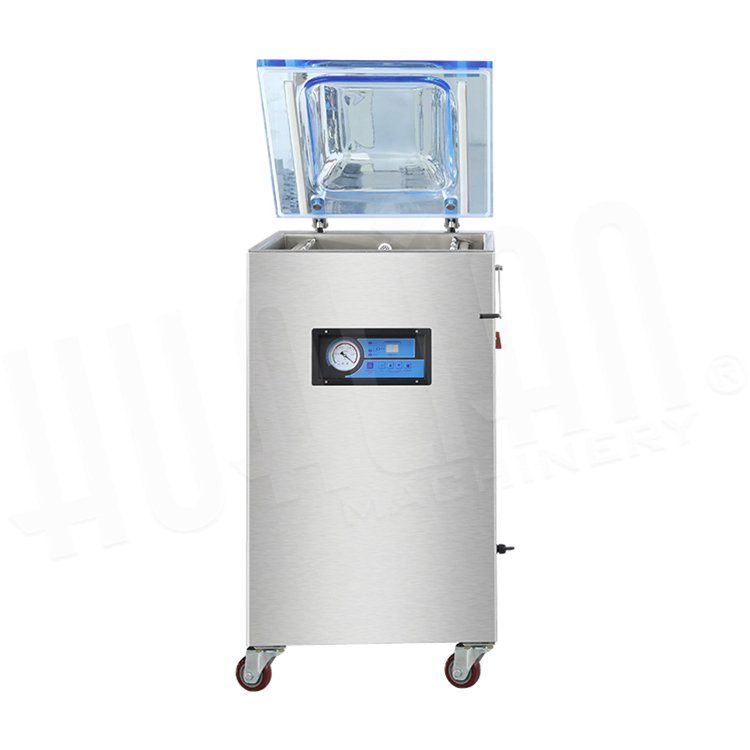
Hualian ofrece una gama completa de máquinas fiables para el envasado de alimentos
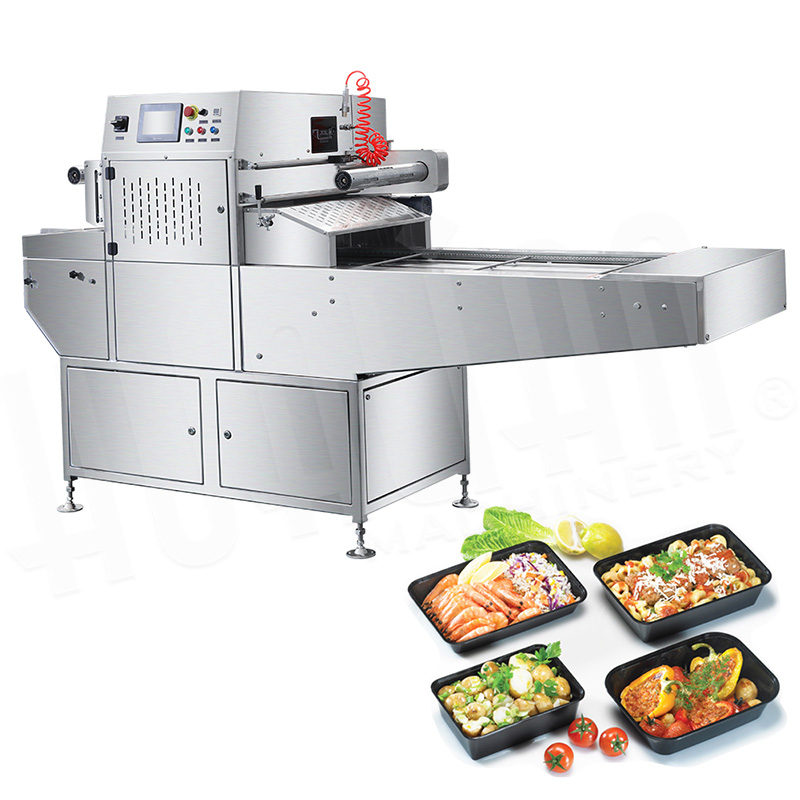
¿Qué es la selladora de bandejas?
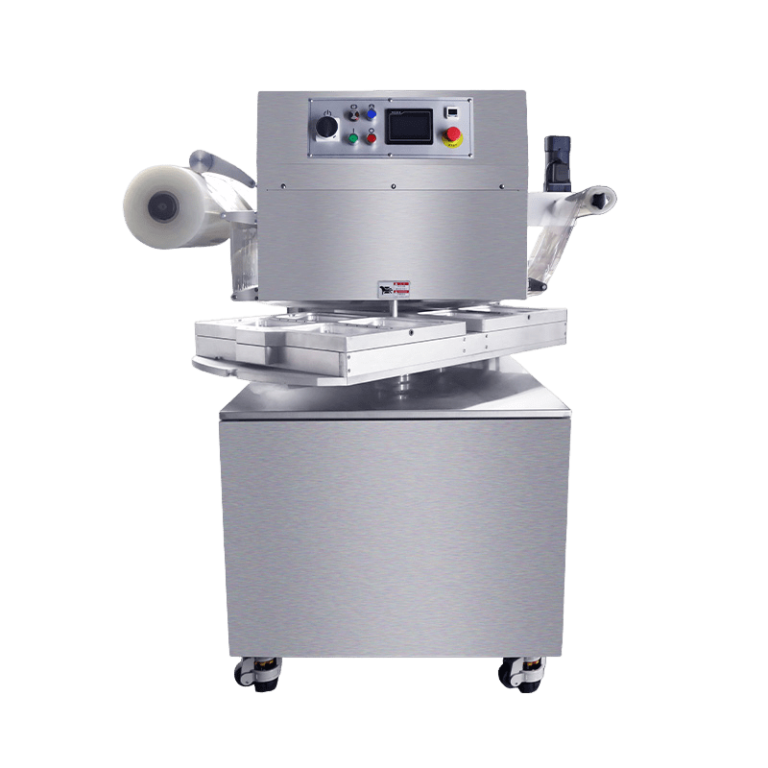
A selladora de bandejas se utiliza para sellar bandejas preformadas llenas de alimentos mediante calor y presión. Estas máquinas suelen utilizar MAPA (envasado en atmósfera modificada) o envasado skin al vacío para prolongar la vida útil. Las selladoras de bandejas son ideales para líneas de producción pequeñas y medianas y ofrecen flexibilidad en el manejo de distintos tipos de bandejas y materiales.
Hualian Pack ofrece una gama completa de soluciones de sellado de bandejas, desde máquinas semiautomáticas hasta máquinas totalmente automáticas, incluidos modelos como el Máquina selladora de bandejas MAP HVT-450M, Máquina envasadora rotativa de atmósfera modificada HVT-450R, Selladora de bandejas completamente automática HVT-450A, y Sellador de bandejas al vacío MAP de una línea HVT-350AZ, para adaptarse a diversas necesidades de producción.
Más información: 3 tipos de envases de sellado de bandejas que debe conocer
Más información: ¿Cómo funciona el envasado en atmósfera modificada?
¿Qué es la termoformadora?
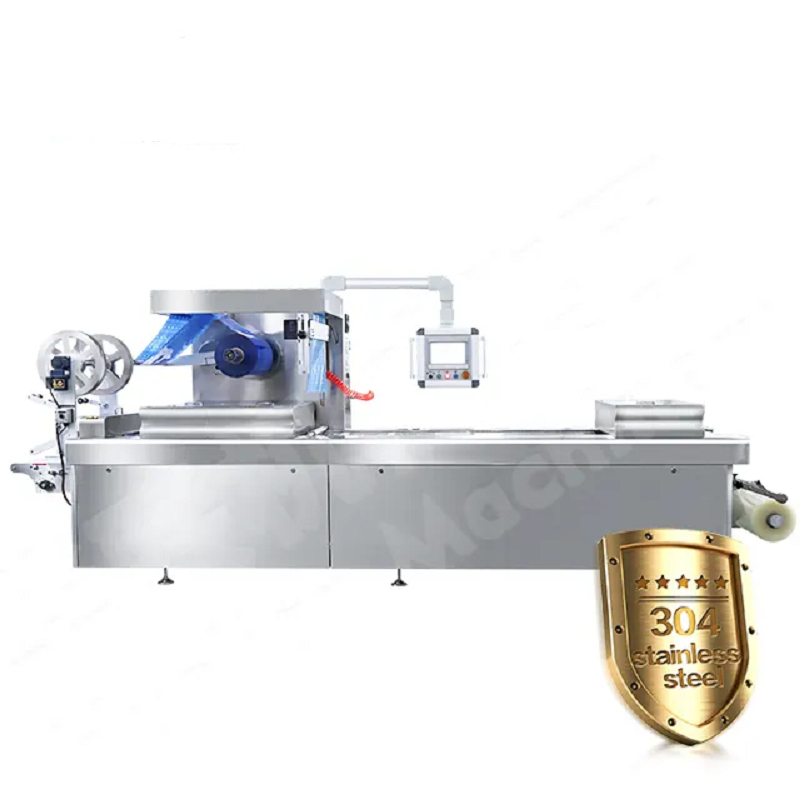
A termoformadora forma la bandeja o el envase a partir de una lámina plana dentro de la propia máquina. Una vez formado, el producto se llena y se sella en un proceso continuo. Máquinas de termoformado se suelen utilizar en entornos de producción de gran volumen en los que la automatización, la higiene y la personalización del diseño son las principales prioridades.
Hualian Pack ofrece una gama de soluciones de envasado al vacío por termoformado para satisfacer diferentes necesidades de producción, incluida la Máquina de envasado al vacío termoformado MAP compacta HVR-A(Q), el Máquina de envasado al vacío termoformado de gama media HVR-A, y el Máquina de envasado al vacío termoformado de película de aluminio HVR-S.

Sellado de bandejas vs Envasadora de termoformado: 12 diferencias
| Aspecto | Selladora de bandejas | Envasadora de termoformado |
|---|---|---|
| Cómo funciona | Sella con film las bandejas ya preparadas | Fabrica bandejas a partir de film, luego rellena y sella |
| Método de envasado | Admite envasado MAP y skin al vacío | También admite MAP y vacío, con más control de la forma |
| Velocidad | Bueno para producciones pequeñas y medianas | Más rápido, mejor para la producción a gran escala |
| Coste | Menor coste inicial | Mayor coste inicial, pero puede ahorrar en materiales |
| Fuente de bandejas | Utiliza bandejas compradas | Fabricación propia de bandejas a partir de rollos de película |
| Mantenimiento | Mantenimiento sencillo y económico | Más complejo, necesita técnicos cualificados |
| Espacio necesario | Compacto, cabe en espacios pequeños | Máquina más grande, necesita más espacio |
| Facilidad de uso | Manejo sencillo | Requiere personal formado |
| Aspecto del embalaje | Gran aspecto, especialmente para los envases skin al vacío | Permite formas y diseños personalizados |
| Flexibilidad | Funciona con muchos tipos de bandejas y materiales | Ideal para envases estándar de gran volumen |
| Higiene | Limpio, pero con algunos pasos manuales | Muy higiénico gracias a la automatización total |
| Lo mejor para | Alimentos delicados o de poco volumen | Alimentos estandarizados de gran volumen, como la carne o los platos precocinados |
Principio de funcionamiento
La principal diferencia mecánica radica en cómo se crea el paquete. A selladora de bandejas está diseñado para funcionar con bandejas prefabricadas que se introducen en el sistema. El producto se coloca manual o automáticamente en estas bandejas terminadas, y luego la máquina aplica una película superior, sellándola con calor y presión.
En contraste, un termoformadora Es un sistema “todo en uno”. No utiliza bandejas prefabricadas; en cambio, forma las bandejas internamente a partir de un rollo de película original. La máquina calienta la película, le da la forma deseada mediante vacío o presión, permite el llenado del producto y luego la sella con una red superior, todo en un flujo de trabajo continuo y sincronizado.
Método de envasado
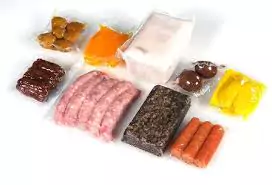
Ambos sistemas son muy versátiles en cuanto a técnicas de conservación. Selladoras de bandejas son excelentes para sellado térmico estándar y Envasado en atmósfera modificada (MAP), donde el aire de la bandeja se reemplaza con una mezcla de gas protector para frenar el deterioro.
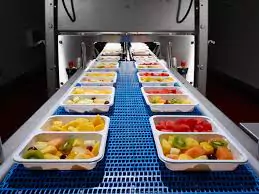
Las máquinas de termoformado también son altamente capaces de envasado al vacío estándar y MAP. Sin embargo, debido a que la bandeja se forma directamente a partir de la película durante el proceso, los termoformadores a menudo permiten un control más complejo sobre la profundidad y estructura final del paquete, asegurando que la película se ajuste perfectamente al producto para un acabado seguro.
Eficacia de la producción
En lo que respecta al rendimiento, el termoformadora generalmente se construye para operaciones de gran volumen y escala industrial. Debido a que opera con un movimiento continuo y puede formar múltiples cavidades a la vez, ofrece velocidades de producción significativamente más altas que la mayoría de los sistemas por lotes.
Selladoras de bandejas son más adecuados para operaciones de mediana escala o entornos de producción donde la flexibilidad es más importante que la velocidad bruta. Si bien los selladores de bandejas en línea de alta gama son muy rápidos, a menudo son los preferidos por las empresas que necesitan cambiar las líneas de productos con frecuencia a lo largo del día.
Coste e inversión
La barrera financiera de entrada es un diferenciador significativo. Selladoras de bandejas requieren una inversión de capital inicial mucho menor, y normalmente cuestan entre 30 y 501 TP3T menos que una configuración de termoformado completa. Esto los convierte en la opción preferida para las pequeñas y medianas empresas (PYME) o para las empresas que lanzan nuevas líneas de productos.
Termoformadoras implican un costo inicial más alto debido a su compleja ingeniería de “formar, llenar y sellar”. Sin embargo, para los productores a gran escala, los costos del material de embalaje a largo plazo suelen ser menores porque la película en rollo es significativamente más barata que comprar bandejas prefabricadas.
Fuente del material de envasado
La gestión de la cadena de suministro varía mucho entre estas dos máquinas. Selladoras de bandejas dependen de un suministro externo de bandejas prefabricadas, lo que requiere una gestión confiable de los proveedores y un importante espacio de almacén para almacenar voluminosas pilas de bandejas vacías.
Máquinas de termoformado ofrecer más independencia. Al formar bandejas internamente a partir de rollos compactos de película, los fabricantes pueden reducir su dependencia de proveedores externos de bandejas, reducir los costos de transporte (ya que un rollo de película produce miles de bandejas) y controlar mejor su propio inventario de materiales.
Mantenimiento y reparación
La complejidad mecánica influye directamente en los requisitos de mantenimiento. Selladoras de bandejas Por lo general, tienen estructuras mecánicas más simples y menos piezas móviles involucradas en la etapa de “formación”. Esto los hace más fáciles de mantener y, por lo general, genera menores costos de reparación durante la vida útil de la máquina.
Máquinas de termoformado son más complejos e integran módulos de calentamiento, conformado, corte y sellado. En consecuencia, requieren un programa de mantenimiento más disciplinado y técnicos altamente capacitados para garantizar que todas las estaciones, desde el tensado de la película hasta las cuchillas de corte, permanezcan en perfecta calibración.
Espacio necesario
El espacio de la fábrica es un recurso de primera calidad. Selladoras de bandejas son generalmente compactos y modulares, lo que les permite adaptarse a entornos de producción más pequeños o integrarse fácilmente en líneas existentes sin renovaciones importantes.
Máquinas de termoformado tienen una huella mucho mayor. Debido a que integran los módulos de formado, llenado y sellado en un único marco lineal, requieren un espacio largo y dedicado dentro de la instalación. Los fabricantes deben planificar cuidadosamente el diseño de sus instalaciones para dar cabida a estos sistemas industriales alargados.
Facilidad de uso y funcionamiento
Para empresas preocupadas por la capacitación laboral, selladores de bandeja son altamente ventajosos. Son fáciles de usar y requieren una formación mínima para su funcionamiento diario. El proceso es sencillo, lo que los hace accesibles para el personal laboral en general.
Máquinas de termoformado implican configuraciones más complejas, incluido el control preciso de la temperatura para el calentamiento de la película, el tiempo de vacío y el tensado de la película. Como resultado, normalmente requieren operadores e ingenieros capacitados que comprendan la configuración sofisticada del PLC (controlador lógico programable) y la sincronización mecánica.
Forma y estética del envase
La presentación visual en el lineal es fundamental para las marcas de consumo. Selladoras de bandejas Proporciona un acabado profesional de alta calidad con sellos limpios y uniformes. Las bandejas prefabricadas suelen ser más resistentes y ofrecen un aspecto premium ideal para comidas listas para comer y artículos alimenticios de lujo.
maquina termoformadora permite formas de embalaje y marcas altamente personalizadas. Dado que la máquina forma la bandeja a partir de una película, los fabricantes pueden crear geometrías únicas o diseños de múltiples compartimentos que se adaptan específicamente a la forma del producto, lo cual es una gran ventaja para la distribución minorista masiva.
Flexibilidad y gama de aplicaciones
Si su empresa envasa una amplia variedad de productos en diferentes formas y tamaños, máquinas selladoras de bandejas ofrecen una flexibilidad inigualable. Cambiar entre diferentes formas de bandeja normalmente implica un cambio rápido de la herramienta de sellado, que se puede realizar en minutos.
Máquinas de termoformado son menos flexibles cuando se trata de variedad. Cambiar el formato de la bandeja normalmente requiere reemplazar juegos de moldes pesados y costosos, lo que genera un tiempo de inactividad significativo. Estas máquinas destacan cuando ejecutan tiradas de producción largas y consistentes para productos estandarizados.
Higiene de los envases
Las normas de higiene son primordiales en el procesamiento de alimentos. Las máquinas de envasado termoformado proporcionan un mayor nivel de higiene porque funcionan como un sistema cerrado y automatizado de “formado, llenado y sellado”. La bandeja se forma, llena y sella en un solo entorno, lo que reduce el riesgo de contaminación transmitida por el aire.
Selladoras de bandejas Puede implicar una mayor manipulación manual durante la etapa de carga de bandejas, aunque esto se puede mitigar con desapiladores automáticos. Independientemente, ambas máquinas son capaces de cumplir estrictos estándares globales de seguridad alimentaria cuando se operan dentro de una instalación controlada.
Compatibilidad de los productos
Finalmente, la naturaleza de su producto dicta la máquina. Selladoras de bandejas son excelentes para artículos delicados, de forma irregular o de primera calidad que requieren una cuidadosa colocación manual o semiautomática en una bandeja resistente.
Las máquinas termoformadoras son la opción ideal para productos alimenticios estandarizados como embutidos, bloques de queso o comidas preparadas uniformes. Su capacidad para formar una cavidad que coincida con las dimensiones del producto garantiza un ajuste perfecto, lo que resulta especialmente beneficioso para el envasado al vacío de grandes volúmenes de productos consistentes y uniformes.
¿Cómo elegir entre termoselladora y termoformadora?
Su elección debe depender de la escala de producción, el presupuesto, la variedad de productos y la estrategia operativa a largo plazo.
Elija una selladora de bandejas si tú:
- Tener un volumen de producción moderado
- Necesidad de flexibilidad de envasado
- Quiere menores costes de puesta en marcha

Elija Hualian: automatización sin esfuerzo, máximo rendimiento
Elija una termoformadora si tú:
- Necesidades de producción de gran volumen
- Requieren automatización en línea
- Desea un control total sobre el diseño y el material del envase
Mejore con Hualian: Formación de bandejas a medida, sellado sin juntas
Evalúe sus objetivos operativos, la disponibilidad de mano de obra y los requisitos de higiene antes de tomar la decisión final.
Preguntas frecuentes
1. ¿Qué máquina es mejor para una pequeña empresa o una nueva empresa?
El sellador de bandejas generalmente es mejor para las empresas emergentes debido a su menor costo inicial, operación más simple y menor tamaño en espacios de producción limitados.
2. ¿Existe una diferencia significativa en los costos de materiales?
Sí, el termoformado generalmente genera costos de material más bajos a largo plazo porque los rollos de película son más rentables y ocupan menos espacio de almacenamiento que las paletas de bandejas prefabricadas.
3. ¿Pueden ambas máquinas realizar envasado en atmósfera modificada (MAP)?
Tanto las selladoras de bandejas como las máquinas termoformadoras son totalmente capaces de realizar MAP para extender la vida útil de los productos alimenticios frescos.
4. ¿Qué máquina ofrece mejor velocidad de producción para pedidos de gran volumen?
La máquina de envasado termoformado es superior para la producción de gran volumen porque puede formar y sellar múltiples paquetes en un ciclo automatizado continuo y de alta velocidad.
5. ¿Qué tan difícil es cambiar entre diferentes tamaños de bandeja?
Las selladoras de bandejas ofrecen cambios mucho más rápidos y generalmente requieren solo un simple cambio de herramienta, mientras que las máquinas de termoformado requieren cambios de molde complejos que implican más tiempo de inactividad.
Conclusión
Ambos máquinas selladoras de bandejas y máquinas de embalaje de termoformado son tecnologías esenciales en el envasado de alimentos moderno. Cada uno ofrece ventajas únicas según la escala de su negocio y los objetivos de embalaje. Al comprender las diferencias fundamentales y alinearlas con sus necesidades de producción, puede realizar una inversión estratégica que mejore tanto la eficiencia como el atractivo del producto.