Skip to content
Introduction
The Growing Demand for Food Packaging Machines
In the high-stakes food industry, packaging is no longer just a container—it’s a critical factor for shelf-life extension, food safety, and brand competitiveness. As the demand for Modified Atmosphere Packaging and Vacuum Skin Packaging grows, food manufacturers face a pivotal strategic choice: Tray Sealing vs. Thermoforming.
Choosing the right equipment isn’t just about speed; it’s about optimizing your Total Cost of Ownership. While both technologies aim to protect the product, they operate on different mechanical principles and suit different production scales.
The Importance of Choosing the Right Equipment
Selecting the appropriate packaging machine is not merely a matter of operational efficiency—it is a strategic decision that directly impacts production costs, final product quality, and overall market competitiveness. Among the most widely used solutions in the industrial food sector are tray sealing machines and thermoforming packaging machines. While both technologies serve the primary goal of protecting the product, they operate on fundamentally different mechanical principles and cater to distinct production scales and business needs. Understanding their differences is essential for optimizing your ROI.

Hualian Offers a Full Range of Reliable Food Packaging Machines
What is the Tray Sealer?
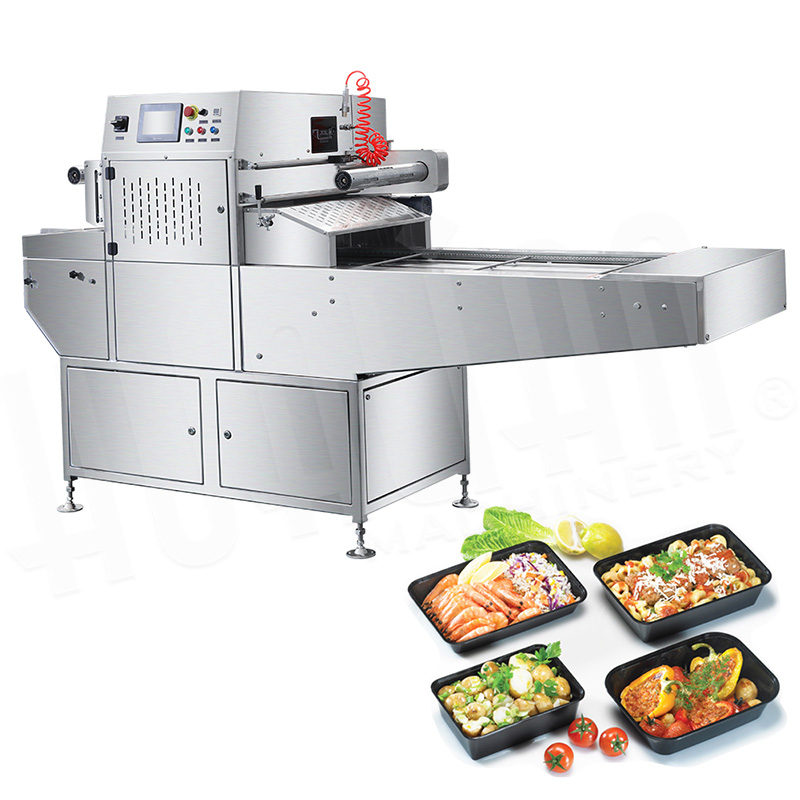
A tray sealing machine is used to seal pre-formed trays filled with food using heat and pressure. These machines often utilize MAP (Modified Atmosphere Packaging) or vacuum skin packaging to extend shelf life. Tray sealers are ideal for small to medium production lines and offer flexibility in handling different tray types and materials.
Hualian Pack provides a full range of tray sealing solutions, from semi-automatic to fully automatic machines, including models like the HVT-450M MAP Tray Sealer Machine, HVT-450R Rotary Modified Atmosphere Packaging Machine, HVT-450A Fully Automatic Tray Sealer, and HVT-350AZ One-line MAP Vacuum Tray Sealer, to suit various production needs.
Learn more: 3 Types of Tray Sealing Packaging You Should Know
Learn more: How Does Modified Atmosphere Packaging Work?
What is the Thermoforming Packaging Machine?
A thermoforming packaging machine forms the tray or package from a flat film within the machine itself. Once formed, the product is filled and sealed in a continuous process. Thermoforming machines are typically used in high-volume production environments where automation, hygiene, and design customization are top priorities.
Hualian Pack offers a range of thermoforming vacuum packaging solutions to meet different production needs, including the HVR-A(Q) Compact MAP Thermoforming Vacuum Packaging Machine, the HVR-A Mid-range Thermoforming Vacuum Packaging Machine, and the HVR-S Aluminum Film Thermoforming Vacuum Packaging Machine.

Tray Sealing vs Thermoforming Packaging Machine: 12 Differences
| Aspect | Tray Sealing Machine | Thermoforming Packaging Machine |
|---|---|---|
| How it works | Seals ready-made trays with film | Makes trays from film, then fills and seals |
| Packaging method | Supports MAP and vacuum skin packaging | Also supports MAP and vacuum, with more shape control |
| Speed | Good for small to medium production | Faster, best for large-scale production |
| Cost | Lower initial cost | Higher upfront cost, but may save on materials |
| Tray source | Uses purchased trays | Makes trays in-house from roll stock film |
| Maintenance | Easy and low cost to maintain | More complex, needs skilled technicians |
| Space needed | Compact, fits in small spaces | Larger machine, needs more room |
| Ease of use | Simple to operate | Requires trained staff |
| Packaging look | Great appearance, especially for vacuum skin packs | Allows custom shapes and designs |
| Flexibility | Works with many tray types and materials | Best for standard, high-volume packaging |
| Hygiene | Clean, but some manual steps involved | Very hygienic due to full automation |
| Best for | Delicate or low-volume food items | Standardized, high-volume foods like meat or ready meals |
Working Principle
The primary mechanical difference lies in how the package is created. A tray sealer machine is designed to work with pre-made trays that are fed into the system. The product is manually or automatically placed into these finished trays, and the machine then applies a top film, sealing it with heat and pressure.
In contrast, a thermoforming packaging machine is an “all-in-one” system. It does not use pre-made trays; instead, it forms the trays in-house from a roll of stock film. The machine heats the film, forms it into the desired shape using vacuum or pressure, allows for product filling, and then seals it with a top web—all in one continuous, synchronized workflow.
Packaging Method
Both systems are highly versatile in terms of preservation techniques. Tray sealers are excellent for standard heat sealing and Modified Atmosphere Packaging (MAP), where the air in the tray is replaced with a protective gas mixture to slow down spoilage.
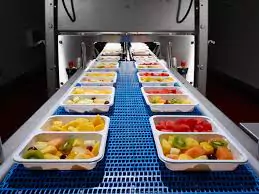
Thermoforming machines are also highly capable of MAP and standard vacuum packaging. However, because the tray is formed directly from film during the process, thermoformers often allow for more intricate control over the final depth and structure of the package, ensuring the film conforms perfectly to the product for a secure finish.
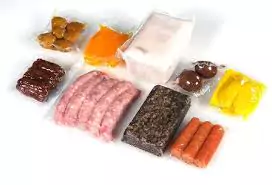
Production Efficiency
When it comes to throughput, the thermoforming packaging machine is generally built for high-volume, industrial-scale operations. Because it operates on a continuous motion and can form multiple cavities at once, it offers significantly higher production speeds than most batch-style systems.
Tray sealers are better suited for medium-scale operations or production environments where flexibility is more important than raw speed. While high-end inline tray sealers are very fast, they are often favored by businesses that need to change product lines frequently throughout the day.
Cost & Investment
The financial barrier to entry is a significant differentiator. Tray sealers require a much lower initial capital investment, typically costing 30–50% less than a full thermoforming setup. This makes them the go-to choice for small-to-medium enterprises (SMEs) or businesses launching new product lines.
Thermoforming packaging machines involve a higher upfront cost due to their complex “form-fill-seal” engineering. However, for large-scale producers, the long-term packaging material costs are often lower because roll-stock film is significantly cheaper than purchasing pre-made trays.
Packaging Material Source
Supply chain management varies greatly between these two machines. Tray sealers depend on an external supply of pre-made trays, which requires reliable vendor management and significant warehouse space to store bulky stacks of empty trays.
Thermoforming machines offer more independence. By forming trays in-house from compact rolls of film, manufacturers can reduce their dependence on third-party tray vendors, lower transportation costs (since one roll of film produces thousands of trays), and better control their own material inventory.
Maintenance & Repair
Mechanical complexity directly influences maintenance requirements. Tray sealers typically have simpler mechanical structures and fewer moving parts involved in the “forming” stage. This makes them easier to maintain and usually results in lower repair costs over the machine’s lifespan.
Thermoforming machines are more complex, integrating heating, forming, cutting, and sealing modules. Consequently, they require a more disciplined maintenance schedule and highly skilled technicians to ensure that all stations—from the film tensioning to the cutting knives—remain in perfect calibration.
Footprint & Space Requirements
Factory floor space is a premium resource. Tray sealing machines are generally compact and modular, allowing them to fit into smaller production environments or be easily integrated into existing lines without major renovations.
Thermoforming machines have a much larger footprint. Because they integrate the forming, filling, and sealing modules into a single linear frame, they require a long, dedicated space within the facility. Manufacturers must carefully plan their facility layout to accommodate these elongated industrial systems.
Ease of Use & Operation
For businesses concerned with labor training, tray sealers are highly advantageous. They are user-friendly and require minimal training for daily operation. The process is straightforward, making them accessible for general labor staff.
Thermoforming machines involve more complex settings, including precise temperature control for film heating, vacuum timing, and film tensioning. As a result, they typically require trained operators and engineers who understand the sophisticated PLC (Programmable Logic Controller) settings and mechanical synchronization.
Packaging Form & Aesthetic Appeal
Visual presentation on the retail shelf is critical for consumer brands. Tray sealers provide a high-quality, professional finish with clean, uniform seals. Pre-made trays are often sturdier, offering a premium look that is ideal for ready-to-eat meals and luxury food items.
Thermoforming machine allows for highly customized packaging shapes and branding. Since the machine forms the tray from film, manufacturers can create unique geometries or multi-compartment designs that are specifically tailored to the product’s shape, which is a major advantage for mass retail distribution.
Flexibility & Application Range
If your business packages a wide variety of products in different shapes and sizes, tray sealing machines offer unmatched flexibility. Changing between different tray shapes usually involves a quick change of the sealing tool, which can be done in minutes.
Thermoforming machines are less flexible when it comes to variety. Changing the tray format typically requires replacing expensive and heavy mold sets, which leads to significant downtime. These machines excel when running long, consistent production runs for standardized products.
Packaging Hygiene
Hygiene standards are paramount in food processing. Thermoforming packaging machines provide a higher level of hygiene because they operate as a closed and automated “form-fill-seal” system. The tray is formed, filled, and sealed in one environment, reducing the risk of airborne contamination.
Tray sealers may involve more manual handling during the tray loading stage, although this can be mitigated with automatic de-nesters. Regardless, both machines are capable of meeting strict global food safety standards when operated within a controlled facility.
Product Compatibility
Finally, the nature of your product dictates the machine. Tray sealers are excellent for delicate, irregular-shaped, or premium items that require careful manual or semi-automated placement into a sturdy tray.
Thermoforming machines are the ideal choice for standardized food products such as deli meats, cheese blocks, or uniform ready meals. Their ability to form a cavity that matches the product dimensions ensures a snug fit, which is particularly beneficial for high-volume vacuum packaging of consistent, uniform goods.
How to Choose Between Tray Sealer and Thermoforming Packaging Machine?
Your choice should depend on production scale, budget, product variety, and long-term operational strategy.
Choose a tray sealing machine if you:
- Have a moderate production volume
- Need packaging flexibility
- Want lower startup costs

Choose Hualian: Effortless Automation, Maximum Output
Choose a thermoforming packaging machine if you:
- Have high-volume production needs
- Require in-line automation
- Want complete control over packaging design and material
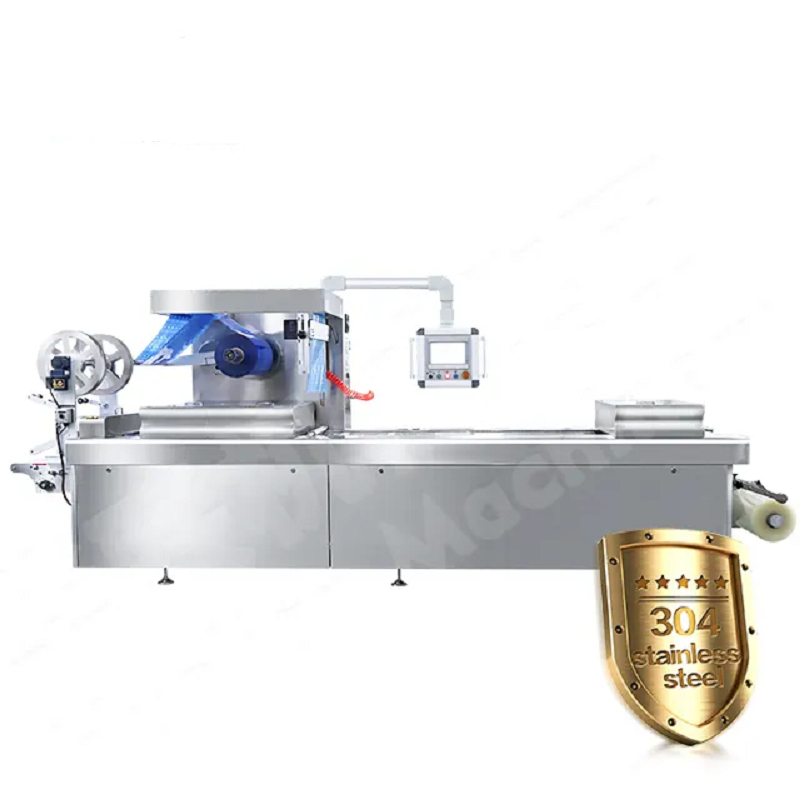
Elevate with Hualian: Custom Tray Forming, Seamless Sealing
Evaluate your operational goals, labor availability, and hygiene requirements before making your final decision.
FAQs
1. Which machine is better for a small business or startup?
The tray sealer is generally better for startups due to its lower initial cost, simpler operation, and smaller footprint in limited production spaces.
2. Is there a significant difference in material costs?
Yes, thermoforming usually results in lower long-term material costs because rolls of film are more cost-effective and take up less storage space than pallets of pre-made trays.
3. Can both machines perform Modified Atmosphere Packaging (MAP)?
Both tray sealers and thermoforming machines are fully capable of performing MAP to extend the shelf life of fresh food products.
4. Which machine offers better production speed for high-volume orders?
The thermoforming packaging machine is superior for high-volume production because it can form and seal multiple packages in a continuous, high-speed automated cycle.
5. How difficult is it to switch between different tray sizes?
Tray sealers offer much faster changeovers, usually requiring only a simple tool change, whereas thermoforming machines require complex mold changes that involve more downtime.
Conclusion
Both tray sealer machines and thermoforming packaging machines are essential technologies in modern food packaging. Each offers unique advantages based on your business scale and packaging objectives. By understanding the core differences and aligning them with your production needs, you can make a strategic investment that enhances both efficiency and product appeal.