Skip to content
Choosing the right modified atmosphere packaging machine can transform your food production line. Flexible film and rigid film thermoforming packaging machine both deliver MAP packaging solutions that extend shelf life and reduce waste. The table below helps you understand which thermoforming MAP packaging machine suits your products best.
What Is Flexible Film MAP Packaging?
Flexible film MAP packaging uses thin, pliable rollstock films—typically 100μ to 350μ in thickness—that are heated and formed into lightweight packages. The film is drawn into a mold using air pressure or vacuum suction, creating a cavity that closely conforms to the shape of the product. Flexible thermoforming is commonly configured for vacuum and MAP applications, enabling food processors to optimize shelf life, hygiene, and packaging efficiency without altering the fundamental machine structure.
Flexible MAP packaging solutions excel when the primary goal is to reduce material usage and lower per-package costs. For example, switching from rigid trays to Flexible Film thermoforming packaging machine can reduce plastic consumption by as much as 69% while boosting labor and efficiency savings by up to 40%. Flexible films are widely applied for fresh meat, cheese blocks, sausages, seafood, and ready-meal components.

What Is Rigid Film MAP Packaging?
Rigid film MAP packaging utilizes thicker, self-supporting materials—ranging from 200μ to 1,100μ—that form sturdy, shape-retaining trays capable of maintaining their structure independently. Rigid films are engineered for high-speed packaging lines where strength, clarity, and reliability are essential. The thermoforming process for rigid films can achieve deep-draw forming depths up to 180 mm, making it ideal for bulky, irregularly shaped, or delicate products that require physical protection.
A thermoforming MAP packaging machine configured for rigid film supports both MAP and vacuum sealing applications, providing enhanced protection and a premium presentation that appeals to retail consumers. Rigid trays are commonly used for bakery items like croissants and cookies, whole poultry, fresh pizza, sandwich packaging, and medical device blisters.

Five Differences Between Flexible Film MAP and Rigid Film MAP
The table below summarizes the key differences across five critical business considerations:
| Aspect | Flexible Film MAP | Rigid Film MAP |
|---|---|---|
| Material Cost | Lower film cost; thinner material reduces storage and transport costs. Each reel contains more material, meaning fewer reel changes and less downtime. | Higher material cost due to thicker gauge and deeper draw capabilities. |
| Packaging Strength | Package relies on the product for support; best for items that can withstand moderate compression. | Self-supporting rigid trays offer superior crush protection; deep-draw forming up to 180mm securely holds delicate products. |
| Shelf Appeal | Compact, product-hugging design showcases natural product shape. | Premium, retail-ready presentation with crisp edges and customizable tray designs that stand out on shelves. |
| Transport Efficiency | Maximizes pallet density; lighter weight reduces shipping costs. Lightweight packages have significant impact along the entire logistics chain. | Rigid trays stack more easily but may require more space and weigh more, increasing logistics costs. |
| Sustainability | Uses significantly less plastic per package; monomaterial flexible films support recycling initiatives. Can reduce plastic consumption by up to 69%. | Rigid trays are increasingly manufactured from recycled PET (rPET) or fiber-based alternatives, with some reducing plastic by up to 90%. |
Material Cost
When comparing flexible film and rigid film for MAP packaging, material cost is often the first factor that impacts your bottom line. Flexible film MAP uses thinner rollstock—typically between 100μ and 350μ—which costs significantly less per square meter than rigid alternatives. Because flexible film reels contain more linear meters of material per roll, you benefit from fewer reel changes during production, reducing downtime and labor costs. In contrast, rigid film MAP requires thicker gauges (often 200μ to 1,100μ) to achieve self-supporting tray structures and deep-draw capabilities. This higher material consumption translates directly into higher per‑package costs. However, for products that demand structural integrity, the added material expense is often justified by reduced product damage and waste.
Packaging Strength
The mechanical strength of the finished package determines how well your product survives handling, stacking, and transportation. Flexible film MAP creates a package that relies on the product itself for support. This works perfectly for items that can withstand moderate compression—think vacuum‑packed beef steaks, fish fillets, or cheese blocks. The flexible skin conforms tightly to the product, eliminating empty space and reducing the risk of puncture or tearing. Rigid film MAP, on the other hand, produces self‑supporting trays that do not depend on the product for shape or strength. With deep‑draw forming capabilities up to 180mm, rigid trays securely hold delicate, bulky, or irregularly shaped items such as whole roasted chickens, soft cakes, fresh pasta, or sandwich platters. The superior crush protection of rigid trays makes them the go‑to choice for distribution channels involving manual stacking or long‑haul shipping.
Shelf Appeal
How your packaged product looks on a retail shelf directly influences consumer purchase decisions. Flexible film MAP offers a sleek, product‑hugging design that showcases the natural shape, color, and texture of the food. This minimalist, “skin‑tight” appearance is highly attractive for premium fresh meat, seafood, and artisanal cheese, as it communicates freshness and high quality. However, the flexible package may appear less structured or “premium” compared to a rigid tray. Rigid film MAP delivers a completely different visual impression: crisp edges, smooth surfaces, and customizable tray geometries that create a traditional, retail‑ready presentation. Rigid trays can be designed with compartments, different colors, or even transparent lids, allowing your brand to stand out among competitors. For products like pastries, pizza, or multi‑component meals, rigid MAP packaging enhances perceived value and encourages premium pricing.
Transport Efficiency
Logistics efficiency—how many packages fit on a pallet and how much they weigh—drives significant cost savings or expenses. Flexible film MAP excels here: because the thin film tightly conforms to the product, there is minimal wasted space. You can stack more units per pallet layer, and the lightweight nature of flexible film reduces shipping weight across your entire supply chain. Fewer truckloads, lower fuel costs, and smaller warehouse footprints all contribute to a leaner operation. Rigid film MAP requires more space because the formed trays retain fixed dimensions, often including air gaps or taller profiles. While rigid trays themselves can be stacked more easily on top of each other due to their sturdy construction, each tray occupies a larger volume and adds more weight than an equivalent flexible package. For long‑distance distribution where every cubic meter and kilogram counts, flexible film often wins—unless product fragility forces the use of rigid trays.
Sustainability
Environmental impact is no longer a secondary consideration; it is a core business requirement. Flexible film MAP uses significantly less plastic per package—by weight, up to 69% less compared to rigid trays. Many flexible films are now manufactured as monomaterial structures (e.g., all‑PE or all‑PP) that are compatible with existing recycling streams. The reduction in material consumption also means lower carbon emissions from production and transport. Rigid film MAP has made remarkable sustainability strides as well. Producers increasingly use recycled PET (rPET) made from post‑consumer bottles, or fiber‑based alternatives like paper‑based trays with thin barrier liners. Some rigid tray designs reduce plastic content by up to 90% compared to conventional solid trays. Both film types can be part of a circular economy, but the choice depends on your local recycling infrastructure and your company’s specific sustainability goals. Flexible film minimises plastic use at source; rigid film enables high recycled content while maintaining premium packaging strength.
Why the Right MAP Packaging Matters
The global MAP market is expanding rapidly. By 2032, it is projected to reach $22.56 billion, growing at a CAGR of approximately 5.6%, driven by demand for extended shelf life, enhanced food safety, and automation in packaging lines.
MAP packaging extends shelf life dramatically across food categories—fresh pasta from 6 days to 21 days, raw red meat from 2–4 days to 5–8 days, and fresh pizza from 7–10 days to 14–28 days. These improvements optimize supply chains, reduce food waste, and lower inventory costs. Selecting the wrong film type can increase per-unit costs by 15–25%, compromise product protection during transit, or undermine your sustainability commitments. The right MAP packaging machine delivers measurable ROI through reduced material waste, extended sellable life, and enhanced brand positioning.
How to Choose the Right MAP Packaging for Your Business
Start with three simple questions:
What are you packing? Products that can withstand compression—steaks, fish fillets, cheese blocks, processed meats—are ideal for flexible MAP packaging solutions. Items requiring structural support—cakes, pastries, soft fruits, whole poultry, sandwiches—demand the forming depth and rigidity of hard trays.
How far and rough is your journey? Long-distance distribution with manual handling and stacking favors rigid trays. Environmentally controlled, palletized shipping to nearby retailers can use flexible film.
What do your customers expect? High-end retailers and foodservice distributors often expect premium, shelf-ready rigid packaging. Value-focused channels prefer lightweight, cost-efficient flexible solutions.
When in doubt, look for a thermoforming MAP packaging machine capable of handling both film types with simple changeovers. This future‑proofs your line as your product mix evolves. You can start with the film that fits your current needs and add the other when demand shifts.
Why Choose Hualian for MAP Packaging Solutions
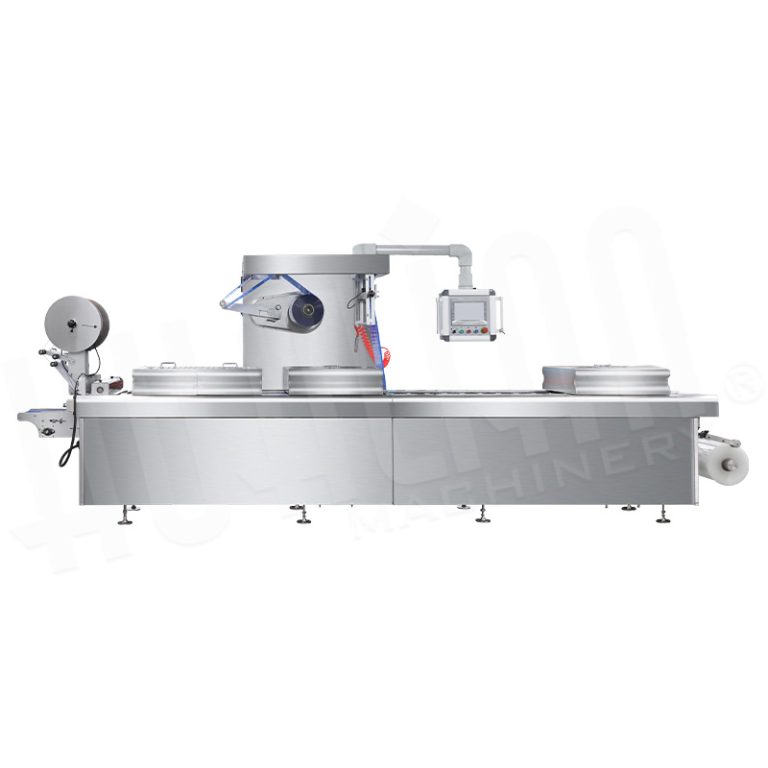
At Hualian, we know your business demands packaging equipment that balances performance with profitability. Our thermoforming MAP packaging machines are engineered to handle both flexible and rigid films on a single platform, giving you the agility to respond to changing market demands without investing in separate lines.
-
Flexible MAP packaging solutions that maximize material savings and production throughput
-
Rigid film thermoforming with deep-draw capabilities up to 180mm for premium product protection
-
Stainless steel construction with hygienic open‑frame design suitable for washdown environments
-
Precision gas flushing systems that extend shelf life and maintain product freshness
-
Remote support management and integrated maintenance programs minimize costly downtime
Contact Hualian today to discuss which MAP packaging configuration best suits your production needs.
FAQs
Does MAP packaging extend shelf life?
Yes, significantly—MAP can extend fresh pasta from 6 to 21 days, raw meat from 4 to 8 days, and fresh pizza from 10 to 28 days, depending on the product and gas mixture used.
Can one machine handle both flexible and rigid MAP?
Yes, many modern thermoforming machines support both film types with simple tooling and setting adjustments, allowing manufacturers to switch between flexible and rigid MAP on the same equipment.
Conclusion
Flexible film MAP packaging minimizes material costs and maximizes transport efficiency for products that can handle compression. Rigid film MAP packaging delivers superior protection and retail presentation for delicate or high‑value items needing structural support. The best choice depends on your product’s fragility, your distribution environment, and your brand positioning.
Ready to optimize your packaging line? Explore Hualian’s MAP packaging machines and request a custom quote today—our thermoforming experts will help you select the right solution for your business.