Skip to content
Ground coffee is a demanding packaging product because grind, bulk density, oil, entrained air, static, and dust can all change dosing and sealing performance.
Quick answer: Use a powder dosing system—commonly an auger filler—matched to the grind and weight range, then control hopper condition, cutoff, dust, settling, and the seal area. Approve the line only after repeated weight and seal trials with representative batches and packaging material.
This article goes deeper than our coffee packaging machine guide and focuses on one specific equipment decision.
Why Ground Coffee Requires Its Own Specification
| Variable | Operational effect |
|---|---|
| Grind distribution | Changes flow, dust, compaction, and dose behavior |
| Bulk density | Changes weight delivered by the same apparent volume |
| Entrained air | Affects settling and package volume |
| Oil and moisture | Can change adhesion, flow, and cleaning |
| Static | Causes dust attraction and product buildup |
| Product temperature | Can influence flow and package behavior |

How an Auger Filler Works
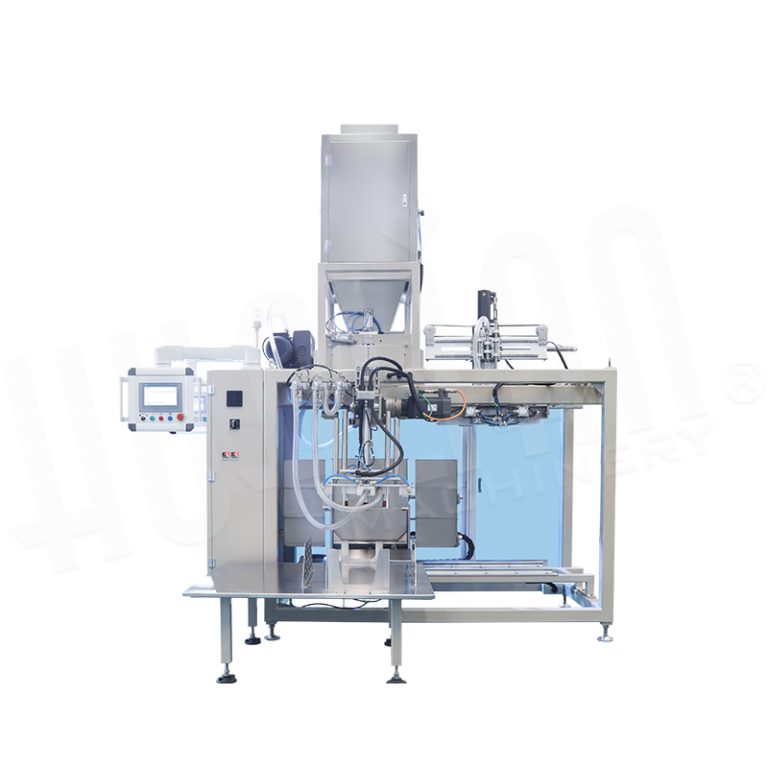
An auger rotates a defined amount to move powder from the hopper through a funnel into the package. Agitation and product-level control help maintain a consistent condition around the screw. The machine may correct dosing from checkweigher feedback, but feedback cannot compensate for an unstable process indefinitely.
Specify screw geometry, tooling, hopper agitation, cutoff device, fill funnel, extraction, and cleaning access as one dosing system.
Test Accuracy Under Real Conditions
Do not accept one average figure. Record sequential weights at startup, after the hopper level changes, after replenishment, across representative batches, and at the required speed. Report mean, variation, underweights, and giveaway.
| Trial variable | What to learn |
|---|---|
| Different grinds | Whether one setup covers the intended portfolio |
| High and low hopper level | Whether head pressure changes the dose |
| Start and end of batch | Whether density or segregation drifts |
| Different target weights | Whether change parts or recipes are required |
| Sustained production | Whether buildup changes performance over time |
Control Dust Before It Reaches the Seal
- Shorten uncontrolled product fall where practical.
- Use a clean cutoff so powder does not continue dribbling.
- Allow suitable settling time before the seal closes.
- Position extraction to capture airborne dust without removing saleable product.
- Review static control, grounding, and cleanable surfaces.
- Keep the fill funnel and bag mouth aligned.
- Provide access for inspection and cleaning around sealing components.
Prevent Product Trapped in the Seal
Powder across the sealing band can interrupt bonding and create leak paths. The solution is not automatically more temperature. First determine whether contamination comes from dribble, airborne dust, bag movement, overfilling, or poor timing.
Run seal tests across the intended operating window. Record temperature, pressure, dwell time, material lot, product condition, and defect type. Establish a documented cleaning trigger rather than waiting for visible buildup to become a reject trend.
Choose the Package-Handling Machine
VFFS can suit stable rollstock production; a premade-pouch machine can suit zipper or premium converted bags; sachet and stick-pack systems can suit single portions. Each must protect the seal zone from powder. Compare these routes in our coffee packaging machine types overview.
Add Nitrogen Only With a Verification Plan
Ground coffee has high exposed surface area, but a gas-flush option still needs a defined objective. Specify where gas enters, flow control, purge time, package volume, residual-oxygen measurement, barrier material, and seal-integrity test. Measure finished packs at the agreed sampling time.
Cleaning and Changeover Are Production Requirements
Ask which parts can be removed without tools, how the auger and hopper are accessed, how residual powder is contained, and how operators verify cleanliness. Include cleaning and changeover in capacity calculations. A fast machine with a long or uncertain cleanout may be a poor fit for many short runs.
Ground Coffee FAT Checklist
- Representative grinds, batches, and packaging materials
- Weight data across hopper levels and operating time
- Dust observations and extraction settings
- Seal-defect classification and rate
- Residual oxygen when applicable
- Cleaning demonstration and reassembly verification
- Changeover between defined products and weights
- Sustained output using saleable-pack criteria
Prepare the Information for an Application Review
Send Hualian your coffee type, fill weight, package drawings and samples, target saleable output, SKU schedule, utility information, and required inspection scope. These inputs allow the engineering team to define a testable configuration instead of assuming that a standard machine will fit.
Frequently Asked Questions
What filler is used for ground coffee?
An auger filler is common, but its screw, agitation, tooling, and controls must match the coffee and target weight.
Why does ground coffee filling accuracy change?
Bulk density, grind, entrained air, hopper level, temperature, oil, and machine settings can all change the dose.
How do you prevent coffee powder in the seal?
Control cutoff, dust, fall path, settling, bag position, fill level, and cleaning before adjusting seal settings.
Can one auger fill every grind?
Not necessarily. Different grinds and weights may require recipes, tooling, or separate validation.
How should seal quality be tested?
Use production material and agreed inspection or leak methods across the intended operating window.