Skip to content
A small coffee business rarely needs the most automated machine first; it needs a reliable packaging cell that fits today’s volume without blocking tomorrow’s growth.
Quick answer: Begin with a good weighing or powder-filling method, a repeatable sealer, coding, and simple quality checks. Move to automatic pouch handling only when manual work, inconsistency, or capacity has become a measured constraint—not simply because a faster machine is available.
This article goes deeper than our coffee packaging machine guide and focuses on one specific equipment decision.

Three Practical Starting Configurations
| Configuration | Best for | Typical operator work |
|---|---|---|
| Scale or filler + hand/foot sealer | Market testing and very short runs | Dose, position, seal, code, inspect |
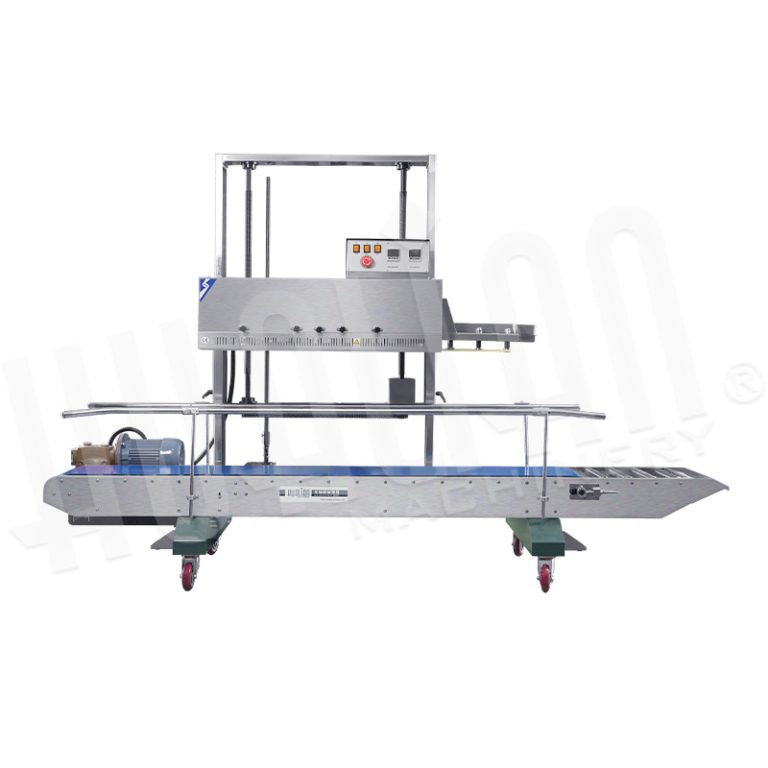
| Semi-automatic filler + band sealer | Growing roasters with several SKUs | Present or transfer pouch and monitor quality |
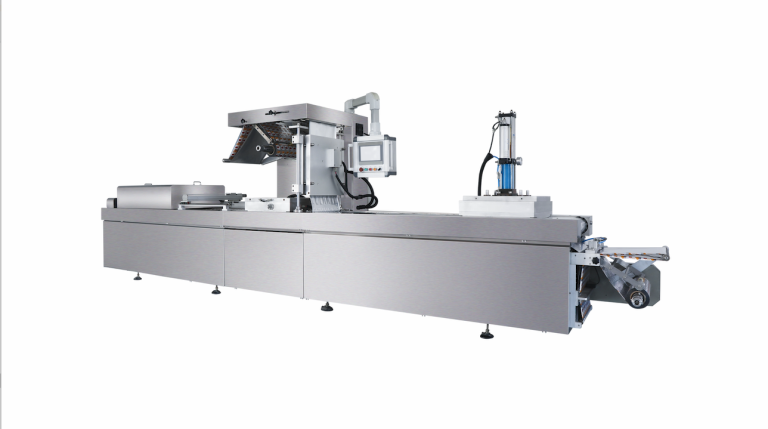
| Compact automatic pouch system | Stable demand and a limited pouch range | Load materials, replenish coffee, inspect, recover faults |
Choose by Bottleneck, Not Company Size
Observe one shift and time each task: weighing, opening bags, filling, settling, flushing, sealing, coding, inspection, and packing cases. Upgrade the step that controls output or quality. Buying a fast filler will not help if manual sealing remains slower.
Protect Flexibility
- Count SKUs, bag sizes, and typical batch length.
- Record cleaning and changeover time, not only run speed.
- Check whether one sealer supports the intended materials and filled weights.
- Avoid specialized tooling that has no clear volume case.
- Confirm that future feeders, gas systems, or conveyors can be added safely.
Match the Filler to the Coffee
Whole beans commonly use weight-based filling; grounds commonly use an auger. If you sell both, a shared sealing stage with separate dosing equipment may be more practical than forcing one filler to handle incompatible products.
Decide Whether You Need Nitrogen Flushing
Base the decision on product, distribution time, package barrier, valve strategy, and a shelf-life plan. Small gas-flushing additions still need safe supply, flow control, a suitable bag, and residual-oxygen verification. Do not add complexity without a measurable objective.
Calculate Capacity From the Full Cycle
Count acceptable finished bags over a representative hour. Include material replenishment, label changes, cleaning, corrections, and short stops. Then compare the result with orders, seasonal peaks, staffing, and the time available for packaging.
Budget Beyond the Machine
| Cost group | Examples |
|---|---|
| Equipment | Filler, sealer, coder, conveyor, inspection |
| Packaging | Pouches or film, valves, labels, cases |
| Utilities | Electricity, compressed air, nitrogen, extraction |
| People | Operation, setup, inspection, cleaning, training |
| Risk | Giveaway, rejects, downtime, delayed orders |
| Support | Freight, installation, spare parts, maintenance |
When to Delay Full Automation
- Demand is uncertain or seasonal.
- You change bags or products more often than you run them.
- The final retail package is still changing.
- The facility lacks space, utilities, or maintenance capability.
- A co-packer currently delivers better economics or lower risk.
Plan an Upgrade Path
Standardize bag dimensions where commercial needs allow, document recipes, maintain weight and seal records, and choose components with clear interfaces. A staged line should be designed so that a future automatic bagger does not require replacing every upstream and downstream component.
Prepare the Information for an Application Review
Send Hualian your coffee type, fill weight, package drawings and samples, target saleable output, SKU schedule, utility information, and required inspection scope. These inputs allow the engineering team to define a testable configuration instead of assuming that a standard machine will fit.
Frequently Asked Questions
What is the best coffee packaging machine for a startup?
Usually the smallest configuration that can produce a compliant, well-sealed package at the required output. That may be a filler and sealer rather than a fully automatic line.
When should a small roaster automate?
Automate when measured labor, quality variation, capacity, or ergonomics justify the installed cost and added complexity.
Can small machines use nitrogen?
Some can, but you still need a suitable package, safe gas supply, and a method to verify the result.
Should a startup choose premade pouches or rollstock?
Premade pouches can preserve flexibility; rollstock can become attractive with stable formats and volume. Compare total pack economics.
How do you future-proof a small setup?
Standardize inputs, document requirements, and select equipment with defined interfaces and available change parts.