Skip to content
For manufacturers handling powders, granules, or pellets, open mouth bagging systems offer a reliable solution for filling and sealing heavy-duty bags. Whether you need a heavy duty bagging system or a fully automated industrial packaging automation system, understanding how bagging machine technology works is the first step toward upgrading your packaging line.
What is an Open-Mouth Bagging System?
An open mouth bagging system is a specialized bagging machine designed to fill pre-made bags with an open top. Unlike valve baggers that require product to be injected through a small sleeve, open mouth systems use the bag’s full-width opening—making them ideal for free-flowing and semi-free-flowing materials including grains, seeds, fertilizers, chemicals, pet food, and construction aggregates.
The bags themselves are typically constructed from kraft paper, woven polypropylene, plastic film, or burlap, with capacities ranging from 5kg to 50kg or more. Once filled, the bag is sealed using sewing, heat sealing, pinch closing, or adhesive tape, depending on the bag material and application requirements.
For industrial operations seeking greater throughput, an automatic bagging machine eliminates manual bag handling and integrates seamlessly with upstream filling scales and downstream palletizing equipment.

How Does an Open-Mouth Bagging System Work?
A complete open mouth bagging operation can be broken down into six stages:
| Stage | Description |
|---|---|
| Automatic Bag Feeding | Empty bags are picked from a magazine stack and conveyed to the filling station |
| Bag Opening & Positioning | Bag mouth is opened and secured over the filling spout |
| Weighing & Filling | Product is metered into the bag via gravity-fed, vibratory, belt, or auger systems |
| Bag Closing & Sealing | Filled bag is sealed using sewing, heat sealing, or pinch closure |
| Quality Inspection | Optional checkweigher and metal detector verify package integrity |
| Palletizing & Wrapping | Bags are stacked onto pallets and stretch-wrapped for shipment |
Automatic Bag Feeding
Empty bags are stacked in a magazine. An automatic bagging machine uses vacuum suction cups to pick the top bag, ensuring one bag is retrieved at a time without double-picks. The bag is then transferred to the opening station via conveyor or gripper mechanism. A fully automated heavy duty bagging system can achieve cycle times of 6–12 bags per minute or more, depending on bag size and product characteristics.
Bag Opening and Positioning
Once the bag reaches the filling station, mechanical openers or suction cups pull the bag mouth open. The bag is then clamped securely onto the filling spout—often called the “bird beak”—which holds it in position throughout the fill cycle. Proper positioning ensures no spillage and accurate weight delivery.
Weighing and Filling
This is the core of the open mouth bagging system. The filling mechanism depends on the product type:
Gravity-fed filler – Uses shutoff gates to control material flow. Best for free-flowing granules like rice, fertilizer, salt, seeds, and plastic pellets. The product drops by its own weight into the bag.
Vibratory feeder – Uses side-to-side tray movement. Works well for irregular shapes or materials with varying bulk density, such as ground coffee, grass seed, or granola.
Belt feeder – Adjustable speed control. Ideal for sticky or cohesive materials like molasses-based feed, mulch, or topsoil.
Auger packer – A rotating screw moves product into the bag. Essential for fine powders such as flour, starch, cement, or chemical powders.
Weighing can be performed as gross weigh (the bag sits on a scale during filling) or net weigh (product is pre-weighed in a hopper above the filler before discharge). Each method offers distinct advantages depending on speed requirements and product characteristics.
Bag Closing and Sealing
After filling, the bag moves to a closing station. Options include:
-
Sewing – Stitches the bag top closed using thread; common for woven PP and multi-wall paper bags
-
Heat sealing – Melts the bag opening to form a hermetic seal; ideal for moisture-sensitive products and PE-lined bags
-
Pinch closing – Hot-melt adhesive activates and presses the bag top flat; creates a tamper-evident, sift-proof closure
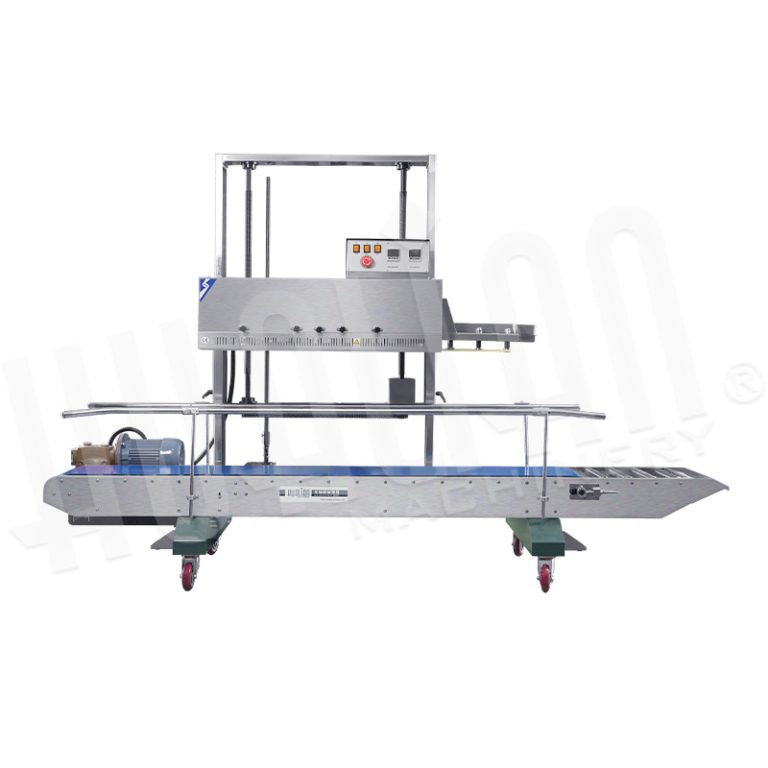
Integrated bag closing systems can combine multiple functions—dust removal, mouth trimming, stitching, tape application, heat sealing, and cycle counting—in a single continuous pass-26.
Quality Inspection
Optional but highly recommended. A checkweigher verifies each bag’s weight and rejects underweight or overweight bags. Metal detectors inspect for ferrous and non-ferrous contaminants, critical for food and pharmaceutical applications.
Palletizing and Wrapping
Filled and sealed bags are conveyed to a palletizing system. Automated palletizers—either robotic or conventional—stack bags in predetermined patterns. Finally, a stretch wrapper secures the pallet for storage and transport, completing the industrial packaging automation system.
How to Choose the Right Open-Mouth Bagging System at Hualian?
Selecting the right system involves balancing several factors. As a leading bagging system manufacturer, Hualian recommends evaluating these eight dimensions:
Product type and characteristics – Free-flowing granules call for gravity-fed fillers. Fine powders need auger or vibratory systems with dust control. Hygroscopic or fragile materials benefit from gentle handling and enclosed filling environments.
Bag type and size compatibility – Verify material compatibility (paper, plastic, woven PP) and ensure the system supports your bag size range. Modular designs allow quick changeovers without tools.
Packaging speed and throughput – Entry-level systems handle 4–6 bags per minute; high-performance automatic bagging machine systems exceed 30 bags per minute.
Level of automation – Semi-automatic machines require manual bag placement. Fully automated systems integrate weighing, filling, sealing, and quality control—reducing labor costs and improving consistency.
Equipment footprint – Measure your available floor space and consider integration with existing conveyors, scales, and palletizers.
Cleaning and maintenance – Look for easy-access designs, tool-free cleaning, and hygienic construction—especially for food-grade applications.
Total cost of ownership – Factor in initial investment, operating costs, maintenance, and ROI. A higher upfront cost often pays back through reduced downtime and higher throughput.
After-sales support – Hualian provides spare parts availability, training programs, and remote support to keep your line running.
Hualian’s ZSG-1000G Automatic Open Mouth Bag Machine, for example, uses four independent servo motors for bag taking, opening, hopper lifting, and feeding—delivering high speed with positional accuracy. Paired with an FBK-332C bag closing system that performs dust removal, trimming, stitching, tape application, and heat sealing, it’s a complete solution for demanding industrial environments.
With 35 years of experience and over 200 product varieties across seven major categories, Hualian offers end-of-line packaging machinery from single machines to complete production lines. Visit Our Web to explore your options.
FAQs
What Materials Can Be Packed with Open-Mouth Bagging Systems?
Open mouth bagging systems handle a wide range of materials including grains (rice, wheat, corn, soybeans), fertilizers, seeds, salt, sugar, animal feed, pet food, plastic pellets, cement, chemical powders, and construction aggregates.
What Are Benefits of Using Open-Mouth Bagging Systems?
These systems deliver higher packaging speeds, consistent filling accuracy, reduced labor costs, minimal product spillage, and seamless integration with automated palletizing and wrapping equipment.
What Industries Use Open-Mouth Bagging Systems?
Common applications include agriculture (rice, flour, feed), food processing (sugar, salt, pet food), chemicals (powders, plastic pellets), construction (cement, sand, aggregates), and minerals.
Conclusion
Open mouth bagging systems streamline the packaging of dry bulk materials—from automatic bag feeding to sealing and palletizing. Choosing the right heavy duty bagging system depends on your product type, bag format, and throughput needs. Contact Hualian today to discuss your application and request a custom quote. Get a free consultation now!