Skip to content
Introduction
The Importance of Tray Sealers
In today’s competitive packaging environment, maintaining product freshness, safety, and visual appeal is essential. Tray sealer machines play a vital role in achieving these goals by securely sealing products in trays using advanced technologies such as Vacuum Skin Packaging (VSP) or Modified Atmosphere Packaging (MAP). These machines are widely used in food, medical, and industrial sectors to enhance shelf life and product presentation.
The Impact of Choosing the Right Tray Sealer
Selecting the right tray sealer machine directly impacts your operational efficiency, product quality, and long-term cost. Whether you’re working with a map tray sealer machine or a vacuum tray sealer machine, choosing equipment that aligns with your production needs ensures smoother workflows, reduced waste, and consistent sealing performance.
8 Factors of Choosing Your Tray Sealer Machine
| Factor | Details |
|---|---|
| 1. Production Capacity | Match the machine to your daily tray volume. Use automatic or inline sealers for high-speed production; manual or semi-auto for smaller batches. |
| 2. Type of Tray Sealer | Packaging Types: – Vacuum Skin: Tight seal for meats & seafood – Vacuum: Air removed to extend shelf life – MAP: Gas flush to keep food fresh Structures: – Inline: Fast, fully automated – Table Top: Compact and simple – Floor-standing: Heavy-duty for large-scale use Automation Levels: – Manual: Hand-operated, low cost – Semi-Auto: Manual load, auto seal – Automatic: Fully automated, high output |
| 3. Flexibility | Pick a machine that supports different tray sizes, shapes, and films—great for varied products or seasonal changes. |
| 4. Seal Quality | Look for adjustable temperature, time, and pressure to ensure strong, leak-proof seals. |
| 5. Budget | Manual machines are cheaper upfront; automatic ones cost more but save labor and improve output. |
| 6. Space | Small spaces suit tabletop models. Larger machines like inline or floor-standing need more room. |
| 7. Ease of Use & Maintenance | Choose user-friendly machines with easy cleaning and quick part changes to reduce downtime. |
| 8. Material Compatibility | Make sure your machine works with PET, PP, aluminum, or paperboard trays and films to ensure strong seals and sustainability. |
Production Capacity
Understanding your production volume is the first step. If your operation requires high-speed packaging, an automatic or inline tray sealer may be ideal. For lower-volume or specialized products, a semi-automatic or manual machine might be more cost-effective. Match the machine’s output with your current demand and expected growth.
Type of Tray Sealer
Three Types of Tray Sealing Packaging
| Tray Sealer Type | Description | Key Features |
|---|---|---|
| Vacuum Skin Packaging Tray Sealer | Seals the product tightly with a “skin-like” film, preserving freshness and appearance. | Skin-tight seal, ideal for fresh meats, seafood, and deli products. |
| Vacuum Tray Sealer Machine | Uses heat and pressure to remove air and create a vacuum seal around the product. | Provides tight seals, enhances product shelf life. |
| MAP Tray Sealer Machine | Modifies the atmosphere inside the package using a gas mixture to extend shelf life. | Controls internal gases, perfect for fresh produce, dairy, and meat. |
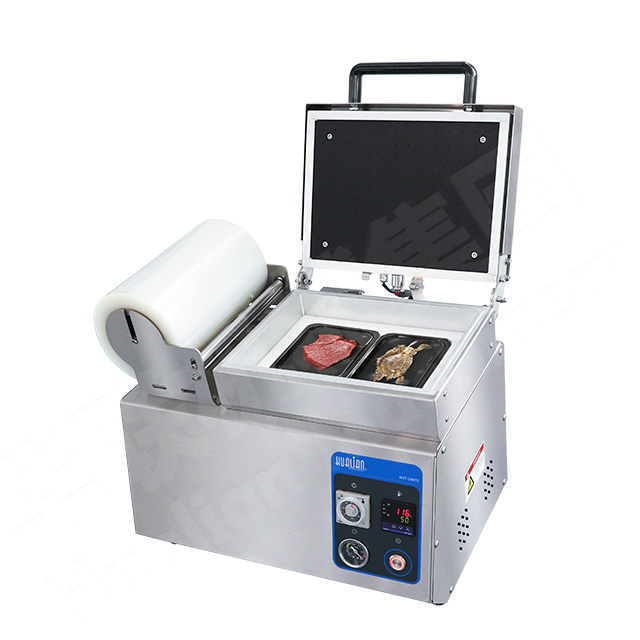
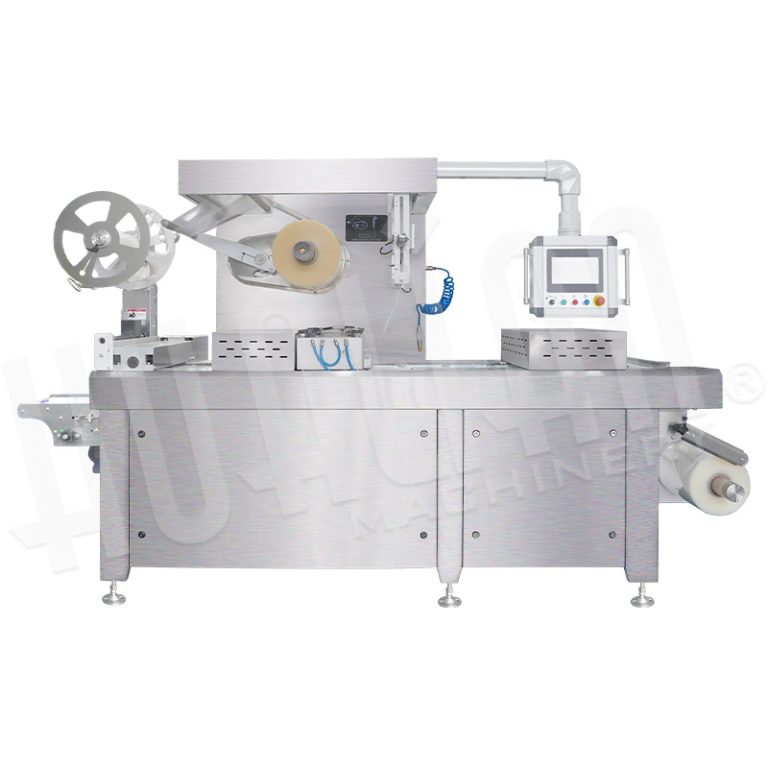
Seal Freshness with Hualian: Vacuum Skin Packaging
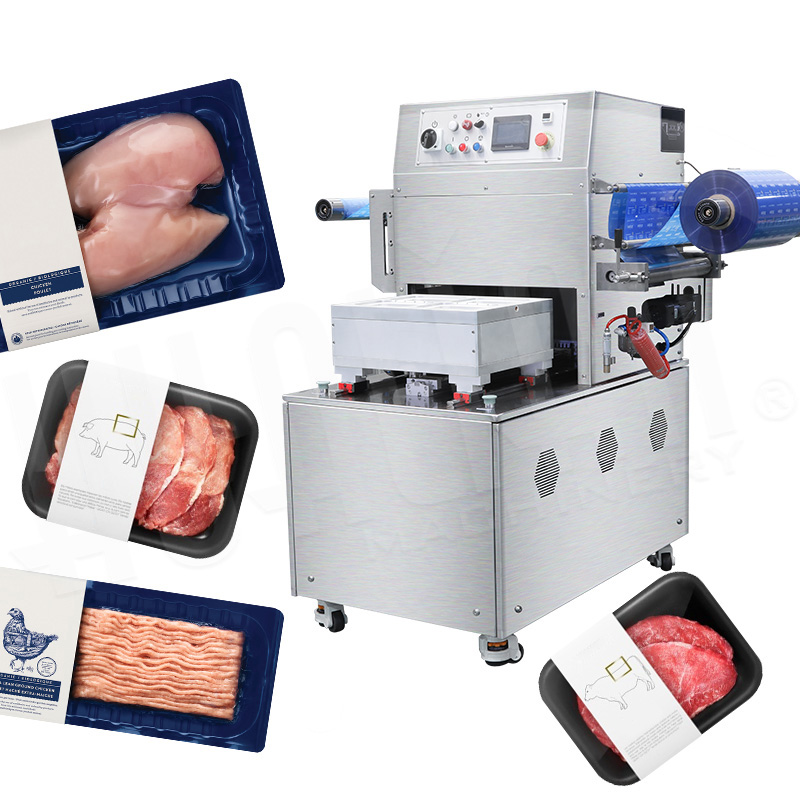
Choose Hualian: Smart MAP, Longer shelf life
Learn more: 3 Types of Tray Sealing Packaging You Should Know
Learn more: How Does Modified Atmosphere Packaging Work?
Three Types of Tray Sealer Structure
| Tray Sealer Type | Main Features | Application Scenarios |
|---|---|---|
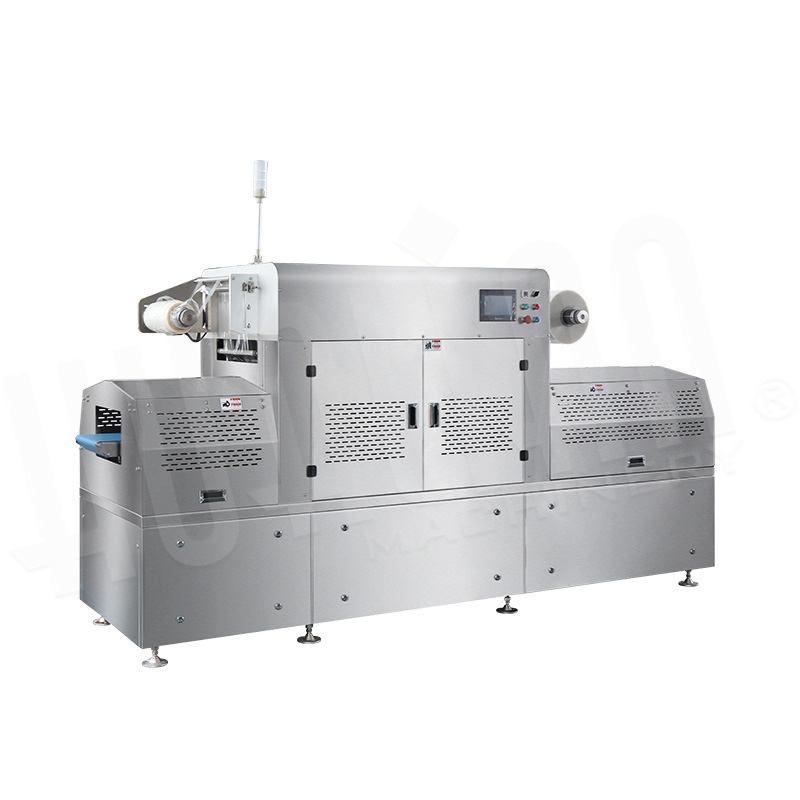
| Inline Tray Sealer | High-speed operation, automated controls, compact design | High-output production in food, pharmaceutical, and electronics. |
| Table Top Tray Sealing Machine | Compact, easy operation, cost-effective, versatile tray handling | Small food manufacturers, catering, labs, and pharmacies. |
| Floor-standing Tray Sealer | Heavy-duty, advanced automation, durable, customizable | Large-scale food packaging, pharmaceutical, and high-demand industries. |
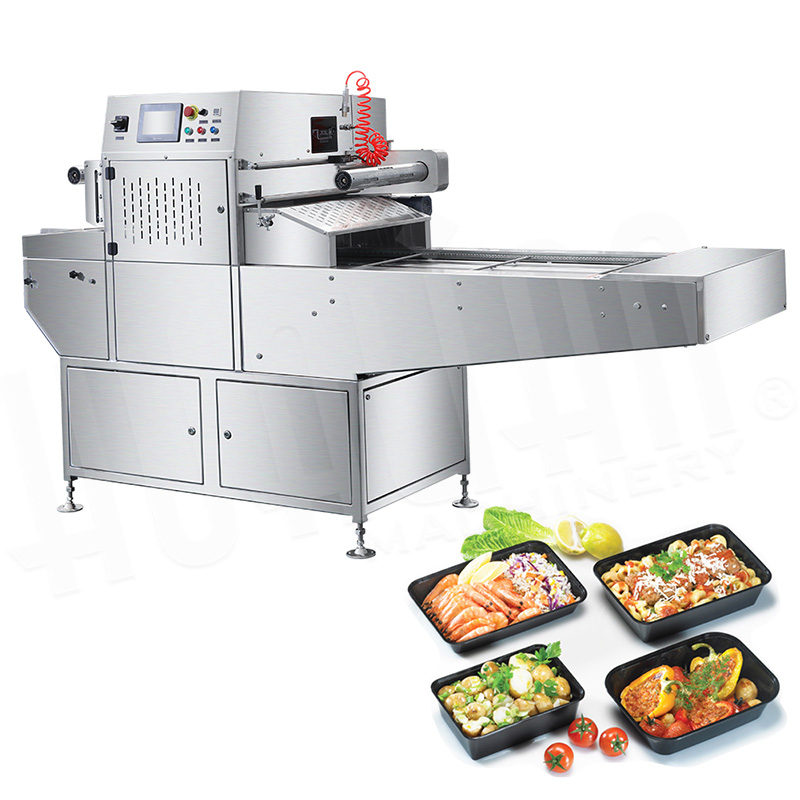
For Hualian: Inline Tray Sealer, Seamless Flow
Learn more: 3 Types of Tray Sealer Structures You Should Know
Three Types of Tray Sealing Machine by Automation
| Type | Manual Tray Sealing Machine | Semi Automatic Tray Sealing Machine | Automatic Tray Sealing Machine |
|---|---|---|---|
| Definition | Hand-operated machine; user places and seals trays manually. | Partially automated; user loads trays, machine seals them. | Fully automated; handles loading, sealing, and unloading. |
| Features & Benefits | – Simple and portable – Low cost – Good for small batches | – Faster than manual – Consistent seals – Good for medium production | – High speed – Precise sealing – Low labor need |
| Used By | – Small food shops – Markets – Catering – Labs | – Medium food companies – Meal prep services – Health packaging | – Large factories – Pharma plants – Airline catering |
| Disadvantages | – Slow – Labor-heavy – Inconsistent results | – Needs supervision – Slower for big jobs – Less flexible | – Expensive – Needs trained staff – Takes up space |
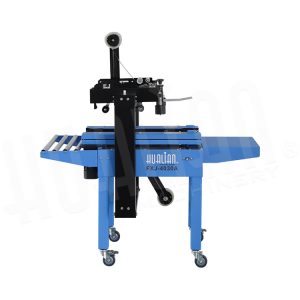
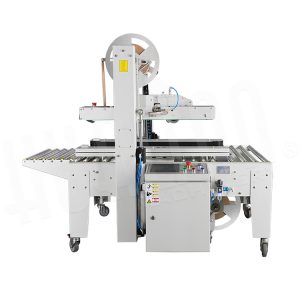
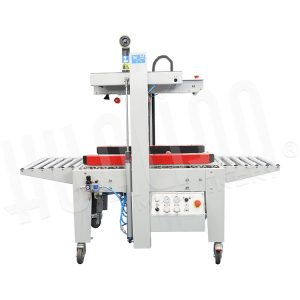
Found Hualian: Efficiency With Semi Automation

With Hualian: Fully Automated, Max Efficiency
Flexibility and Product Variety
Choose a machine that supports different tray sizes, shapes, and sealing films. Flexibility is crucial for businesses offering multiple SKUs or changing packaging formats based on seasonal or customer demands.
Seal Quality and Consistency
Seal integrity is essential to avoid leaks, spoilage, or contamination. Look for features such as adjustable sealing time, temperature control, and pressure settings to ensure consistent and high-quality seals across all trays.
Budget Constraints
Costs vary widely depending on automation level, size, and features. Consider both upfront investment and long-term operating costs. A vacuum tray sealer machine may have a higher initial price but could offer better product shelf life and lower returns due to spoilage.
Space Availability
Measure your workspace and compare it with the machine’s footprint. Compact tabletop models are available for smaller facilities, while larger floor-standing machines are suited for industrial plants with more space.
Ease of Use and Maintenance
Choose a machine with intuitive controls, minimal training requirements, and easy cleaning access. Machines with quick-change tooling or error-detection systems reduce downtime and improve operational efficiency.
Material Compatibility
Ensure your tray sealer is compatible with the tray and film materials you use, including PET, PP, aluminum, and paperboard. Material compatibility affects seal strength, appearance, and sustainability.
FAQs
Q1:What type of tray sealer is best for high-volume food production?
A1:For high output, an automatic or inline tray sealer is recommended. It ensures consistent sealing quality and minimizes labor costs.
Q2: When should I choose MAP instead of vacuum packaging?
A2: Choose MAP when packaging fresh food that needs controlled gas levels, such as meat, dairy, or produce, to extend shelf life without compressing the product.
Q3: How do I calculate the right production capacity for my tray sealer?
A3: Estimate your daily tray volume and select a machine with at least 20–30% higher capacity to allow for future growth.
Q4:What tray materials are compatible with most tray sealing machines?
A4:Most industrial tray sealers support PET, PP, aluminum, and paperboard, but compatibility should always be confirmed before purchase.
Q5: Can one tray sealer handle multiple tray sizes?
A5: Yes, if the machine has adjustable molds or quick-change tooling, making it suitable for multiple SKUs.
Q6: How often does a tray sealer require maintenance?
A6: Routine maintenance is minimal and usually involves daily cleaning and periodic seal inspection, depending on usage intensity.
Q7: What industries commonly use tray sealer machines?
A7: Tray sealers are widely used in food processing, ready meals, meat & seafood, pharmaceuticals, and medical packaging.
Q8: What should I consider before requesting a quotation?
A8: Prepare details such as tray size, packaging type, production speed, and workspace dimensions to receive an accurate quotation. Contact us to get more details.
Conclusion
Choosing the right tray sealer machine involves more than just price comparison. It requires a deep understanding of your production needs, packaging types, space, and long-term goals. Whether you are using a vacuum tray sealer machine for delicate cuts of meat or a map tray sealer machine for extended shelf life, the right choice ensures product safety, operational efficiency, and customer satisfaction. Take time to evaluate these eight critical factors and consult industry experts when necessary to make the best investment for your packaging line.