Choose vacuum packaging for sausages when a tight flexible pack, efficient oxygen removal, and compact transport are priorities and the product can tolerate compression. Choose modified atmosphere packaging (MAP) when shape retention, headspace, and retail presentation justify trays or rigid cavities and a validated gas-control process. Neither method is automatically safer or gives a universal shelf life; the complete product, process, package, and cold chain must be validated.
Table of Contents
ToggleVacuum vs MAP at a Glance
| Decision factor | Vacuum packaging | MAP packaging |
|---|---|---|
| Pack appearance | Film conforms tightly to sausages | Product remains in a headspace package |
| Shape protection | May compress soft links | Better separation from external compression when tray/cavity is suitable |
| Typical package | Premade bag or flexible thermoformed pocket | Preformed tray or rigid/semi-rigid thermoformed pack |
| Process control | Vacuum level, seal, barrier, purge control | Gas recipe, gas replacement, residual oxygen, seal, barrier, headspace |
| Material and transport | Usually compact with less headspace | Tray or rigid pack can use more volume and material |
| Best fit | Bulk packs, firm products, food service, compact distribution | Shape-sensitive and retail-display packs where presentation matters |
How Vacuum Packaging Works
Vacuum packaging removes air before hermetically sealing the package. It can be performed in premade bags with a chamber machine or in formed pockets on a thermoformer. The finished film typically conforms around the product.
Vacuum does not replace hygienic processing or refrigeration. It changes the package environment, so processors must evaluate the relevant hazards and controls. The FDA Food Code identifies vacuum and MAP as forms of reduced-oxygen packaging and notes that reduced oxygen can suppress aerobic spoilage while requiring controls for hazards that may not be signaled by normal spoilage.
How MAP Works
MAP removes or displaces the original atmosphere and introduces a specified gas mixture before sealing. For sausage applications, the correct mixture is product- and market-specific. It should be determined with qualified food-safety, product, gas, and packaging specialists rather than copied from another product.
The package must maintain the intended atmosphere through filling, sealing, storage, and distribution. That requires suitable barrier materials, adequate headspace, repeatable gas delivery, sound seals, and appropriate sampling of residual gas.
Compare Product Shape and Appearance
A strong vacuum may pull soft fresh sausages together, flatten them, or highlight variation in link shape. This can be acceptable for bulk or food-service packs but undesirable for premium retail presentation. Support boards, formed pockets, process settings, chilling, or a different packaging method may reduce deformation.
MAP allows the product to sit in a tray or rigid cavity without film pressed tightly against every surface. It can preserve arrangement and provide a consistent label and display area. The tradeoff is a larger package and greater sensitivity to tray, film, gas, and seal compatibility.
Compare Preservation and Shelf-Life Validation
Do not select a method from a generic shelf-life number. Sausage formulation, cooking or fermentation, water activity, pH, initial contamination, packaging temperature, oxygen and carbon dioxide behavior, film transmission, seal integrity, and cold-chain conditions all matter.
For either method, design a shelf-life study around defined acceptance criteria. Include microbiological safety as directed by qualified personnel, sensory quality, color, purge, odor, texture, package integrity, headspace composition where relevant, and performance at realistic storage conditions. Validate the intended worst case, not only ideal refrigeration.
Compare Packaging Equipment
Vacuum Equipment Options
- Single- or double-chamber machines for premade bags
- Belt or continuous chamber systems for increased bag-based output
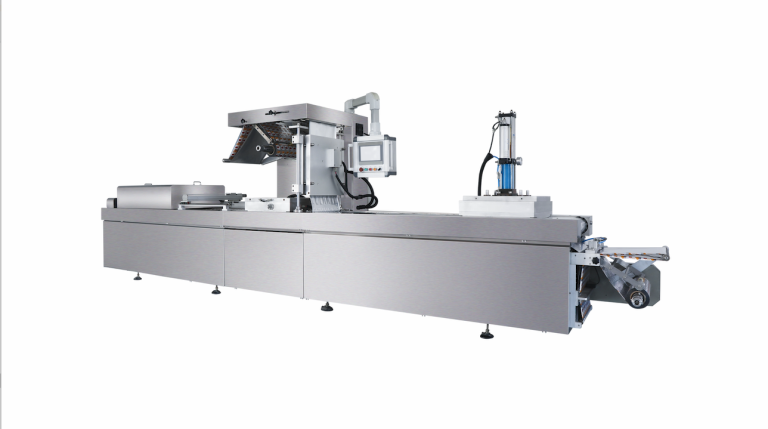
- Thermoforming machines using flexible bottom and top webs
MAP Equipment Options
- Semi-automatic tray sealers for smaller batches or manual loading
- Automatic inline tray sealers with denesting, loading, and downstream options
- Thermoforming machines configured for gas replacement and suitable rigid or semi-rigid films
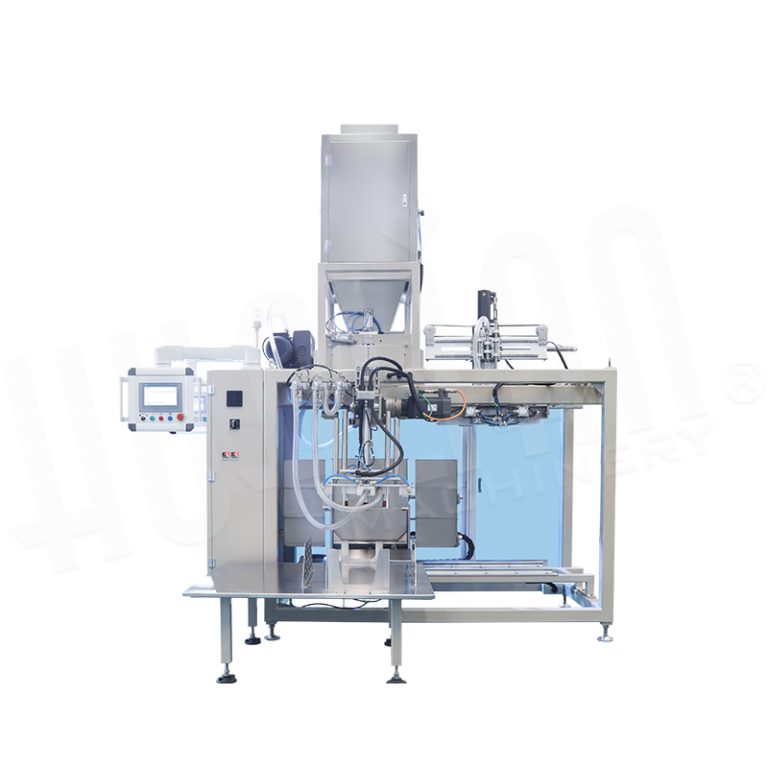
Hualian’s automatic tray sealing machine is offered in sealing, vacuum, gas-flushing, and optional skin-pack configurations. Confirm the exact tray, film, gas-control, speed, and test conditions for the quoted configuration.
Compare Film, Trays, and Operating Cost
Vacuum packs can be materially compact, but the film must withstand product edges, distribution, and the intended process. MAP adds tray or rigid-bottom cost and more shipping volume. It may also add gas use, gas analysis, and tray inventory.
Compare cost per accepted pack, not only material price per kilogram. Include bag or film use, tray, label, trim, rejects, gas, labor, changeovers, and case and pallet utilization.
Control Seal Contamination and Leakage
Sausage surfaces may carry moisture, oil, seasonings, or purge into the seal area. Under vacuum, rapid evacuation can move liquid toward the bag mouth. In MAP trays, an overfilled product or contaminated flange can interrupt sealing. Control product placement, filling height, flange or bag-mouth cleanliness, temperature, seal pressure, dwell, and material compatibility.
Define visual inspection and an appropriate package-integrity method. Monitor process settings and investigate trends rather than relying on occasional squeeze tests.
Selection by Product and Sales Channel
| Application | Starting point | What to validate |
|---|---|---|
| Firm cooked or smoked sausages in bulk | Vacuum bag or flexible thermoform | Seal contamination, purge, film strength, pack handling |
| Soft fresh links for retail display | MAP tray or supported format | Shape, gas process, barrier, cold chain, shelf life |
| Uniform hot-dog multipacks | Thermoform vacuum or MAP | Alignment, cavity layout, loading, label area, output |
| Sliced sausage | MAP tray or rigid thermoform | Arrangement, headspace, discoloration, gas stability |
| Large sausage or salami logs | Chamber or belt vacuum system | Bag and chamber size, evacuation, seal length, handling |
| Frozen distribution | Often vacuum, subject to validation | Film at low temperature, puncture, freezing method, seals |
Questions for a Packaging Trial
- Does the finished pack protect the required product shape?
- Are vacuum, gas recipe, residual oxygen, and seal parameters recorded?
- Does the proposed film or tray remain compatible across the process window?
- What defects appear at realistic loading and product variation?
- How does the package perform after transport, storage, and temperature variation?
- Can operators measure and control the critical variables routinely?
- Has the processor’s food-safety and shelf-life authority approved the validation plan?
Frequently Asked Questions
Does MAP always give sausages a longer shelf life than vacuum?
No. Shelf life depends on the sausage, process, atmosphere, materials, seal integrity, sanitation, and cold chain. It must be validated for the exact system.
Why do fresh sausages flatten under vacuum?
The pressure difference draws flexible film tightly around the product. Product firmness, temperature, vacuum setting, pack arrangement, and support all influence deformation.
Can the same machine run vacuum and MAP?
Some tray sealers and thermoformers can be configured for both, but capability depends on the specific model, tooling, films, gas and vacuum systems, controls, and acceptance criteria.
Before choosing, send Hualian both the sausage and the proposed packaging materials. A side-by-side trial can compare appearance, deformation, process stability, measured atmosphere, seal integrity, output, and cost using the same product.